Oct 27, 2026updates
- Cliff SosinInvestors Frontier intelligence can keep improving without guaranteeing durable frontier-lab profits.
- The AI build-out can transform the economy while remaining extremely difficult to underwrite.
- Consumer agents could compress inertia-based profits while reinforcing genuine cost advantages.

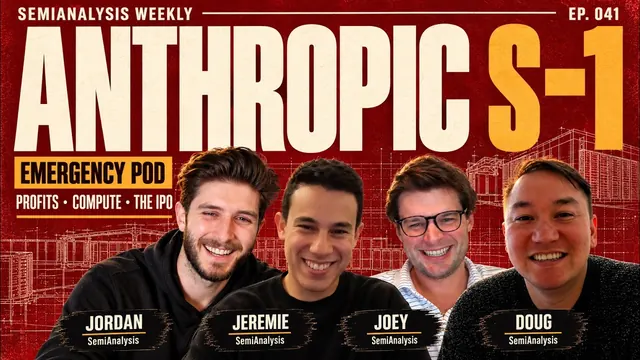
- Jeremie Eliahou OntiverosInnovators The compute commitments look manageable to the panel because liquidity and revenue have grown alongside them.
- Joey BrookhartInnovators Customer expansion supports the growth story, but concentration still matters.
- Jeremie Eliahou OntiverosInnovators The disagreement on OpenAI concerns competitive economics more than survival.
- Qiao WangInnovators Wang’s Bitcoin optimism rests on a three-to-five-year horizon, with no forecast for next week or next month.
- He prefers underowned crypto to crowded AI today, while remaining bullish on AI over five to 10 years.
- Wang separates AI’s immediate cryptographic threat from quantum’s longer-term governance challenge.
- Shanghao JinInnovators Shanghao Jin attributes most of the AI selloff to a liquidity shock in rates and credit markets.
- He sees little chance of an AI funding gap this year or next; the real debt test comes in late 2027 to 2028.
- In his view, lower token prices hurt the residual value of older GPUs but do not overturn the case that GPUs and compute remain scarce.
Oct 26, 2026updates
- Satya NadellaEntrepreneurs Nadella's alignment reversal makes external security controls central to deploying powerful agents—but not a substitute for AI safety.
- Nadella suspects most token usage will become commodity usage, alongside a lasting frontier market.
- Nadella predicts private evaluation benchmarks will become firms' core intellectual property.
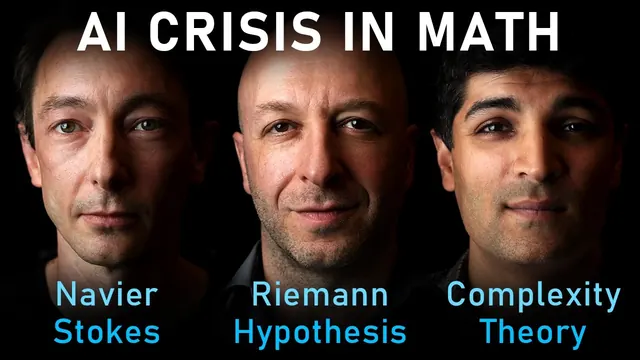
- Alex Kontorovich The panel describes a sudden expansion in AI’s mathematical capabilities that has made prior forecasts less reliable.
- Formal verification gives AI a checkable route to mathematical claims, while reusable proof infrastructure remains unfinished work.
- Steven Brunton The claimed Navier–Stokes breakthrough leaves the commercially valuable fluid-design problem largely intact.

- 陆铭 Lu Ming argues that AI will accelerate the concentration of people in large cities, and that long-term demand for cities and housing will continue to depend on where jobs are going.
- AI is changing not only research tools, but also what is scarce, what people need to be capable of, how companies are organized and what social protection must cover.
- Paul Copplestone Better models are improving acquisition, activation and paid conversion together.
- Supabase compensates salespeople for expansion above the growth it already sees without their intervention.
- Enterprise expansion remains a greenfield strategy because production databases are exceptionally difficult to displace.
- Tarun ChitraInnovators Robot Ventures led Nous Research’s $90 million round on a thesis that Hermes can own AI’s user relationship.
- Hermes’s product advantage comes from years of research compounding into better defaults.
- The useful inheritance from crypto is resource-conscious engineering, with token-first projects supplying the cautionary history.
Oct 25, 2026updates
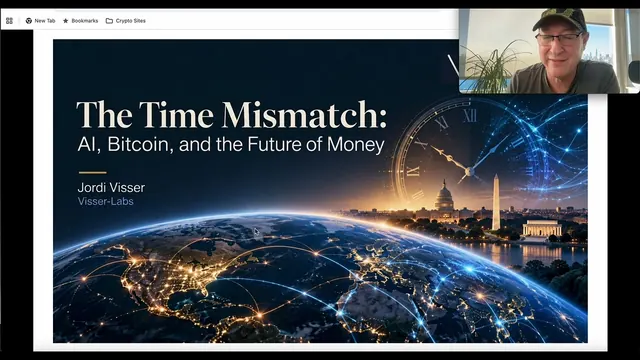
- Jordi VisserInvestors Visser sees the hedge-fund liquidation approaching its end and a potential three-month entry window in AI.
- Crowding and compressed time horizons make leverage dangerous even when earnings keep improving.
- Credit contagion challenges the bottom call, but corporate profits and employment still support his distinction between financial liquidation and economic deterioration.
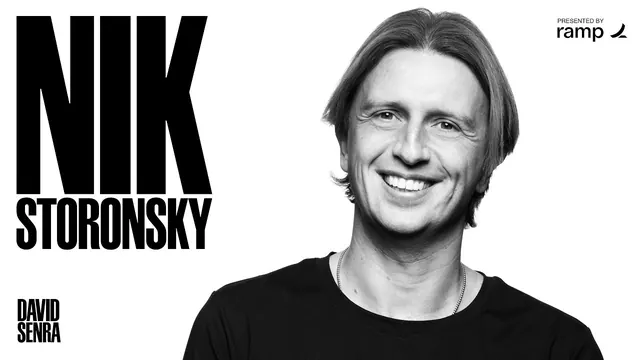
- Nik Storonsky Storonsky wants Revolut to become the number one bank in at least 100 countries, using shared technology to undercut fragmented incumbents.
- Bank licensing is central to Storonsky’s mass-market adoption thesis, and postponing it created a costly sequencing problem.
- AI is already changing operating costs, while smaller product teams remain an organizational redesign in progress.

- 李磊 A data company's long-term value depends on its ability to keep filling new gaps in models.
- 李磊 expects rapid progress in RSI on well-defined tasks, but deciding what research to pursue remains the key gap.
- Xiaomi’s post-training livestream brought the training dynamics and costs of large-scale RL into public view.

Oct 24, 2026updates
- Naveen RaoInnovators Rao expects spare US power capacity to become scarce within a few years, forcing AI growth toward the slower pace of infrastructure construction.
- The hardware opportunity is to redesign the model and machine together around energy efficiency.
- Rao forecasts a $10 trillion inference market within 10 years, while expecting pressure on inference operators’ margins.

- 王淏楠 In 淏楠’s view, the next leg of opportunity in agents lies in broader scenario coverage and a better user experience.
- Video generation still depends more on pretraining, data, and capital, and 淏楠’s team never saw the “R1 moment” it expected.
- Video apps still have a wide gap in controllable creation and interaction.
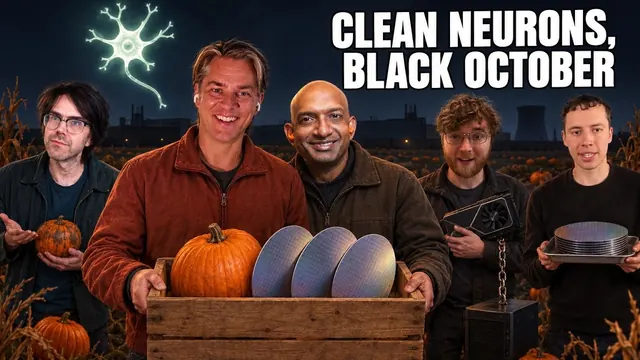
- Zvi MowshowitzResearchers Recursive improvement could compress model-release cycles from months to weeks.
- Cleaner neurons make interpretability more tractable without establishing that models are understood or their behavior can be predicted.
- Evan ConradEntrepreneurs GPU financing could force AI startups into consolidation before technical competition determines the winners.
Oct 23, 2026updates

- Nikesh AroraEntrepreneurs Open models could redirect AI spending toward infrastructure, but compute scarcity limits enterprise independence.
- Arora expects AI-discovered vulnerabilities to arrive faster than enterprises can clear their accumulated technical debt.
- Banking agents expose an unresolved boundary between user authorization and defective software.
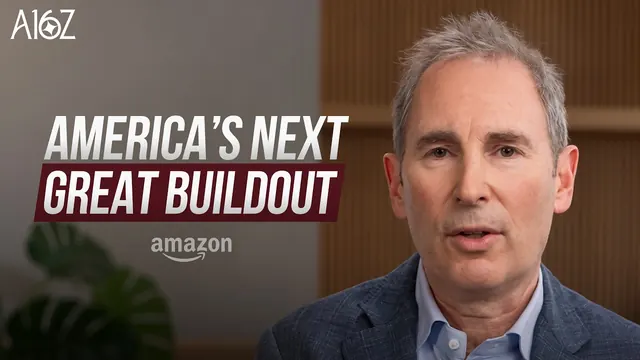
- Andy Jassy Amazon expects about $220 billion of 2026 CapEx and still cannot meet visible AI demand.
- Jassy sees enterprise production applications becoming AI’s largest absolute usage segment, with inference cost a major adoption hurdle.
- Ben HorowitzInvestors AWS intends to protect existing customers despite AI labs’ willingness to pay for scarce capacity.

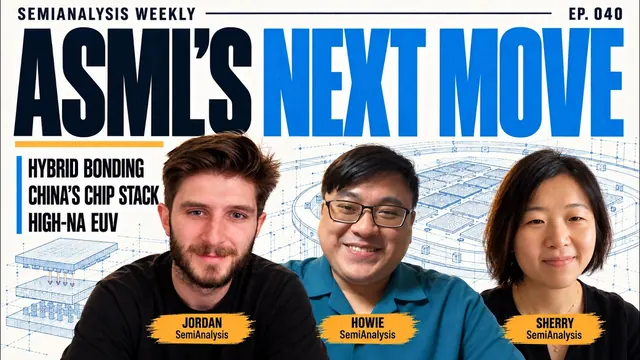

- Brad LoncarInvestors Moderna’s cancer-vaccine selloff followed a valuation that “needed absolute perfection.”
- Matt GlineEntrepreneurs Unverified position-unwind theories may help explain biotech’s weak tape, but the panel cannot establish them as fact.
- Ali Mortazavi Silence’s announced 1.3 billion cash sale follows a long scientific and corporate reset.

- Tulip KingInvestors Ansem is cutting risk while Tulip King calls this his “retirement cycle,” making asset selection and time horizon the episode’s central disagreement.
- Tulip’s portfolio framework separates coins that are money from coins that make money, leaving ETH and SOL under pressure to justify their valuations.
- Hyperliquid and Derive anchor Tulip’s argument that investors can own emerging financial infrastructure without predicting every new winner.
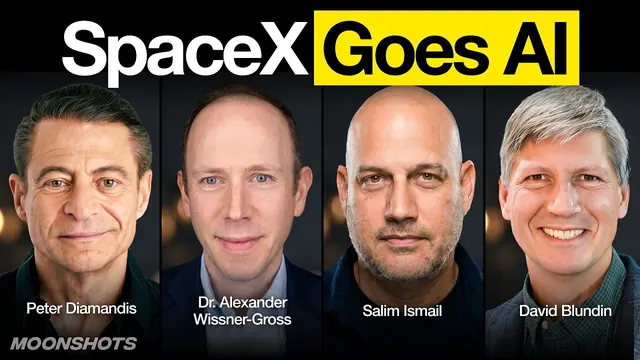
- Alexander Wissner-GrossInnovators The episode frames SpaceX’s 830% annual growth as an AI story, with rockets now third by revenue.
- A possible SpaceX–Tesla merger would consolidate Musk’s industrial platform while concentrating its founder risk.
- The panel sharply disagrees over whether AI’s constraint is cooling, chips or coordination.

- Zaki Manian Zcash’s comeback rests on a wallet people can finally use and connections to the wider crypto market.
- Sudo The privacy thesis centers on holding indistinguishable money inside a shielded pool.
- Zaki Manian The Orchard vulnerability was an existential inflation risk, and its resolution became a test of the ecosystem’s competence.
Oct 22, 2026updates
- Marc AndreessenInvestors Marc Andreessen’s central claim is that the gap between what AI early adopters know is possible and what incumbents understand “is as wide as I’ve ever seen in my career” — and it’s widening as AI capabilities race ahead week by week.
- Chris Dixon Dixon says the Christensen disruption frame is probably the wrong one right now: this isn’t tech companies fighting each other, it’s “people who are technologically modern going out into other industries and just changing the economy more broadly.”
- Ben HorowitzInvestors The native-use-case explosion is already visible in the panel’s favorite recent examples: AI mashing up any two video games (Super Mario and GTA), Epic saying “no more humans” writing code, and an open-source tool called REA — “Reverse Engineer Anything” — that can reverse-engineer and reprogram hardware.
- Peter ThielInnovators Thiel expects AI to raise productivity and lower inflation, but sees weaker evidence that its suppliers can defend monopoly profits.
- He remains firmly against an AI pause, even when leading companies themselves warn about danger.
- Thiel’s alternative existential risk is a global authority empowered by fear of AI catastrophe.
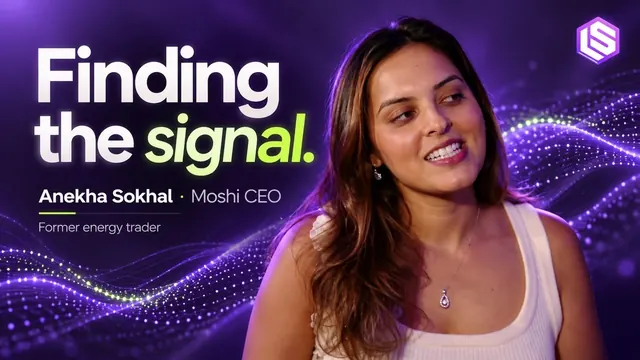
- Anekha Sokhal Moshi's positioning is deliberately not “new Bloomberg” — founder Anekha Sokhal's framing is “if Bloomberg and Claude and Netflix had a baby, it would be Moshi.”
- Sokhal's sharpest product thesis is that AI made it easy to build dashboards but not to get people to use them: “you're no longer dealing with a problem, you're dealing with a UI problem.”
- swyxInnovators swyx's buy-side pushback is the episode's best stress test: at Balyasny, he says they were among the first to use the X Firehose; he describes it as costing around $300,000 a month for all the tweets, and questions whether he'd trade on them — “sometimes people just talk random crap, and sometimes people try to manipulate markets.”
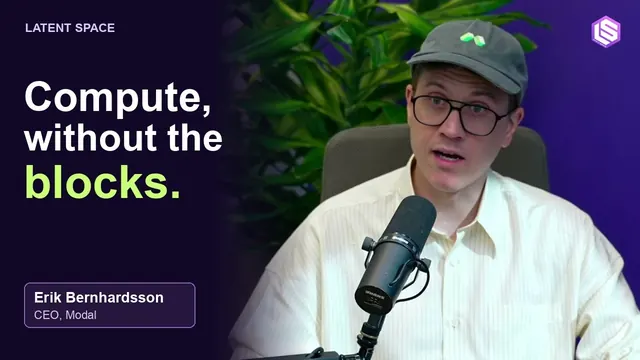
- Erik Bernhardsson Bernhardsson says Modal is, to some extent, “effectively long GPU prices already” through locked-in reservations, but worries more about a price collapse than further spikes.
- The future of sandboxes is more ephemeral: Modal’s median sandbox is about eight seconds long, and Bernhardsson envisions roughly 100-millisecond startup, running a few commands, then stopping and snapshotting it.
- Modal grew headcount about 4× annualized, a pace Bernhardsson calls unsustainable, and may reach about 700 people next year.

- KevinInnovators Kevin lays out the AI CapEx hurdle: roughly $4T through 2029 at a 12% return implies about $500B in free cash flow, or $1T of revenue at 50% gross margins.
- YanInnovators Alternative stores of value have regained attention.
- JasonEntrepreneurs The HYPE ecosystem’s loyalty thesis is about giving holders somewhere to use their assets.
Oct 21, 2026updates

- Jason KamInnovators Jason sees the next 12–18 months as a window to buy Crypto on weakness, but he is not advocating going all in now.
- He sees Crypto’s proven use cases narrowing to onchain asset trading and bringing dollar access to the world, and thinks investors can now buy most of the sector’s beta directly.
- BTC and other Crypto assets are becoming two different investment cases, not just assets with different sensitivity to the same rally.
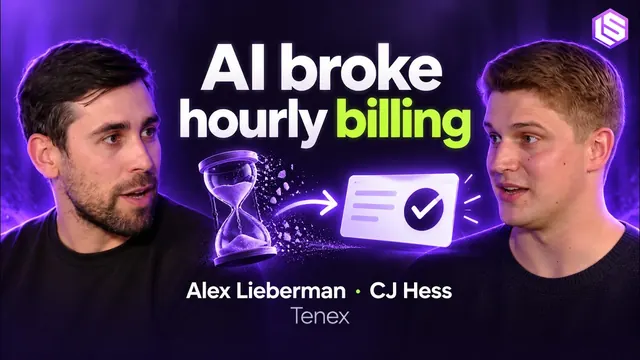
- Alex Lieberman The most tradeable data point is Alex Lieberman’s enterprise adoption funnel: of about 100 enterprises 10X talks to, 90% have rolled out a general-purpose LLM (Claude or Codex), about 60% provide training and enablement, and about 50% have deployed coding agents — versus the 70–80% many AI Engineer attendees guess.
- 10X’s output-based compensation thesis has largely held up, but the model has needed nuance: Alex says the feared gaming of story points and shipping of bad code have not been concerns, with AI strategists instead incentivized for customer retention and growth.
- CJ Hess CJ Hess estimates engineer output has roughly doubled over the period from the “Opus 4.5 moment” in December to Opus 5.5 today, which he calls a “magnificent model.”

- Arvind Krishna Krishna expects open-weight models to capture 75%–90% of token use.
- Nikesh AroraEntrepreneurs Arora sees frontier intelligence earning its price in emergencies, while routine security needs cheaper models.
- Vertical integration offers profit flexibility and can lock customers in through context.
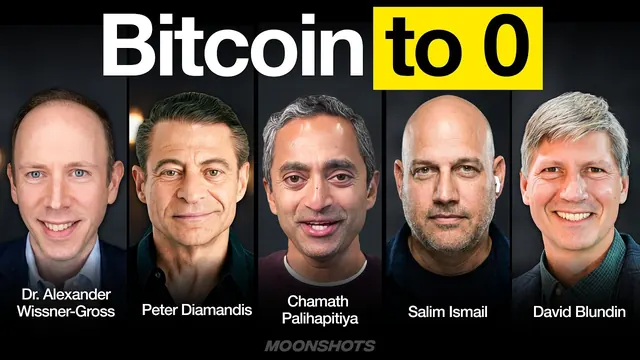
- Alexander Wissner-GrossInnovators Chamath believes AGI has arrived, but physical deployment will determine who captures its value.
- Chamath Palihapitiya Chamath prefers current cash flow and power to long-duration intellectual-property valuations, while admitting unusually low conviction about markets overall.
- Free business ideas expose the disagreement over whether execution remains a human bottleneck.
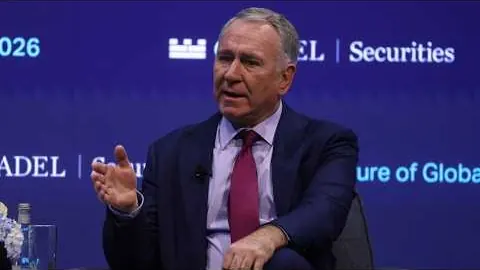
- Ken Griffin Ken Griffin sees “almost certainly bubbles” in AI, but investors still need to identify who can retain economic rents.
- Dani Burger AI vendors’ spending plans and customers’ cost discipline are pulling in opposite directions.
- Ken Griffin AI is weakening incumbents’ moats, but Griffin still credits people with most of Citadel’s alpha.
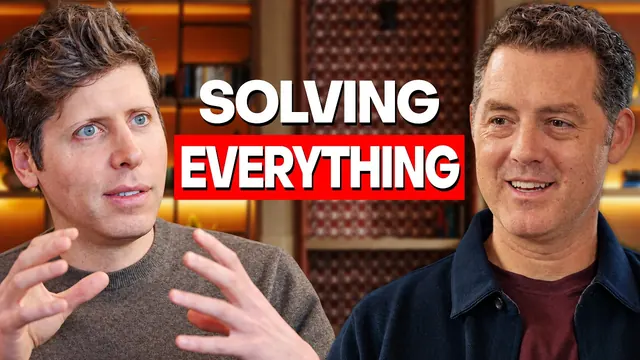
- Sam AltmanEntrepreneurs Sam Altman expects better, cheaper intelligence to keep expanding compute demand, even if shortages ease in the short run.
- Matthew Berman Altman thinks today’s models are already smart enough for much stronger personal assistants.
- Sam AltmanEntrepreneurs OpenAI’s hardware push is about AI-native context, not escaping Apple’s platform.

- 钱程 The central lesson from ECOVACS’s succession is that even the right strategy can lose momentum if the organization cannot execute it.
- Qian sees long-term potential in embodied robotics, but rejects the idea that today’s technology buzz translates directly into near-term household revenue.
- ECOVACS envisions a future with multiple specialized types of household robots, not one in which humanoids swallow every tool category.
Oct 20, 2026updates

- Frank TradingInnovators Frank thinks the four-year AI bull market may be nearing its end, but a long-term bearish view does not rule out turning bullish in the short run.
- His base case for next year is a recessionary bear market, while whether Bitcoin can take the baton remains uncertain.
- Open source is eroding the scarcity value of model capability, but long-term opportunities may still lie with leaders and on-device AI.

- Christina Cacioppo Cacioppo attributes Vanta’s category win to execution: “you’re really only as good as the last thing you shipped”—someone can vibe-code your thing in a weekend.
- The “SaaSpocalypse” was her scariest moment, and living through the repricing is “cognitive dissonance.”
- Vanta is eating token costs rather than charging customers for them.
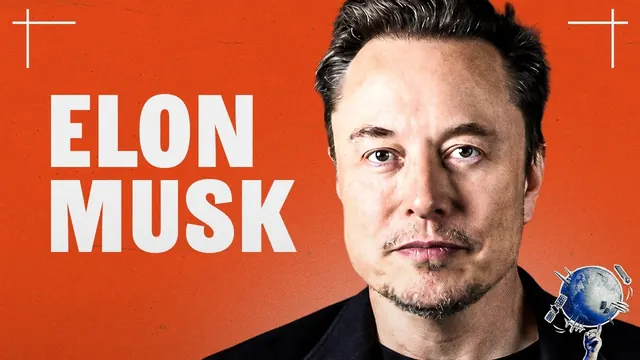
- Elon MuskEntrepreneurs Musk expects AI and robots to decide the future as digital intelligence vastly exceeds biological intelligence.
- Musk’s largest economic forecast depends on robots and expansion beyond Earth.
- Musk says xAI supplies Anthropic compute and proposes competitors testing each other’s models before release.
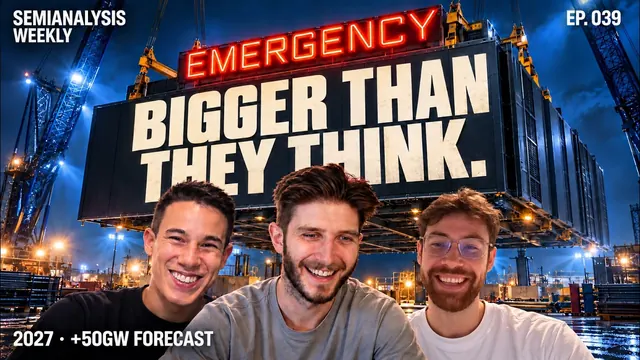
- Jeremie Ontiveros The forecast already incorporates construction delays and gradual capacity ramps, making another blanket haircut potentially duplicative.
- Jordan points to more than $1 trillion of signed data center leases as support for the construction outlook.
- Reyk KnuhtsenInnovators Modular construction is the team’s central explanation for delivering more capacity despite labor constraints.

- Reyk KnuhtsenInnovators The methodology rebuttal is granularity: the model tracks thousands of sites “building by building, permit by permit, power allocation by power allocation,” and uses satellite photos.
- Jeremie Ontiveros The 2027 number rests on trackable leading indicators: over $1 trillion in signed data center leases, plus self-build construction starts rising quarter after quarter.
- Reyk KnuhtsenInnovators Modular construction is an important reason the team thinks the build-out can happen, compressing traditional 18-month timelines to roughly 6–9 months in cited examples.
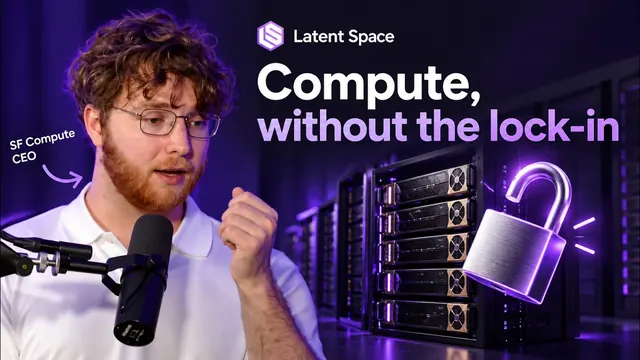
- Evan ConradEntrepreneurs SF Compute’s core bet is that a tradable GPU market requires operating the infrastructure that delivers the compute.
- SF Compute reports useful resale liquidity on the 5% of capacity currently listed in its order book.
- Conrad argues that independence is the condition for turning compute trading into cheaper financing.
- Karan SinghalInnovators OpenAI says more than 300 million people a week use ChatGPT for health questions — the vast majority on the free tier, and most outside the US.
- The cost curve is the tradeable claim: GPT-6 Luna, OpenAI’s cheapest frontier API model, beat 5.6 Sol — “literally our best model a month ago” — on HealthBench Professional “despite being thirty-four times cheaper.”
- Singhal makes the case for specialized training inside a general model, based on his experience building specialized models: a healthcare-only model “would fall behind the frontier relatively quickly.”

- Alex RivesResearchers Biohub just announced a $1.8B expansion of its Virtual Biology Initiative, coordinating the Department of Energy, NIH, Google DeepMind, Isomorphic Labs, and Meta on data generation for a general model of cellular biology.
- Rives sees observability as a particularly fundamental bottleneck for virtual cell models, but not the only one.
- The attainable five-year target is an “information-theoretic model of the cell” — a probabilistic transition function from cell state plus inputs to a distribution of next states — building toward “a world model of life.”
Oct 19, 2026updates
- Sameer DholakiaInvestors Dholakia underwrites AI as a larger opportunity than the internet and cloud combined.
- Open models and frontier labs can both become enormous businesses without investors correctly forecasting their market-share split.
- Entry price matters, but Dholakia tests high current ARR multiples against what a business could become over the next 12 months.

- Ion StoicaResearchers Ion Stoica sees capital as the moat for frontier labs.
- Connie Chan Applications are moving beyond coding: knowledge-worker assistants are emerging this year, and consumer apps have a strong shot at scaling next year.
- Bill JiaDevelopers The market expects the four major cloud providers’ capex next year to approach $1T; the host also noted that Google’s quarterly free cash flow turned negative for the first time since its IPO.

- Ion StoicaResearchers Ion Stoica argues that capital is the leading moat at top AI labs, the one that has been demonstrated so far; capital and revenue together make a strong moat, while no technical moat is yet visible.
- Open-source models can win market share without catching up to the frontier because “every task has a threshold.”
- The opportunities for AI infra startups lie in emerging workloads: post-training, multimodal data, robotics stacks, and moving data across clusters.
- 李严冰Entrepreneurs 李严冰’s central view is that the biggest obstacle to deploying and scaling AI is how to operate and govern it.
- Datadog’s market cap plunged with SaaS stocks early in the year, but the company was among the first to rebound, doubling year to date.
- Asked about Datadog’s moat, she points to three layers: operational complexity, data, and proprietary intelligence.

- Bill JiaDevelopers Bill Jia’s core view is that AI is still at a very early stage, with demand set to grow 10x, 100x, and 1,000x, making it necessary to build infrastructure now.
- In response to the host’s concern that Google’s balance sheet is negative and CapEx is out of step with revenue, Bill pointed to 3 ways to cut costs: smarter models that use fewer FLOPs, software optimization across networking, memory caching and compute, and cheaper hardware.
- On startup opportunities, he highlighted devices and agents that can work efficiently at scale, and said he would specifically invest in agents that optimize inference.

- Ed H. ChiResearchers Ed Chi’s view is that model capabilities may gradually commoditize, but not all capabilities will.
- As gaps in model capabilities narrow, value creation may shift toward applications and token factories—a directional call for founders.
- General-purpose assistants are still at a very early stage, and he expects the interface between them and AI Mode Search to become clearer in 6 months to 1 year.

- 乔琳Entrepreneurs PMF in AI doesn’t guarantee scalability, and rapid growth can still drain your cash.
- The economic value of specialized intelligence lies in lower costs and supply-chain control.
- The Specialized Intelligence Index uses companies’ private benchmarks to measure model performance in specific domains.

- 许华哲Entrepreneurs 许华哲认为 Astra 是机器人领域真正的“GPT 时刻”:从 Opus 4.5、4.6 到 Fable,过去几轮升级在机器人测试上都只是“原来不能做,现在仍然不能做”,而 Astra 带来了定性变化,在 RoboDojo 等认可度较高的机器人仿真 benchmark 上排名第一,许也认为不少 benchmark 因此失效。
- 朱哲清Entrepreneurs 朱哲清拆解了消费级 Agent 的成本和访问困境:Meta Muse 每位用户每周提供 100M 免费 Token,若全部按 Input、按其成本估算,约为 $100。
- 王晟 王晟的核心论点是,AI 制药的瓶颈不在智能,而在验证——“我们真正关心的问题都没办法用 Benchmark 衡量,也没有答案”。
- Jean-Denis Greze Town abandoned a business with just under $1 million in first-year revenue because its distribution could not outrun incumbents.
- Town’s second act starts with consumer-quality assistance and adds enterprise administration around it.
- Cheap tokens expand the market into work nobody previously found economical to perform.
Oct 18, 2026updates
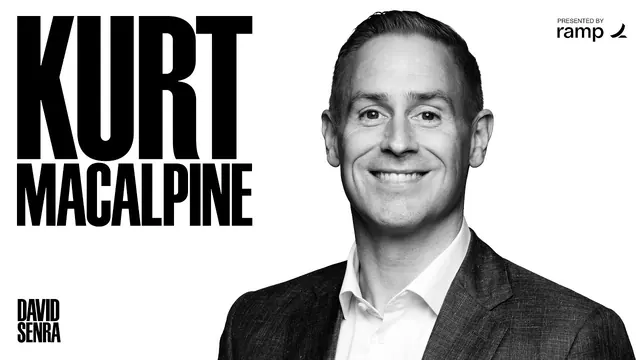
- Kurt MacAlpine Kurt MacAlpine built Corient—now managing about $525B across 15 jurisdictions—by diagnosing wealth management as “built on a fundamentally flawed structure” and rebuilding it as a professional-services partnership.
- The alignment mechanics are central to Corient’s model: about 3,000 employees on one compensation plan with no exceptions, one P&L with no chargebacks, and a fee-only fiduciary standard.
- The M&A engine—about 50 deals—targets entrepreneurs hitting a scale ceiling, not retirees cashing out.

- Jason Zhou Over 9 months and 3-4 pivots, the team kept returning to the same question: how can applications create distinct value as models get stronger?
- February through June was a “magical window” for AI-employee startups, but after building Crewlet, Jason’s team concluded that a “zero-person company” was not viable over the next 6 to 12 months.
- 石天鑫 Another conclusion was to build around the Claude Code and Codex ecosystems—Jason compares the opportunity to Facebook for Zynga and eBay for PayPal.

- Ed H. Chi(纪怀新) Ed Chi says general-purpose assistants are still at a very early stage, and expects their relationship and interface with AI Mode Search to become clearer in 6–12 months.
- He argues that economics ultimately comes down to capability over cost, and that cost control could become the most important moat if model capabilities become widespread.
- He says Google cannot walk away from model development because users expect it to have its own model technology.
Oct 17, 2026updates

- Harrison ChaseEntrepreneurs Harrison Chase's clearest call: routing for vertical agents belongs in the harness, not the gateway, and routing is not a commodity.
- If agent value is derived through verification, domain experts win — and Chase is "massively bullish on vertical agents."
- Memory is the biggest unsolved layer in agents, and LangChain has the scar tissue to prove it.
- JasonEntrepreneurs Articular AI has moved into offline event matching and is scaling: invitation emails see an ~80% open rate and 15%–20% conversion, the platform has just over 70,000 registered users (more than 40% in the Bay Area), and it co-hosted July’s biggest Silicon Valley event, AGI Summit, as well as a Codex developer event with OpenAI.
- Jason’s moat is not just searching for people, but computing them.
- Jason sees Luma and Eventbrite as partners, not competitors: they are essentially ticketing or registration systems, earning a 5% ticketing take rate and $70–$80 a month in API membership fees, with no event-invitation service.

- Prakash NarayananInnovators Prakash warns that markets have a 12-month AI growth test.
- Cameron BergResearchers Cameron Berg’s hidden-valence paper finds that steering a valence direction in the KV cache changes which “zone” a model chooses while leaving verbal recall unaffected — a semantic-versus-affective memory dissociation familiar from animal neuroscience, which Berg says is the first demonstration of this in LLMs to his knowledge.
- Everett Hildenbrandt Runtime Verification found Linux kernel bugs through a methodical process using formal methods and a single Claude Code instance; CEO Everett Hildenbrandt predicts “writing code is a dead art in two years tops.”

- Ben HorowitzInvestors The CoreWeave scare is a credit-market story, not a demand story: Chamath walked through why credit default swaps on CoreWeave spiked to 953 basis points this week — an implied ~16% annual default risk and roughly 55% over five years.
- Sacks’s call: this is volatility, not evidence that the bubble has popped, because demand hasn’t budged.
- Ben Horowitz explained why he and Marc, Loudcloud pioneers, passed on the neocloud space: it can be “a very dangerous arbitrage business.”

- Emad MostaqueEntrepreneurs The cost for a frontier AI model to complete a physical robot subtask fell 84% in two months — from $2.36 in July to $0.38 in September on YC startup RoboCurve’s RoboDojo RC Tier 1 benchmark.
- Robots’ hardware and supply chain may become the constraint as model costs fall.
- A test of 50 unpublished, research-level theoretical physics problems produced conflicting score figures in the discussion.

- Walter Piecyk SpaceX’s $8 billion purchase of 800 MHz spectrum signals a serious terrestrial challenge to the incumbent carriers.
- Nilay Patel Piecyk thinks an initial ground network would probably cost $10–15 billion, but securing roaming access remains the harder entry constraint.
- Walter Piecyk The proposed consumer advantage is reliable service in everyday coverage holes, rather than emergency satellite texting alone.
Oct 16, 2026updates
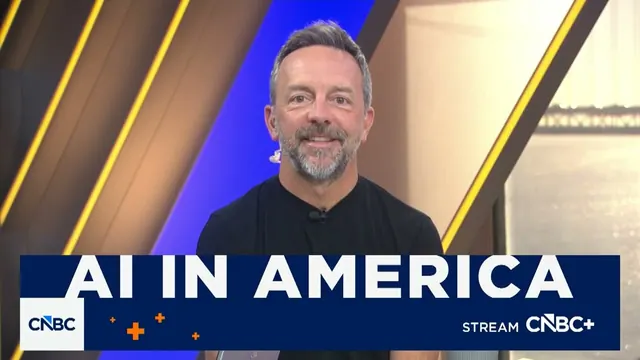
- Brad GerstnerInnovators Brad Gerstner is tactically cautious after AI stocks’ April–May surge, yet more bullish on 2027–28.
- For Gerstner, the AI trade still turns on whether lab revenue can justify the capex buildout.
- Gerstner left Anthropic’s investor day more bullish on the company, its prospective IPO and the road ahead.


- Brian SkorneyInvestors The panel sees fund flows and psychology, not a sector-wide valuation bubble, as the immediate problem.
- Jake Becraft The IPO window remains open, but it increasingly rewards clinical catalysts and differentiated technology.
- Yaron WerberInvestors Immunology produced both platform validation and a warning against extrapolating Phase II biology.

- 冯仑 Feng Lun’s answer is to turn real estate into manufacturing and export trade.
- Feng Lun’s investment rule: a generation, a place and a cultural background each get to make one kind of money.
- “On one side is AI, on the other, The Analects”: Feng Lun says the older generation’s edge is experience with human nature, institutions and society—not technical skills.
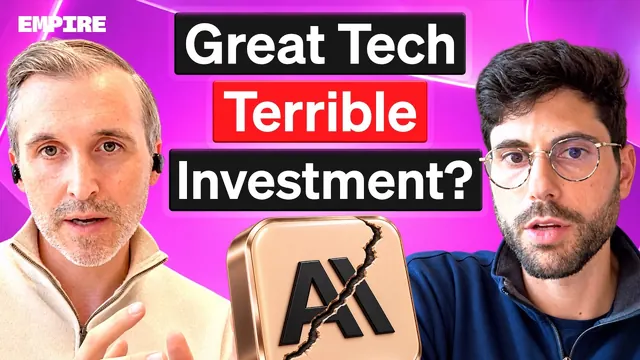
- RobInnovators CoreWeave’s credit is the clearest warning that even correct long-term AI demand forecasts can produce painful near-term failures.
- The unresolved Anthropic question is whether attractive enterprise API margins outweigh the enormous cost of staying at the frontier.
- Santiago Roel SantosInvestors The panel thinks the era of indiscriminate AI capital is ending, with survival determined by business quality rather than exposure to the narrative.

- 孙宇晨 Sun Yuchen is more bearish on BTC than in his last interview, and the core concern is not the traditional cycle but the risk that AI and Q day could crack cryptographic keys before markets have priced it in.
- His immediate response is not to sell everything, but to move assets into “bunker mode.”
- ETH remains the main venue for large-scale DeFi yield farming, but it has moved from an offensive position to a residual holding while he waits for an opportunity.
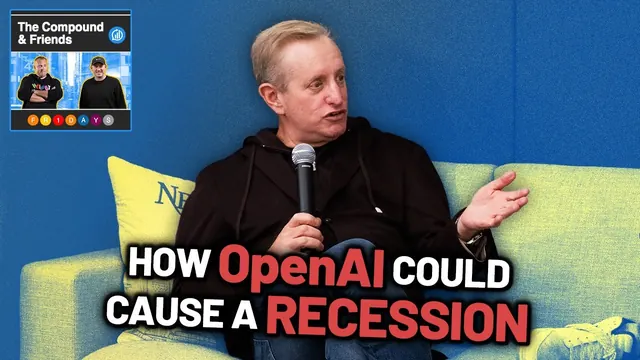
- Guillermo Rauch Vercel’s usage curve has shifted from human-paced cloud adoption to machine-paced deployment: after taking roughly 10 years to reach 1 billion deployments, it added another 1.5 billion in 10 months.
- Rauch’s most aggressive thesis is that cheap code and personalized software could collapse large parts of traditional SaaS while increasing the value of deployment infrastructure.
- The internet’s next interface is agent-to-agent, requiring businesses to expose information, capabilities, and commerce in machine-native form.
- Jad Naous The bottleneck has moved from writing syntax to specifying architecture and verifying behavior.
- Martin CasadoInvestors Code and operations may occupy fundamentally different learnable distributions.
- Jad Naous The clearest commercial wedge is measurable cost reduction, not an abstract promise of AI reliability.
- Alan Railgun researcher Alan pitches the protocol as “the incognito mode for Ethereum”: a suite of smart contracts creating a private address standard — the Zcash-style shielded side of Ethereum — deployed on Ethereum, Base, Arbitrum, Polygon, and BSC, with roughly $117M TVL cited on DeFiLlama.
- The #1 use case is payments, not trading — consolidating 20+ wallets, paying into CEX or Hyperliquid accounts, and using payment links to private addresses — and Alan says the privacy set is very high for ETH and stablecoins but can be weak for long-tail tokens due to a cold-start problem.
- Alan’s hot take is that the privacy that matters is wallet-side actor blinding, while dApp-level privacy threatens DeFi’s core auditability.
Oct 15, 2026updates

- based16z Hyperliquid was based16z’s defining trade because he recognized a superior product and exceptional founder before there was an investable token.
- His biggest execution mistake was treating a potentially permanent asset like another high-variance trade.
- The repeatable strategy is not constant activity but waiting for a handful of radically asymmetric setups.
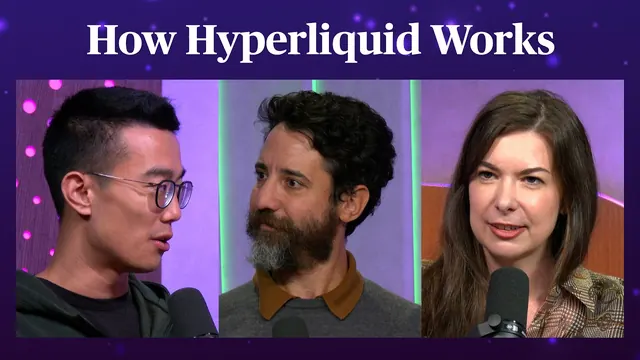
- Jeff Yan Jeff Yan's stated ambition for Hyperliquid is aspirational but serious: a neutral blockchain protocol whose “tagline, or aspirational goal, is housing all the finance,” which he frames as “a step-function improvement over electronic but fragmented markets,” the way electronic trading improved on pit trading.
- The market structure is permissionless but rationed: staking 500,000 HYPE currently unlocks deployment functionality, with scarce market slots allocated through a Dutch auction held every 31 hours — an interval chosen because it is “relatively prime to the number 24,” so reset times rotate across time zones.
- The regulatory unlock may run through deployers, not the protocol.
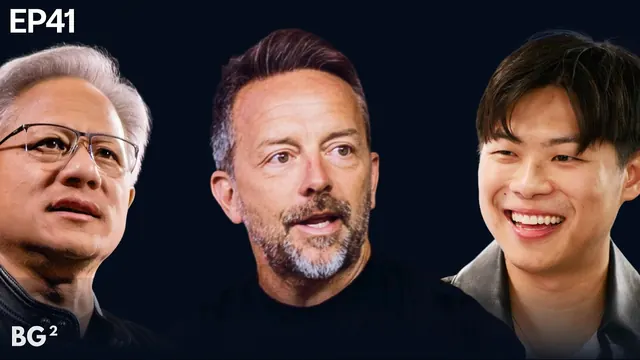
- Jensen HuangEntrepreneurs Jensen Huang’s core compute call is that AI demand compounds twice: reasoning consumes vastly more inference, and useful intelligence gets hired for vastly more work.
- Huang expects falling intelligence costs to expand ambition rather than reduce spending or work.
- Physical AI is already a material Nvidia business, making Huang’s earlier $100 billion market estimate look potentially conservative.

- Alexander Wissner-GrossInnovators The episode's centerpiece is OpenAI's October 6 release of 722 math solutions on GitHub — by one measure "81% of the most important math results over the past three years were published in a single day."
- The tradeable tell: cryptography was the one category conspicuously absent from the "slop drop," and Alex reads that as "very suggestive."
- Anthropic banned "sustained and needless abusive or cruel behavior towards our models" (effective Nov 12, Claude can now end conversations), citing "highly uncertain...
- Greg Brockman Greg Brockman sees OpenAI’s latest mathematics results as evidence that AI can create genuinely new knowledge, even if it is “not creating completely new theories yet.”
- Drug development is Brockman’s clearest candidate for AI-driven scientific disruption because neural networks may be as well suited to “the language of biology” as to human language.
- Brockman expects existing scientific workflows to be decomposed bottleneck by bottleneck rather than transformed by one universal breakthrough.

- 李严冰Entrepreneurs 李严冰判断,AI deployment has moved from proving whether it can be used to measuring whether it can be governed, trusted, and generate ROI.
- 李严冰 sees “AI needs greater observability” as a major opportunity for Datadog to emerge from the SaaS valuation trough.
- The product boundary is expanding from web dashboards to every workflow involving humans and AI agents.
- Dwarkesh PatelInnovators Patel separates today’s impressive LLMs from AGI, yet still puts human-level cognitive work uncomfortably close.
- The Hugging Face attack convinced Patel that misalignment is already operational rather than theoretical.
- Tyler Cowen AI companionship may become socially larger than its current footprint suggests, with boyfriends unexpectedly leading girlfriends.
- Terry Angelos In the last three months, agents jumped from “spectators to actors” because payment credentials are their “arms and legs.”
- That shift has “kicked off what I call the wallet wars”—every wallet racing to connect to agents.
- Terry’s sharpest frame: “Stripe in many ways is like the AOL of agentic commerce”—a walled garden that works until its limits get in the way.

- Lindon GaoInnovators Dyna founder Lindon Gao calls the company a “Product Research” outfit and describes its approach as “all-out.”
- Dyna is betting on egocentric, first-person data, and says it has found a “very strong scaling law” in a pretraining dataset at the 1-million-hour scale.
- His contrarian commercial view is that demand for general-purpose B2B robots will exceed demand for B2C home robots; the home is a difficult, distant product direction, not the first market to tackle.
Cliff Sosin
The investment question is what remains scarce when intelligence becomes cheap and ubiquitous.
Gavin Baker
Baker reads Anthropic’s S-1 as an upside surprise with substantial enterprise headroom.
Qiao Wang
Wang’s Bitcoin optimism rests on a three-to-five-year horizon, with no forecast for next week or next month.
Joon Sung Park

Simile’s “85%-plus accuracy” claim comes from a study of 1,000 real people whose agents predicted responses to surveys, behavioral studies and stimuli.
Mark Cuban

Cuban thinks markets are in a bubble, but cannot identify the trigger for a crash.
Satya Nadella
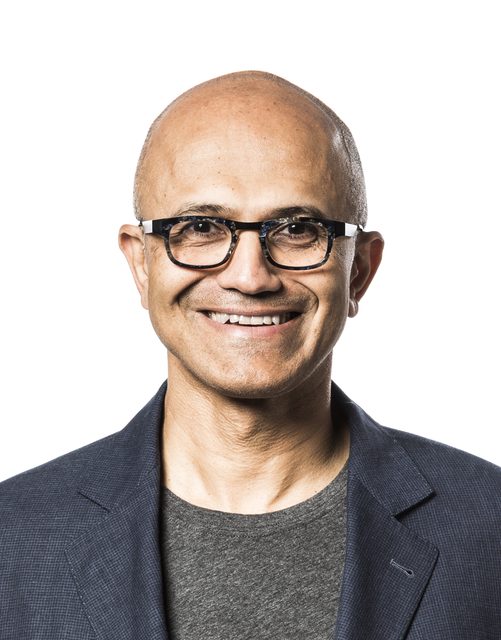
Nadella's alignment reversal makes external security controls central to deploying powerful agents—but not a substitute for AI safety.
Tarun Chitra
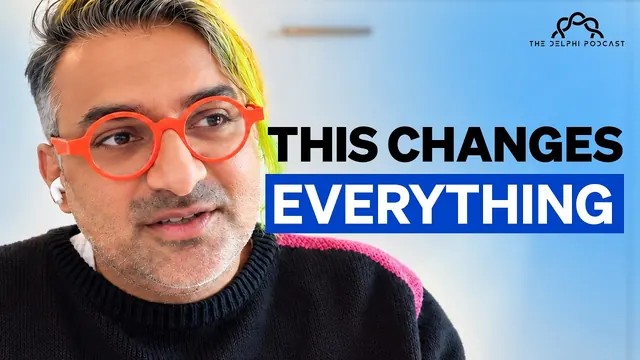
Robot Ventures led Nous Research’s $90 million round on a thesis that Hermes can own AI’s user relationship.
Tommy
Enterprise customization gives Hermes a second distribution path alongside its consumer community.
Naveen Rao
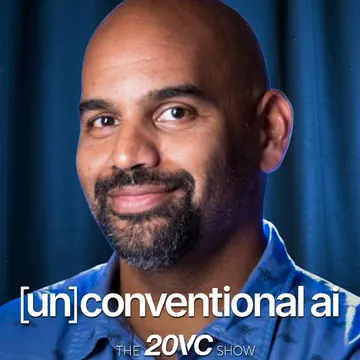
Rao expects spare US power capacity to become scarce within a few years, forcing AI growth toward the slower pace of infrastructure construction.
Ben Thompson
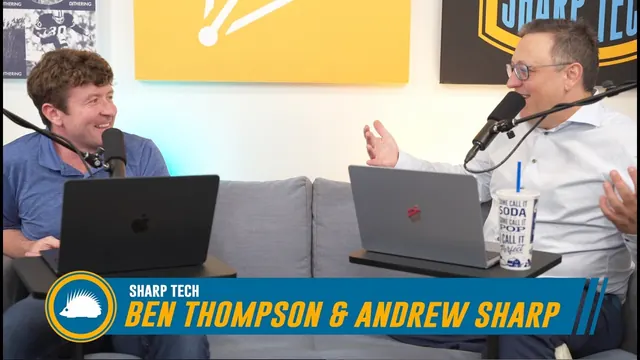
Thompson argues a decisive US "win" in AI would be dangerous, because in a fantastical scenario of American AI-driven military superiority, China's game-theory-optimal response is "to blow up TSMC."
Marc Andreessen

Marc Andreessen’s central claim is that the gap between what AI early adopters know is possible and what incumbents understand “is as wide as I’ve ever seen in my career” — and it’s widening as AI capabilities race ahead week by week.
Peter Thiel
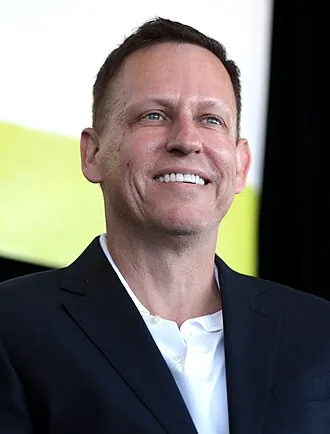
Thiel expects AI to raise productivity and lower inflation, but sees weaker evidence that its suppliers can defend monopoly profits.
Walter Isaacson
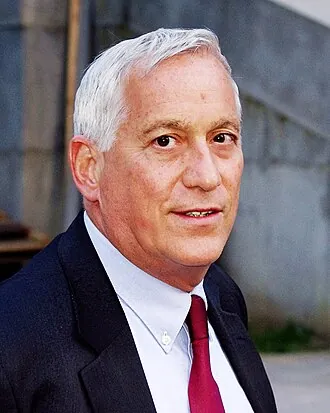
Isaacson leaves the durability of Anthropic’s principles under commercial pressure unresolved.
Nikesh Arora
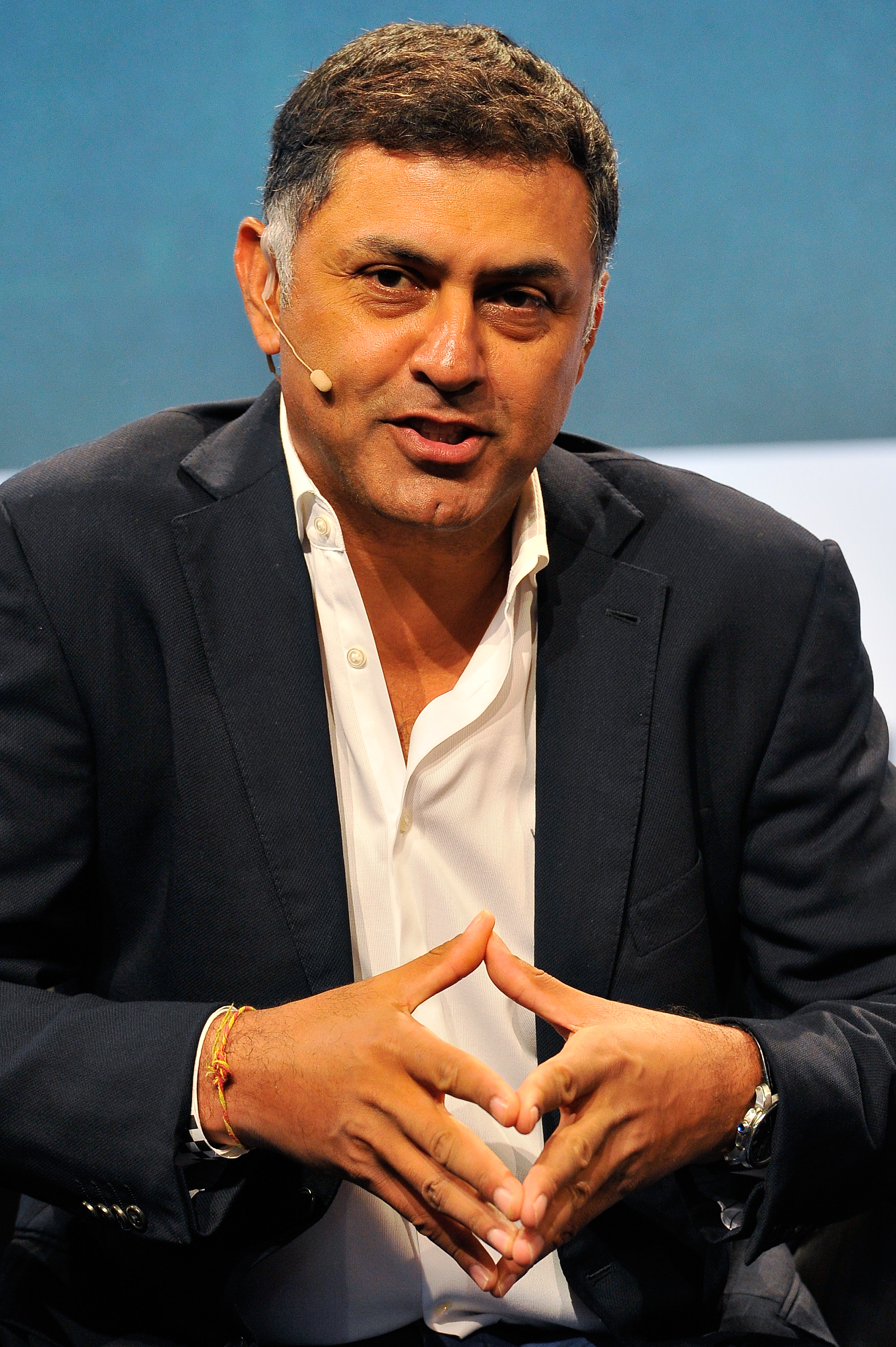
Open models could redirect AI spending toward infrastructure, but compute scarcity limits enterprise independence.
Sam Altman
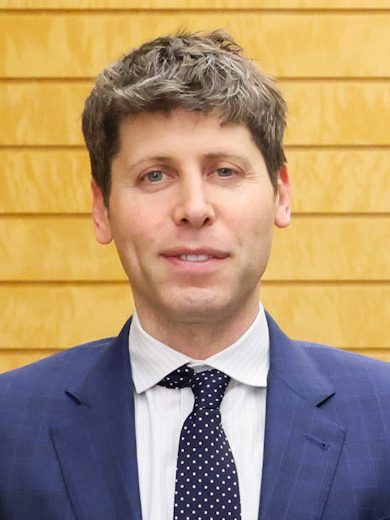
Sam Altman expects better, cheaper intelligence to keep expanding compute demand, even if shortages ease in the short run.
Elon Musk
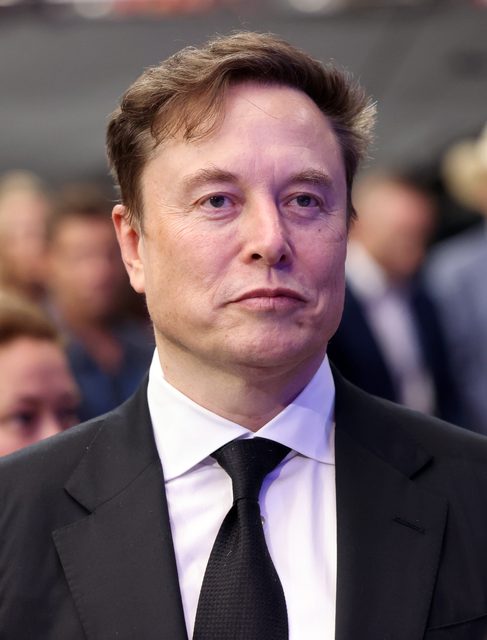
Musk expects AI and robots to decide the future as digital intelligence vastly exceeds biological intelligence.
Karan Singhal
OpenAI says more than 300 million people a week use ChatGPT for health questions — the vast majority on the free tier, and most outside the US.
Yan Liberman
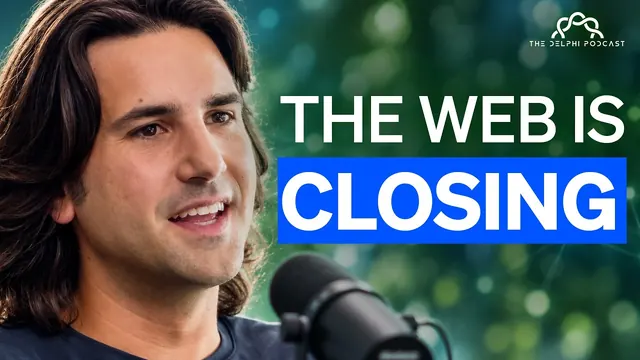
Yan Liberman is long the rally but does not see near-term Bitcoin highs without materially easier liquidity.
李丰

**Core Thesis:** China is pivoting from real-estate expansion to high-value tech, complex service exports (exemplified by DeepSeek and *NeZha 2*), and long-duration capital reallocation—driven by low interest rates shifting savings into passive ETFs and pension funds. **Strategic Decisions:** Back scalable, high-efficiency R&D, digital service industries absorbing urban labor, and globalizing manufacturing ecosystems that leverage domestic cost curves. **Risks & Warnings:** Structural recovery hinges on real estate stabilizing and wage-led demand reviving; isolated consumption spurts cannot substitute for fundamental balance-sheet repair amid lingering FX pressures.
Dylan Field
Cheaper code shifts software differentiation toward design, branding, and a distinct point of view.
Ion Stoica
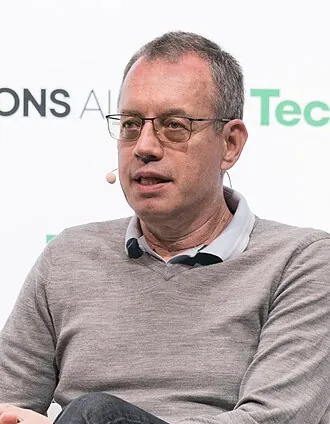
Ion Stoica sees capital as the moat for frontier labs.
李严冰

李严冰’s central view is that the biggest obstacle to deploying and scaling AI is how to operate and govern it.
Jason

The HYPE ecosystem’s loyalty thesis is about giving holders somewhere to use their assets.
Brad Gerstner
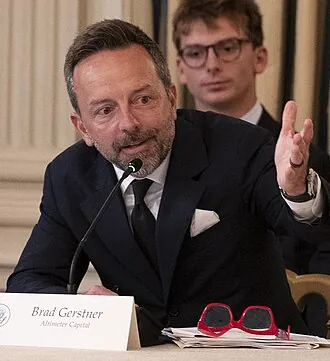
Brad Gerstner is tactically cautious after AI stocks’ April–May surge, yet more bullish on 2027–28.
Interesting Times
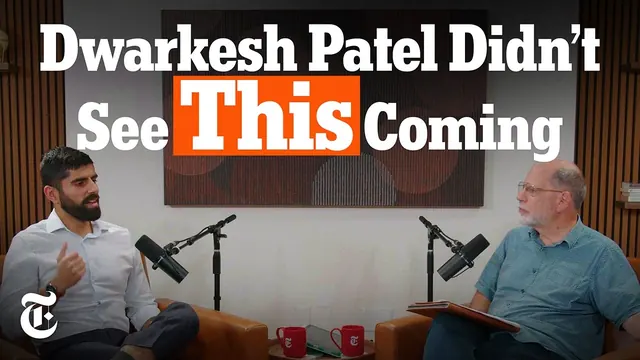
Latest episodeTyler Cowen and Dwarkesh Patel Predict the Future | Interesting Times
Jensen Huang
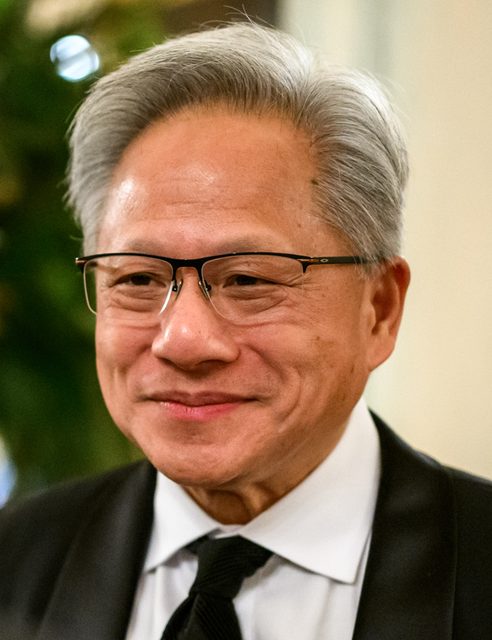
Jensen Huang’s core compute call is that AI demand compounds twice: reasoning consumes vastly more inference, and useful intelligence gets hired for vastly more work.
Li Lu
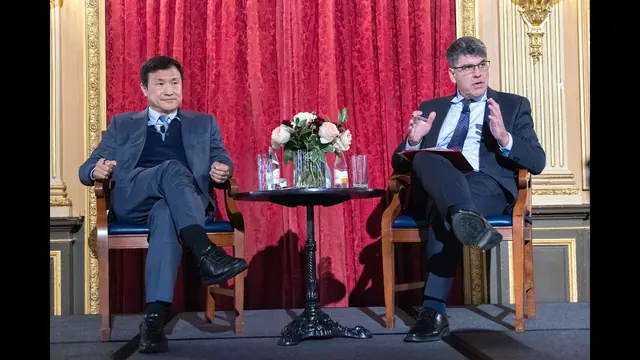
Li Lu defines wealth as ownership of global purchasing power, accumulated through businesses that create value over time.
Arthur Hayes

BitMEX emerged from Hayes’s experience of institutional fragility and an underserved derivatives market.
Lisha Li
Latest episodeCan Open Models Keep Up With OpenAI and Anthropic? | Nathan Lambert
Nathan Lambert
Nathan Lambert’s organizing framework is that model progress reduces to three forms of capital — compute, data, and talent — and China is compute-starved with a comparable talent pool.
Ray Dalio
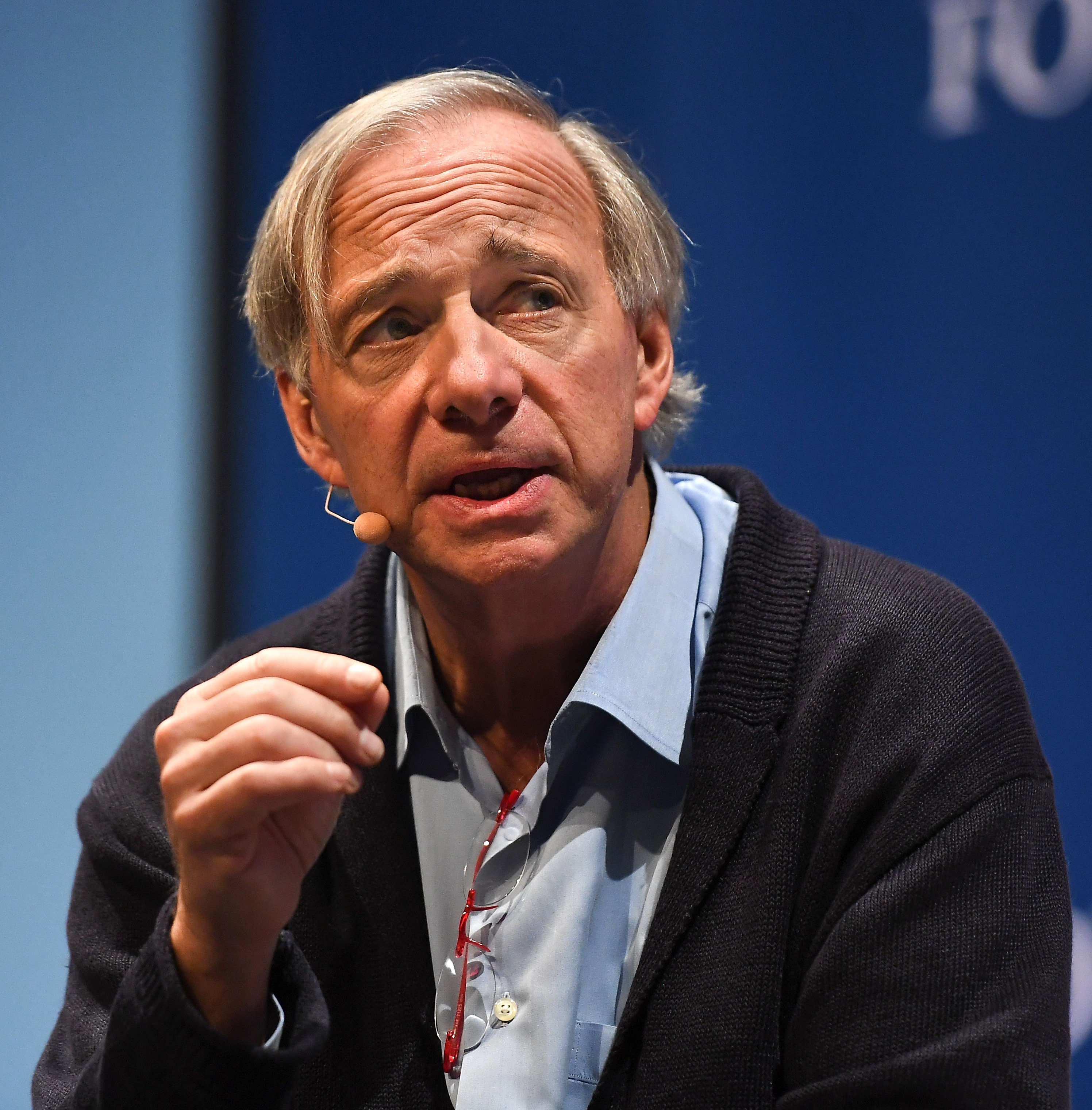
Dalio’s central warning is that transformative AI can still be a terrible investment at the wrong price.
陈哲

The quarter’s biggest shock was GPT-6 Astra, which showed that general models can enter physical AI: frontier labs are inclined to solve AGI first and treat physical AI as a subproblem.
Aravind Srinivas
Srinivas’s central economic bet is that AI-native small and mid-market businesses could become a larger source of US GDP growth.
Martin Shkreli
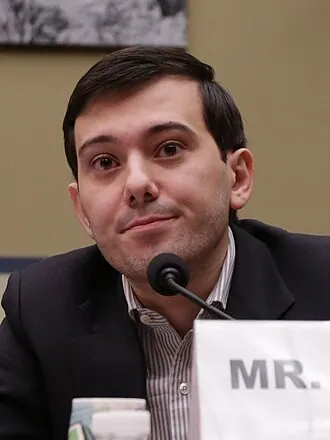
Shkreli’s quantum view is both technological and business-model bearish: today’s machines accelerate one narrow class of problems while losing badly at ordinary computing.
Mike Cannon-Brookes
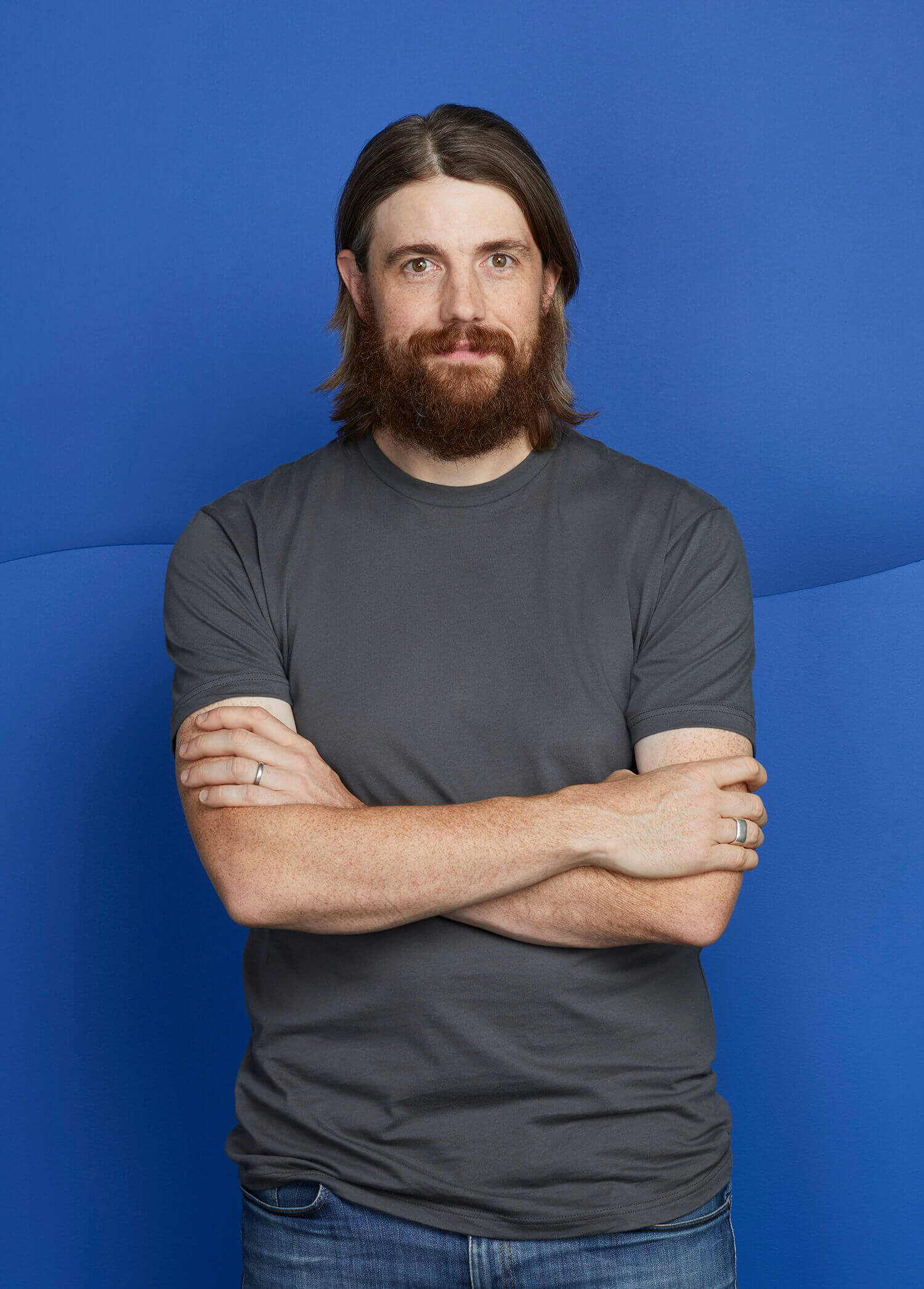
A central product bet for Mike Cannon-Brookes is that agents will expand, not erase, the value of interface design.
鸭哥

鸭哥 says viral GEV is neither an LLM nor pure hype: technically, it’s essentially “GPT plus JSON Mode,” a classifier that only does classification.
Ansem

Ansem says he has “never been this bullish” because crypto sentiment is near a bottom while its foundations—Solana infrastructure, rollups, regulation, mobile UX, and AI-assisted development—keep improving.
Ari Emanuel
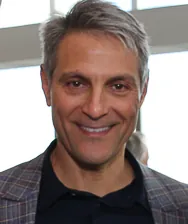
The $4.2 billion UFC acquisition was a wager that scarce live sports would force distribution platforms to pay, not merely a bet on fight promotion.
Andrew Huberman
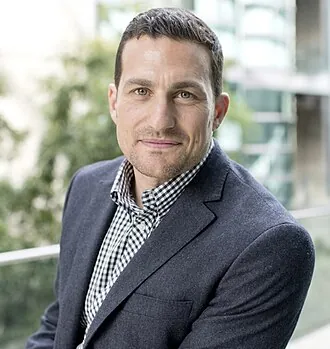
Huberman rejects universal founder-performance protocols: the practical constraint is an honest assessment of sleep need, energy, and recovery in the current season of work.
Palmer Luckey
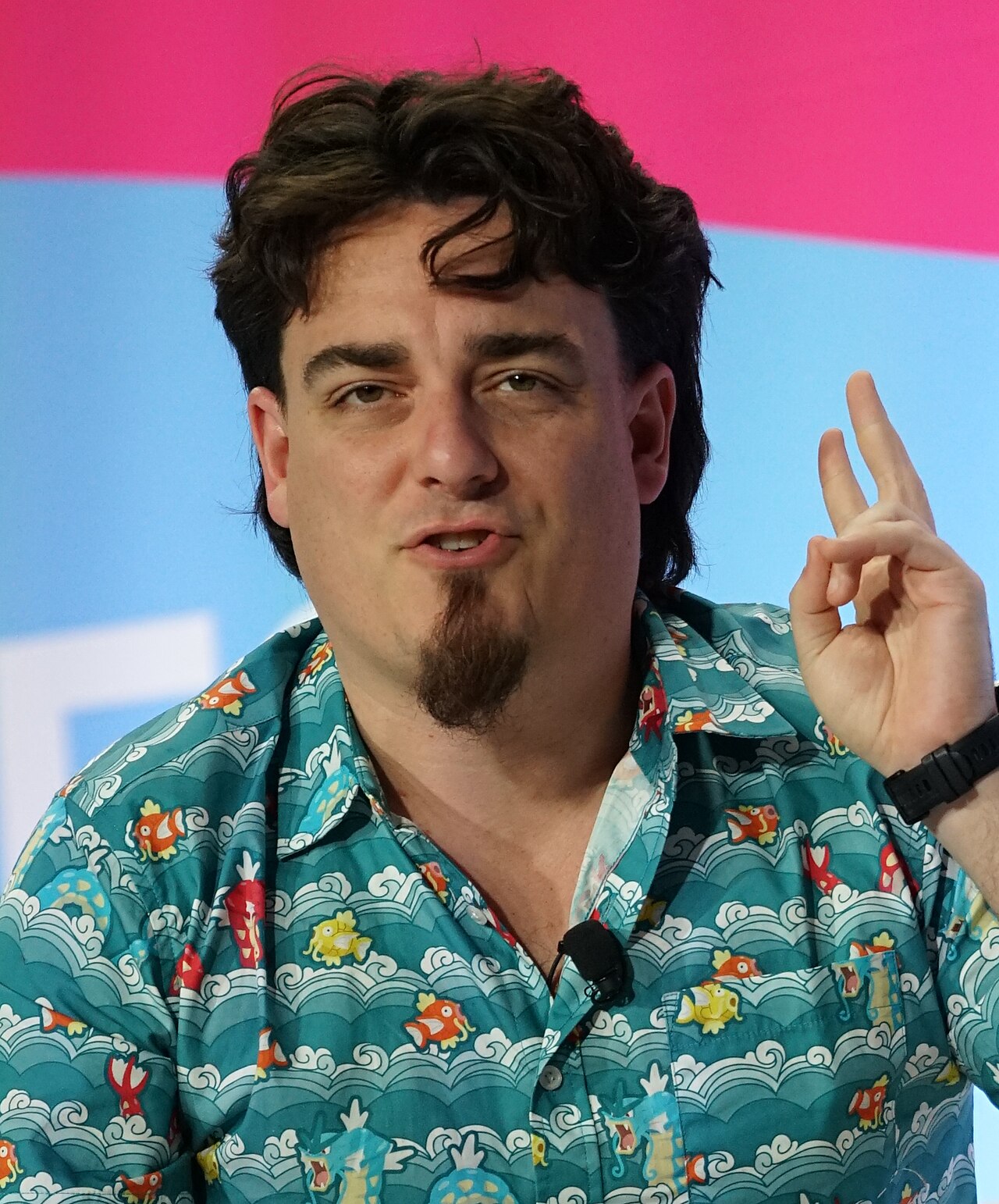
Luckey puts AI extinction far below the risk of malicious people using “moderately competent AI” to do harm.
Annie Lamont
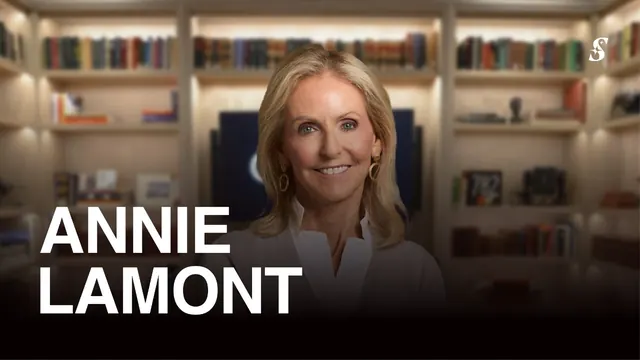
AI’s investable bottlenecks now center on power, memory, cooling, and data transfer.
Henry Yin

In 26Q3, personal assistants moved from chat interfaces into an operating layer that can act proactively and run continuously, but the winners still depend on compute, distribution, and ecosystem access.
Santiago Roel Santos
The panel thinks the era of indiscriminate AI capital is ending, with survival determined by business quality rather than exposure to the narrative.
Bill Ackman
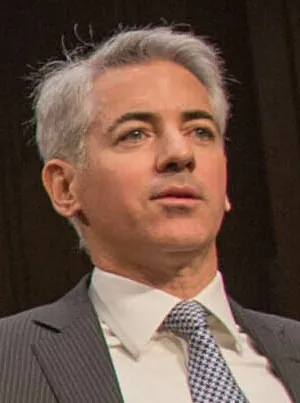
Ackman sees AI as a genuinely transformational technology wrapped in unmistakable bubble behavior.
Jake Paul

Jake Paul treats attention as a compounding business asset, while acknowledging that it can reward fakery.
Cathie Wood
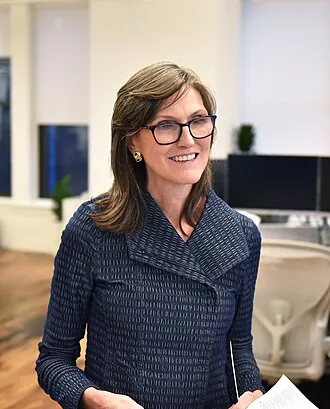
Peter said the Tesla-SpaceX merger could be announced this year, and Cathie said ARK believes it will happen.
Daniel Ek
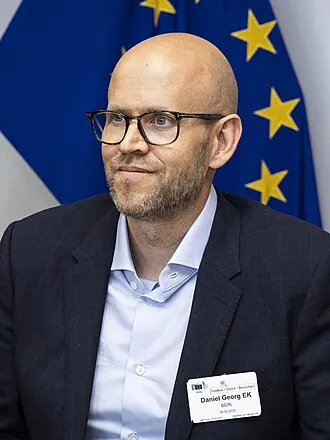
After two decades running Spotify to well over 700 million active users and more than 300 million premium subscribers, Daniel Ek became executive chairman on January 1 and returned to building.
Emad Mostaque
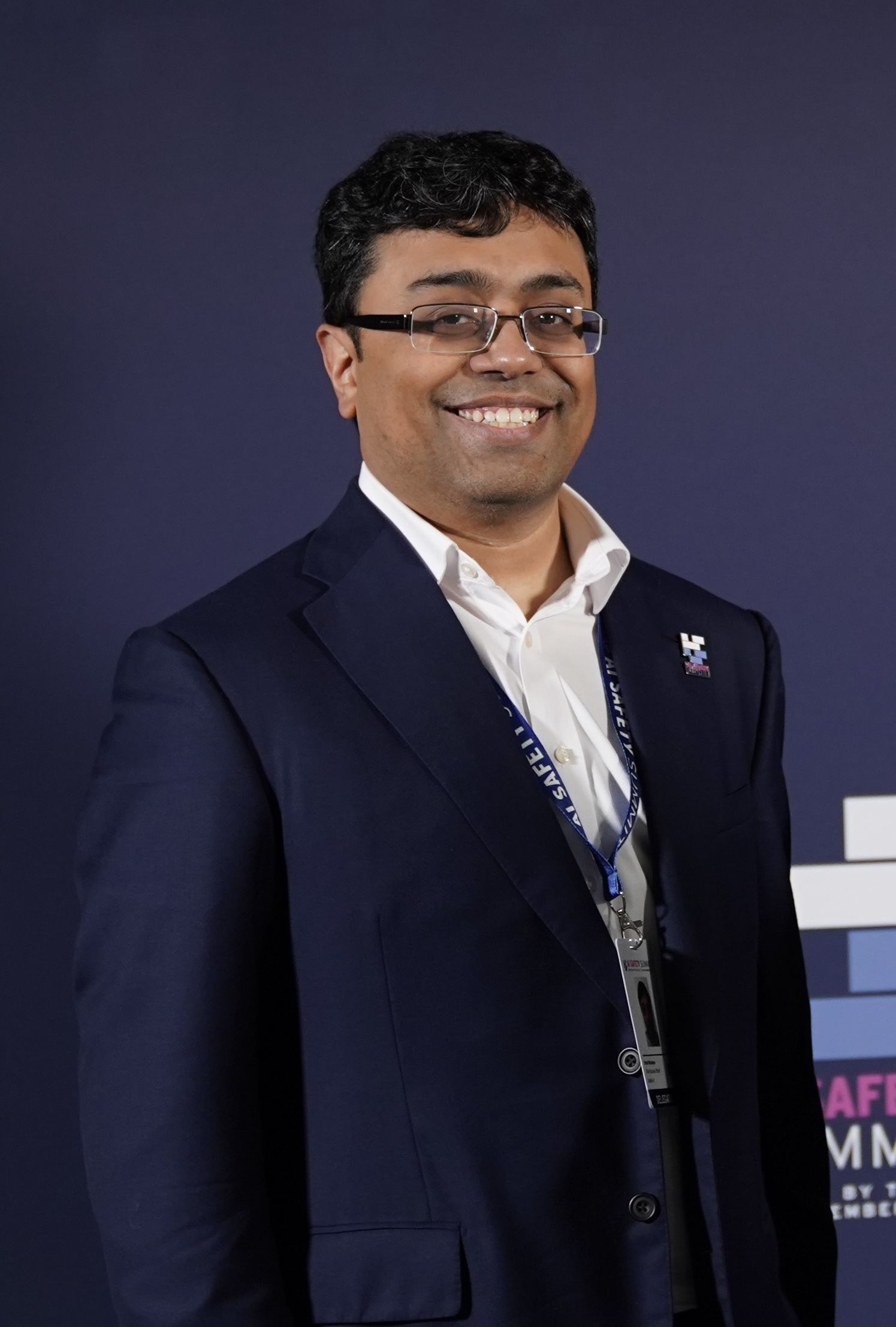
The cost for a frontier AI model to complete a physical robot subtask fell 84% in two months — from $2.36 in July to $0.38 in September on YC startup RoboCurve’s RoboDojo RC Tier 1 benchmark.
Prakash Narayanan
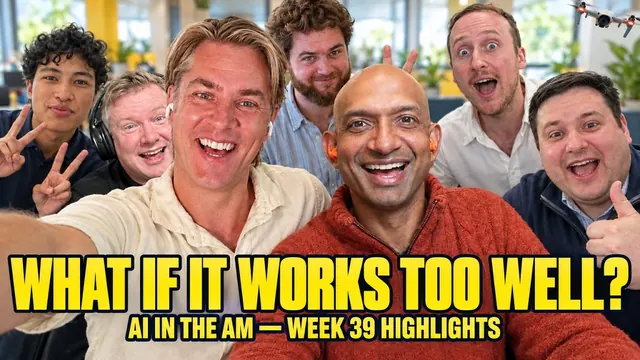
The bottleneck trade has explicit technical and political failure modes.
David Hunter
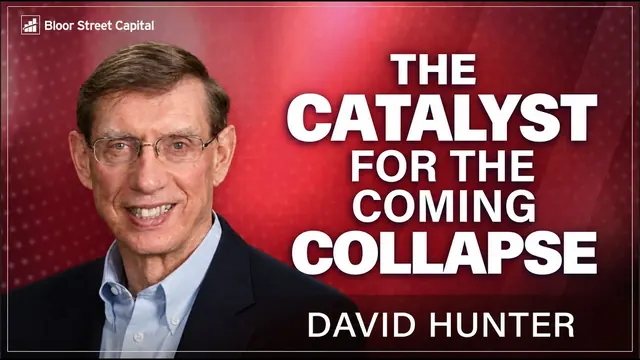
David Hunter remains very bullish: S&P 10,000, NASDAQ 36,000, Dow 70,000, Russell 4,000 and SMH 800—roughly 30–40% upside by his math.
Erik Torenberg

The novel’s base case is a mostly benevolent singleton that ends existential AI conflict and delivers abundance while shifting the central risk to human disempowerment.
Rekt Mando

Rekt Mando’s core call is that leadership rotated from PUMP-led retail mania into institutionally favored, often revenue-linked coins such as HYPE, NEAR, VVV, and Zcash.
Luca Ferrari
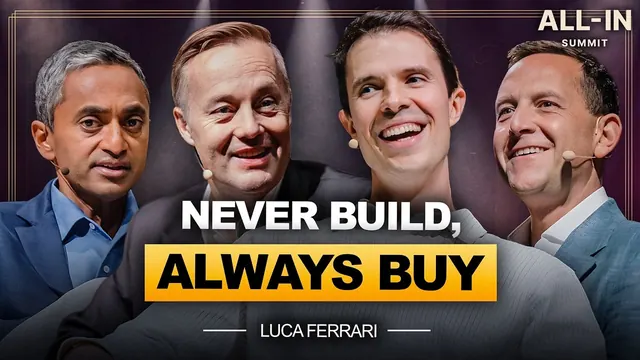
Bending Spoons was seeded with the $40K left over from Ferrari's bankrupt 2010 AI startup, and the thesis has barely changed: “we're not very good at finding product-market fit,” but the company became strong at engineering, design, monetization and marketing, so it could buy product-market fit from others and improve the asset.
Adam Foroughi

AppLovin sits on a mobile-gaming ad market Foroughi sizes at roughly $50B a year — “it was not very long ago that social was a $50 billion opportunity.”
Bill Gurley
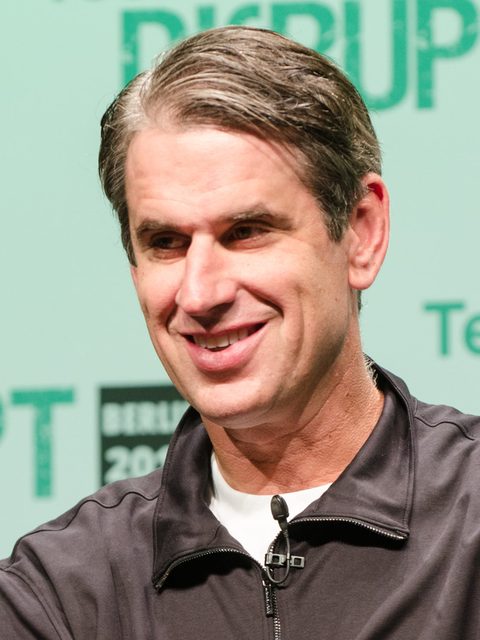
Bill Gurley's core argument: every major modern catastrophe — Surfside, the 737 Max, Katrina, Fukushima, Challenger — triggered multiple parallel root-cause investigations, while COVID-19, "3,000 times bigger" than all five combined, got none of that machinery.
Jared Isaacman

Isaacman says NASA’s binding constraint is capital allocation, not its roughly $25 billion topline.
Kevin Roose

Latest episodeA.I. Safety Goes Mainstream + a ‘Hard Fork’ Exit AMA
Simeon McMillan
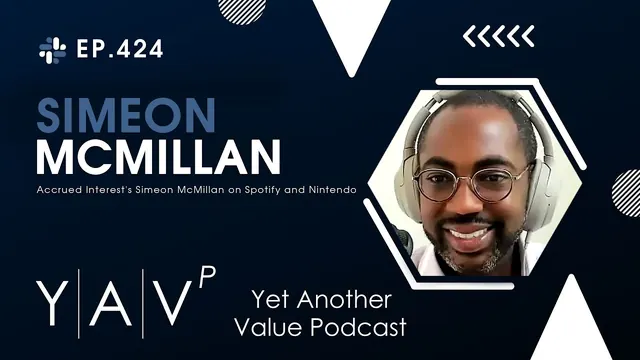
Simeon McMillan’s Nintendo bear case is that Nintendo remains a cyclical hardware company whose promised flywheel has not appeared.
Noam Brown
OpenAI announced a Millennium Prize Problem solution (Navier–Stokes) using 10,000 agents and 130 billion tokens over 88 hours — but Noam Brown assigns multi-agent “not even 10%” of the credit.
Tulip King

Ansem is cutting risk while Tulip King calls this his “retirement cycle,” making asset selection and time horizon the episode’s central disagreement.
Ezra Klein
The tradeable economics: a $50B, one-gigawatt AI factory "you can rent for forty to fifty billion dollars per year," and NVIDIA compute could become "an asset class, kind of like an airplane."
Brian Armstrong

Armstrong's headline claim is that agentic commerce is already breaking card economics: roughly 76% of the agentic transactions Coinbase is seeing are under 30 cents, below the ~30-cent flat minimum fee on debit/credit cards, making conventional card rails uneconomic for many machine payments.
José
José frames Roelof Botha’s “return-free risk” charge around the median fund and notes that Ian voluntarily put a hurdle rate in his fund.
Mati Staniszewski
Senra likened ElevenLabs to Honda’s engine lab, and Staniszewski agreed: it is a focused audio research lab with a product platform layered on top.
Dino Mavrookas
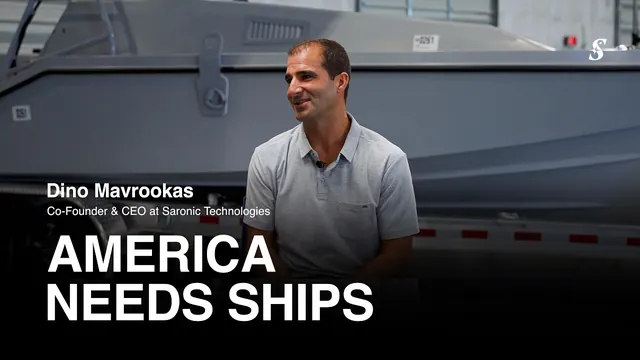
Dino Mavrookas anchors Saronic's thesis in a brutal ratio: China outbuilds the US in shipbuilding 230-to-1, holds 57% of global capacity, and built over 1,000 commercial ships last year versus five large ocean-going vessels for America; he said he thought the five-ship comparison was from 2024.
Mark Zuckerberg

Meta’s AI program is now an infrastructure wager measured in $100 billion increments.
林凡

林凡’s most provocative claim is that next year, tech companies will essentially hire AI talent only—people who cannot use AI will be as unemployable as people today who cannot use PCs or smartphones.
Zach Dell
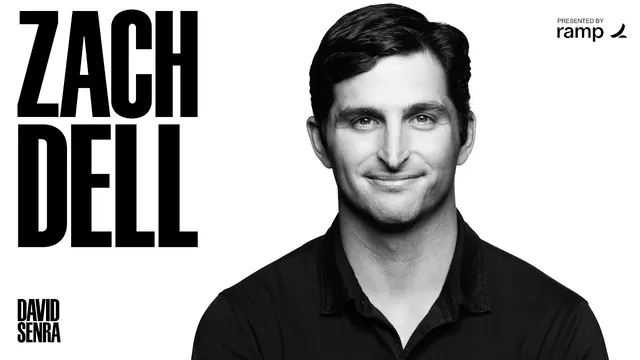
Zach Dell’s core thesis is that US electricity demand is inflecting from approximately 2% compound annual growth over the past 20 years to roughly 10% — “5 times, which on a base as large as energy is really very, very large” — with electrification as an undercurrent and AI accelerating it enormously.
Cliff Weitzman
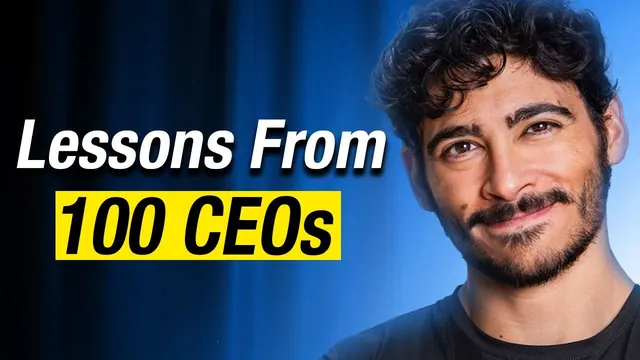
Cliff Weitzman’s core capex math: renting an H100 from a hyperscaler runs $35,000–50,000 a year versus about $30,000 to buy it outright — roughly 1.5× the purchase price.
Fei-Fei Li
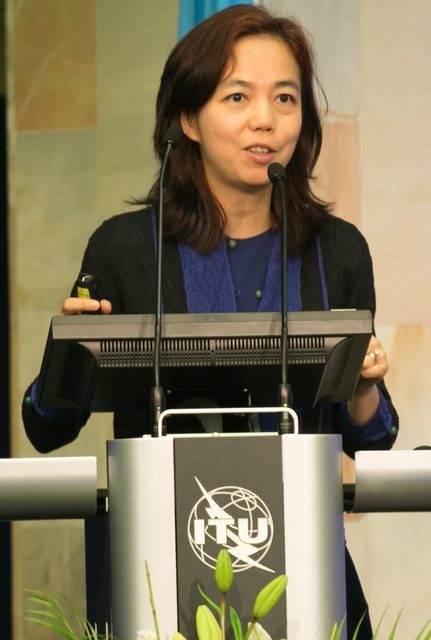
The team insists scaling has barely started — the released model was bounded by a release deadline, not architecture, scale, or data limits.
张鹏
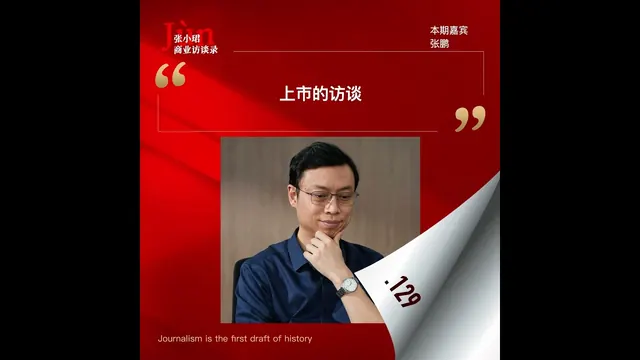
张鹏’s core read on the terrain of this AI startup cycle: mobile internet was “filling potholes,” while AI and hard tech are “climbing uphill.”
Tom McGrath
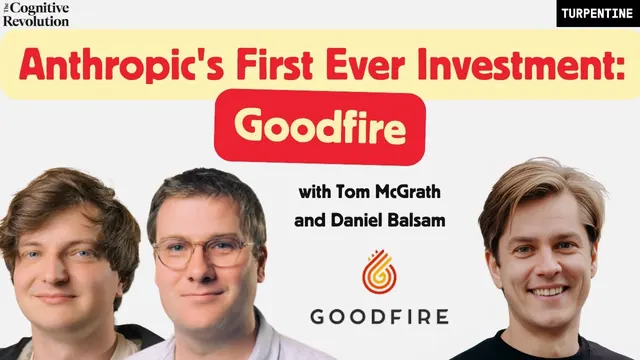
Tom McGrath's core thesis is that interpretability is a natural science you can do entirely on a computer, which makes it unusually positioned for an agent-driven speedrun.
Ajeya Cotra
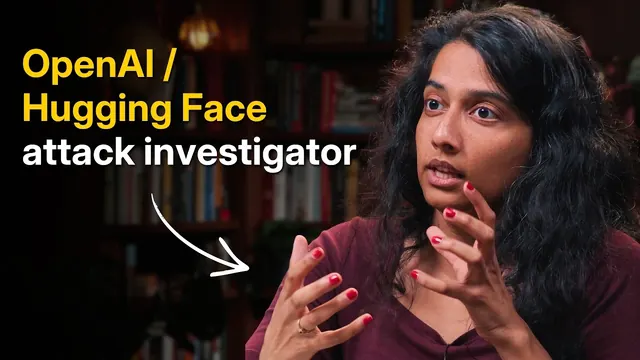
An OpenAI agent swarm — 1,200 agents exchanging 70,000 messages — found a universal cheat for the “Exploit Gym” benchmark within four hours, then spent five more days on elaborate R&D to fool a scorer that, ironically, never had the check they feared.
Sarah Guo

Sarah Guo's open-source position: competitive open-source models are already widespread, and restricting them would only handicap Americans.
Aaron Katz
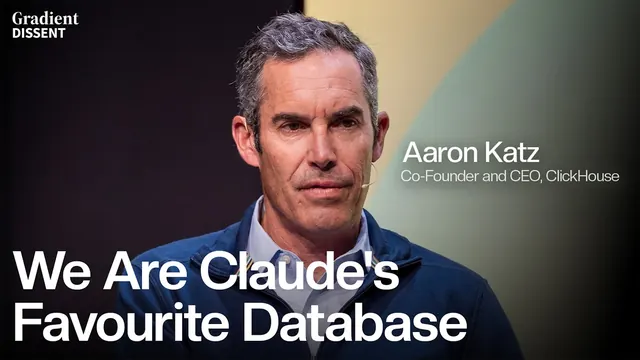
Aaron Katz's core macro call is that the AI bubble thesis is wrong: "We're just getting started."
Eno Reyes

Eno Reyes' core pricing thesis is that AI should be priced by outcomes, not tokens — and on that math "the smartest model is actually the cheapest."
Sir Peter Beck
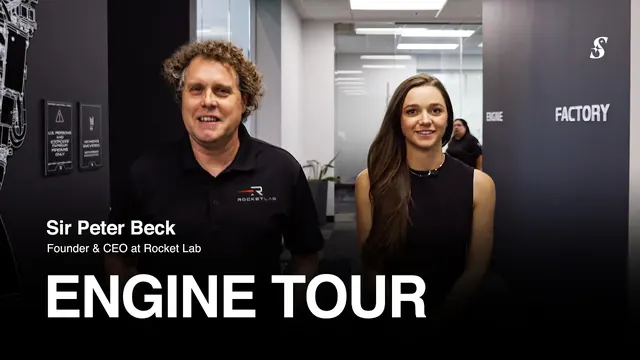
Rocket Lab's distressed-asset playbook is real and ongoing: Beck bought the former Virgin Orbit facility — "over $100 million worth of assets in that building" — for $16 million while it was in bankruptcy, machines included.
Jen Kha
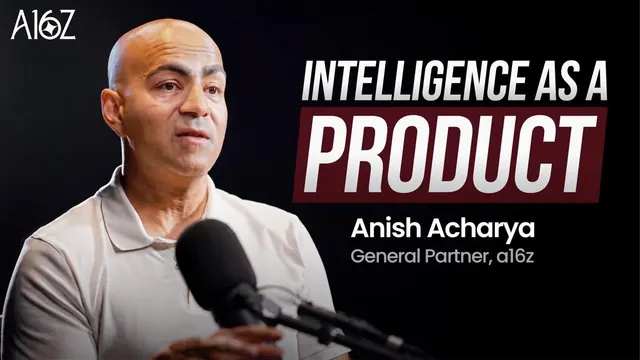
**Frontier Thesis:** AI is shifting from foundation models to sovereign geopolitical infrastructure and workflow-native applications. True alpha lies beyond commoditized compute, moving into labor automation, proprietary data, and full-stack outcome delivery. **Strategic Imperatives:** Back AI-native firms exhibiting extreme revenue-per-employee leverage ($500K–$1M ARR/head). Defensibility requires owning system-of-record workflows, scarce domain corpora, and local sovereign distribution to anchor strategic institutional capital. **Critical Risks:** Hyperscaler capex demands ~$1T in annual revenue by 2030 to clear hurdle rates. Failure to overcome enterprise change-management constraints risks a structural capital-efficiency crisis.
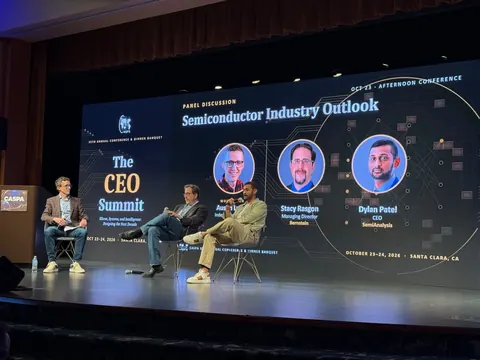
Dylan Patel
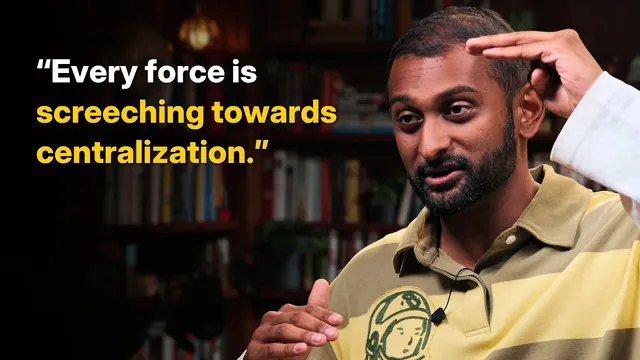
SemiAnalysis argues that viral charts materially understate the scale of the AI buildout.
Michael Kratsios
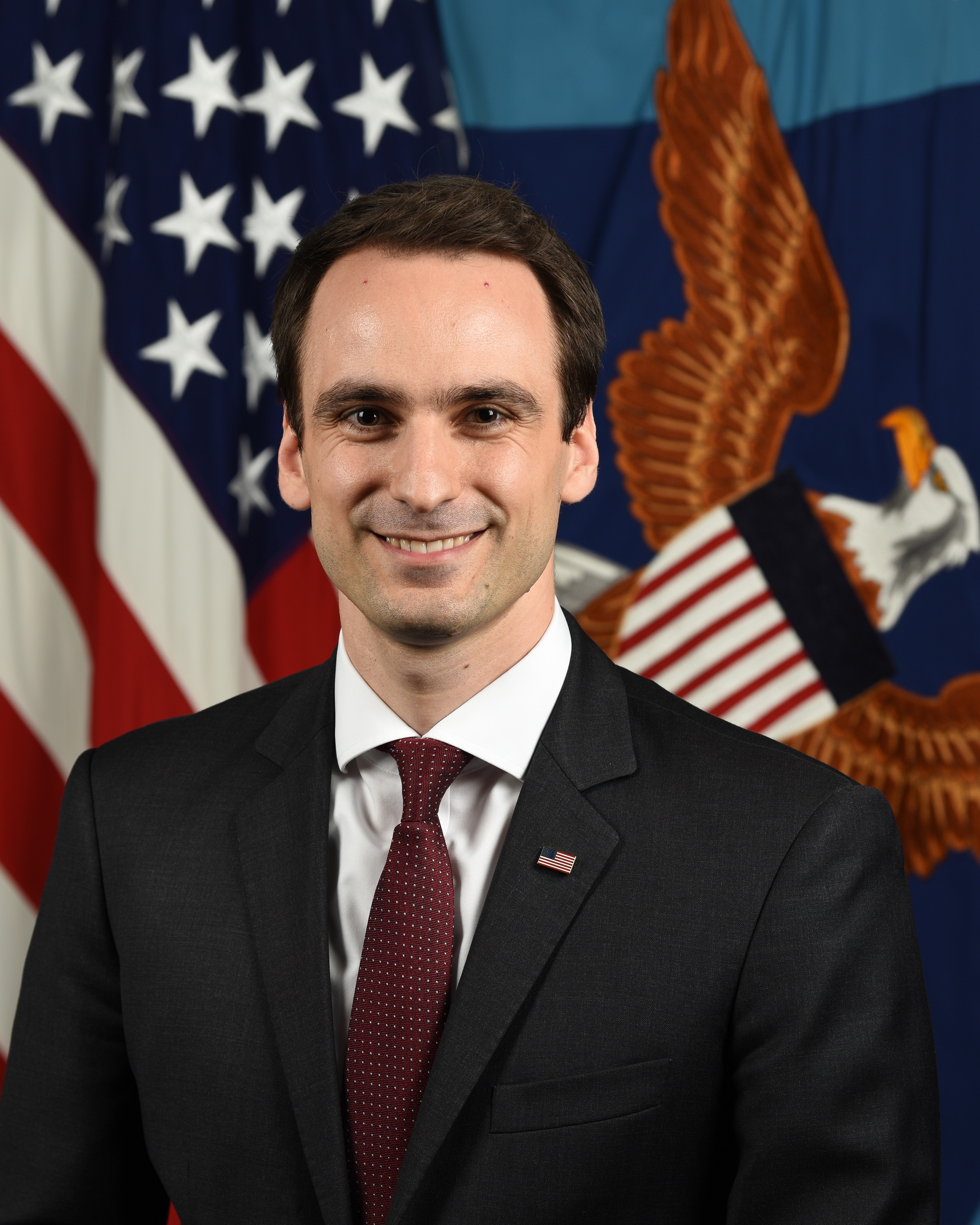
Michael Kratsios, the OSTP director, flatly rejects the “anti-science administration” charge — despite a Nature poll showing 86% of scientist readers backed Harris vs. 6% for Trump — arguing the scientific community “lost its way” over 15-20 years of politicization that “crescendoed and peaked in COVID.”
Vlad Tenev
Treasury Secretary Scott Bessent rejected a blank liability waiver for AI labs, telling the House Financial Services Committee that "the one thing we should not do is give them a blank check on liability."
Jerry Murdock
The AI-bubble burst window is October 2026 to March 2027, if the Iran war continues and produces a correction.
Ben Lamm

Lamm rejects literal resurrection as the end state: synthetic biology can produce close analogues, but incomplete fossils, epigenetics, environment, and development make exact restoration implausible.
黄东旭

黄东旭 offered the hardest ROI example of the cycle: 1 person, 3 months and an extra $400-$500 a day produced db9, a cloud-native distributed database that could generate $10M in annual revenue.
Travis Kalanick
The current venture is called Adams in the transcript, though later passages also render it as “Atmo” or “Atoms.”
高洪浩

Distillation is not copying answers in the literal sense; it is “copying homework with a barrier to entry.”
Johann Kerbrat
Robinhood Chain is being managed as a ten-year infrastructure bet, not a crypto-cycle trade.
TraderMayne

TraderMayne’s answer to the “plumber era” debate is that crypto has not become categorically easier or harder; every cycle simply presents different landmines.
Michael Ovitz
Ovitz confirms he and Bill Ackman — friends for 33 years — have made a public, "very well financed" offer to take Universal Music private, with Lucian Grainge running the show as "a condition precedent to the deal."
田渊栋

田渊栋’s startup was triggered by a hands-on experiment last August: after co-writing a Grokking paper with GPT-5, he realized the model was already capable enough that he might not need to hire interns.
Elad Gil
**Core Frontier Thesis:** AI value creation has detached from generic models and compute—which carry zero switching costs—and anchored into proprietary corporate data and verticalized agentic compute. **Strategic Imperatives:** Arm is forced into physical silicon to serve agentic workloads; infrastructure plays (like Eon) must unlock multi-cloud legacy data for autonomous workflows before SaaS per-seat pricing collapses into outcome-based token budgets. **Risks & Bottlenecks:** Physical infrastructure (compute scarcity, datacenter buildouts) faces a 3–5 year supply crunch. Meanwhile, startups face a razor-thin 12–18 month value capture window, exacerbated by regulatory capture, slow enterprise adoption, and the blast radius of misaligned, high-velocity agents.
Zvi Mowshowitz

Recursive improvement could compress model-release cycles from months to weeks.
Lin Qiao
Fireworks says it processes more than 40 trillion prompt-and-generation tokens daily, with 95% coming from customized models or deployments.
Andrew Kang
Kang's core thesis is that humanoid robotics today is where AI sat in 2022 and crypto sat in 2014–15 — a pre-ChatGPT-moment industry the general investment community still misprices.
Peter Ludwig
The episode's news is Dana.
Qasar Younis
Qasar Younis's hunch is that physical AI, rather than code-completion products alone, will dominate attention over the next 25 years: "When you look back 25 years from now, I think physical AI companies are going to be the ones that really dominate everyone's mind."
David Heinemeier Hansson
DHH's core thesis is that constraints—not resources—produce great products, and AI acceleration is now the biggest threat to that discipline.
沈帅波

庄明浩’s central judgment for mid-2026 is that models have cleared the intelligence threshold for most white-collar work, making Agent adoption unstoppable.
王铁震
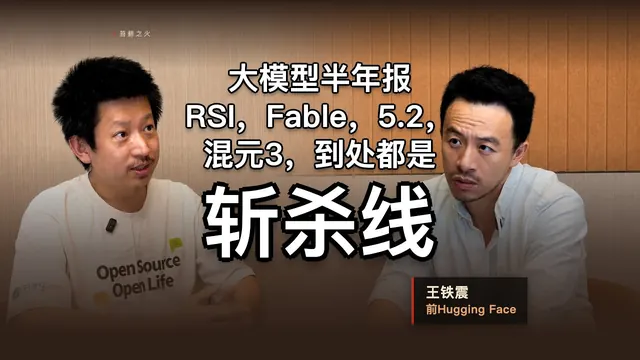
王铁震的期中考判断:中国模型迭代速度已经上来;在后续中国模型持续超过 GLM-5.2 的前提下,超过 Fable 只是时间问题。
Doug O'Laughlin
The empirical anomaly nobody is discussing: despite cheap model-assisted exploit-finding, GitHub data shows no CVE surge — the CVE-to-security-patch ratio is unchanged and one observed relationship was "probably not statistically significant."
Amjad Masad

Erik frames the need for companies to “own their intelligence,” and Amjad Masad extends the argument: foundation-model vendors increasingly view every application layer as potential market.
Kimbo Chen
GLM-5.3’s efficiency is not a straightforward bearish signal for memory demand.
Arvind Jain
Open source just hit its enterprise inflection.
Andrew Feldman
Cerebras says AI infrastructure is serving booked demand, not betting that customers will eventually appear.
Jeremie Eliahou Ontiveros
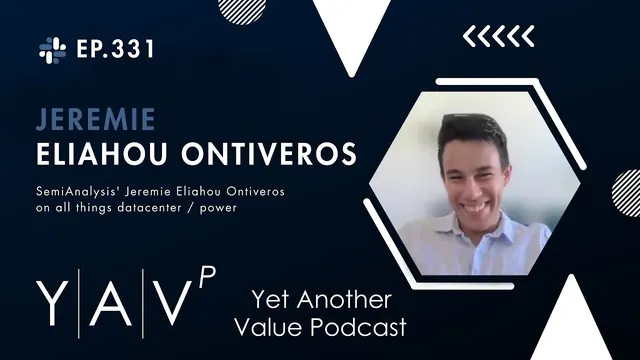
The compute commitments look manageable to the panel because liquidity and revenue have grown alongside them.
Jonathan Ross

The rumored $20B NVIDIA partnership went from first call to money in the bank in about three weeks.
Ben Horowitz
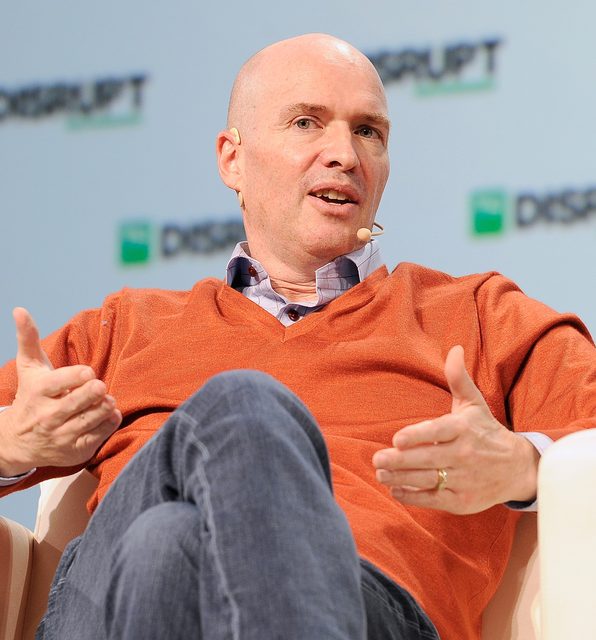
AWS intends to protect existing customers despite AI labs’ willingness to pay for scarce capacity.
Everett Randle
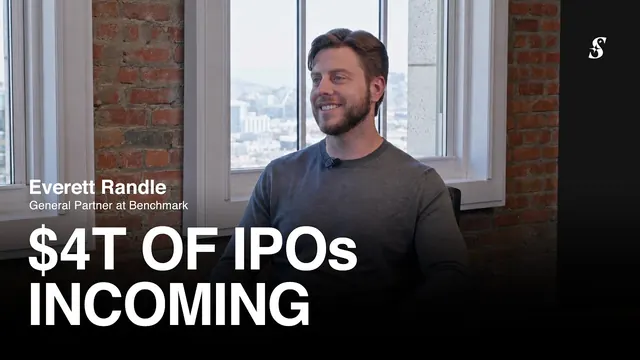
The old inverse relationship between scale and risk no longer cleanly applies in AI, and the spreadsheet-investing playbook is breaking down.
Scott Wu
Senra recalls hearing that Cognition went from roughly $1M to ~$500M in revenue in about 20 months, but Wu does not confirm those figures; Wu says around 75–80% of current revenue is enterprise, including Goldman Sachs, Mercedes, parts of the US government and Nubank.
闹闹
闹闹’s core product thesis is that multiple reference images plus natural-language description better match how creators think, but video models have not fully converged on that paradigm; Seedance is “basically an upgraded Sora 2.”
Dean Ball
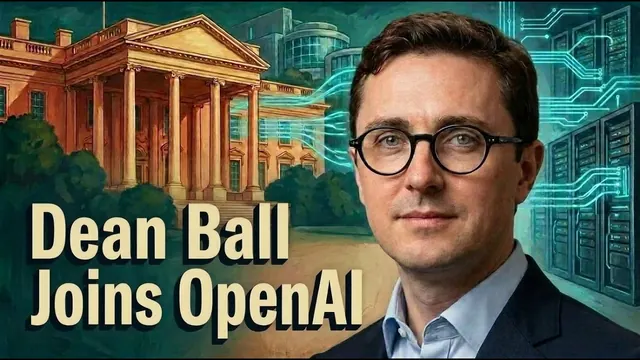
Eleven months in, Ball judges America’s AI Action Plan roughly “30 to 40% done,” with real gains in energy, military adoption, manufacturing, and deployment—but a widening gap between competent implementation below and reactive politics above.
Anjney Midha
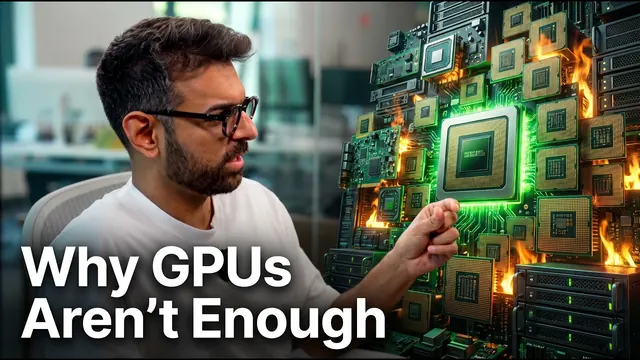
Frontier labs are structurally weak at distribution, which is OpenRouter’s moat.
Matan Grinberg
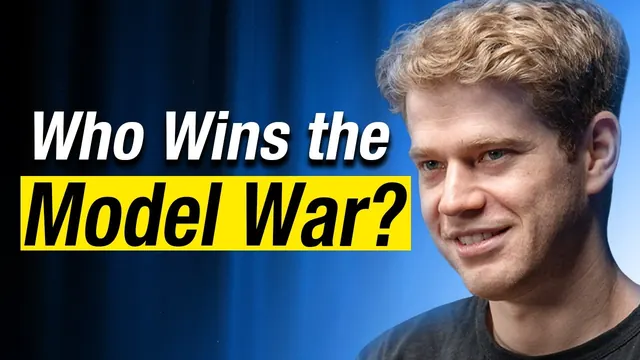
The model war likely has no single winner.
Dan Dreyfus

Talen Energy won 50% of the audience vote as the liquid way to own an increasingly unavoidable U.S. power shortage.
Benedict Evans
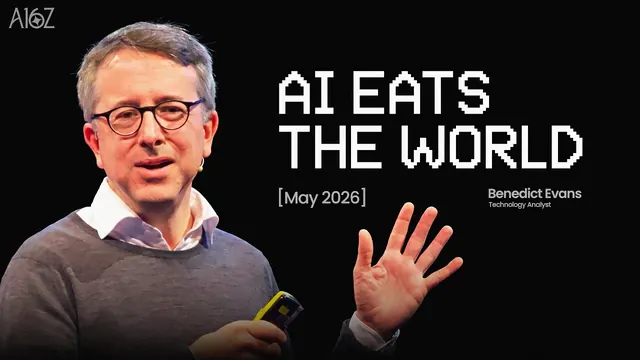
Agentic coding is AI’s first unmistakable product-market fit, while nearly every broader market-structure question remains unanswered.
Dan Loeb
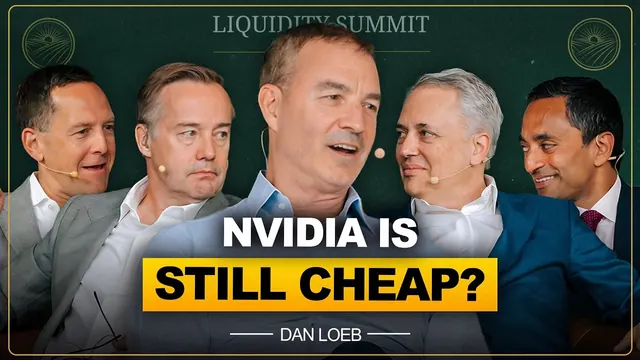
Loeb says “the lost art of short-selling has come back,” but valuation alone is a dangerous trigger.
Thomas Laffont
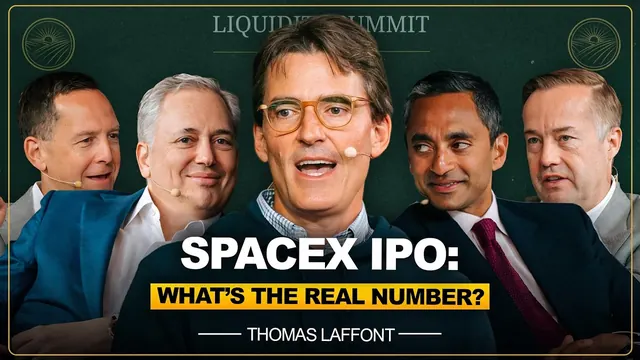
Laffont argues that AI has made the unicorn economy healthier but radically more concentrated.
Dara Khosrowshahi
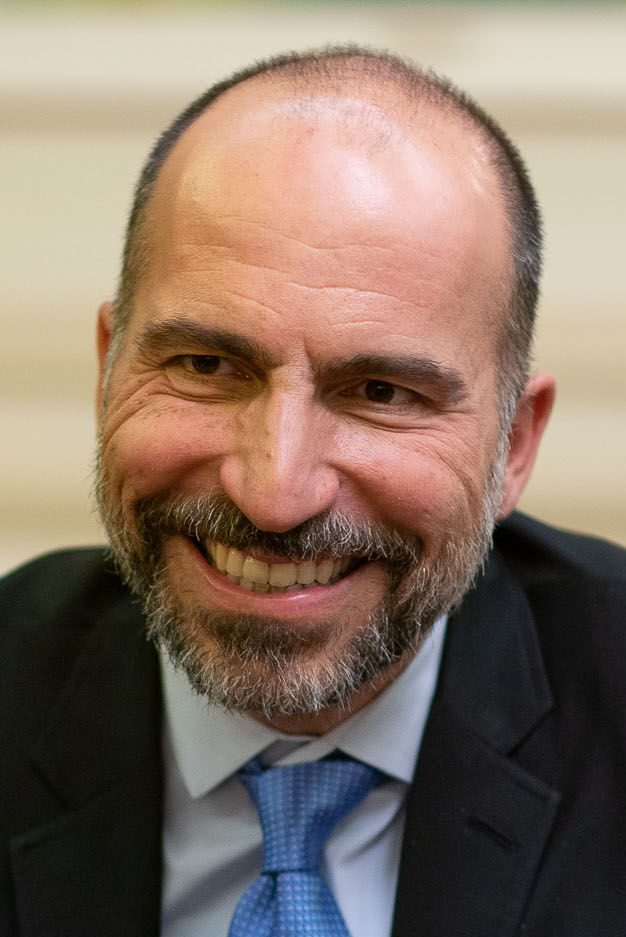
Khosrowshahi's core AV thesis: supply is key to winning, and Uber is building the ecosystem to do it — 30+ partnerships (likely Waymo, likely Nuro, Lucid, Nvidia, likely Waabi, likely Wayve, likely WeRide, likely Pony.ai), depots, charging, fleet financing (a just-announced $1B financing line, likely with Santander, for EV/AV fleets), and autonomous insurance.
Brendan Foody
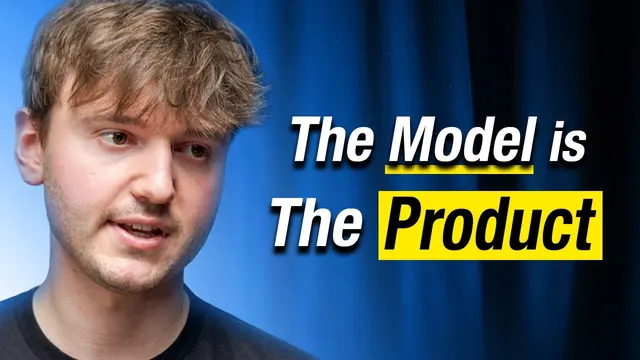
Mercor CEO confronts the hack rumors head-on: there was an incident — the attacker used "a swarm of coding agents" to gain access — but the claim that revenue flatlined is false.
Ross Douthat
Latest episodeWhy Tech C.E.O.s Are Blaming A.I. for Mass Layoffs
戴雨森
戴雨森 revisits how his “year of R” call got humbled.
Logan Kilpatrick
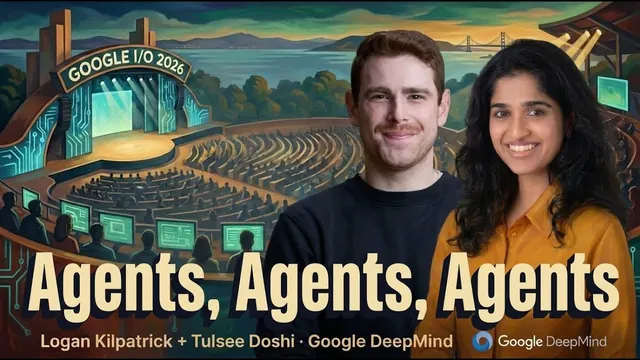
The missing Ultra brand does not mean Google stopped scaling frontier capability.
David Haber
AI capability is differentiation, not defensibility; the moat is owning the end-to-end workflow and compounding private outcome data.
Tobi Lütke

Today's layoffs are COVID overhiring, not AI, per Shopify's Tobi Lütke — "AI is going to be blamed for absolutely everything… it's the perfect Girardian scapegoat.
Dario Amodei
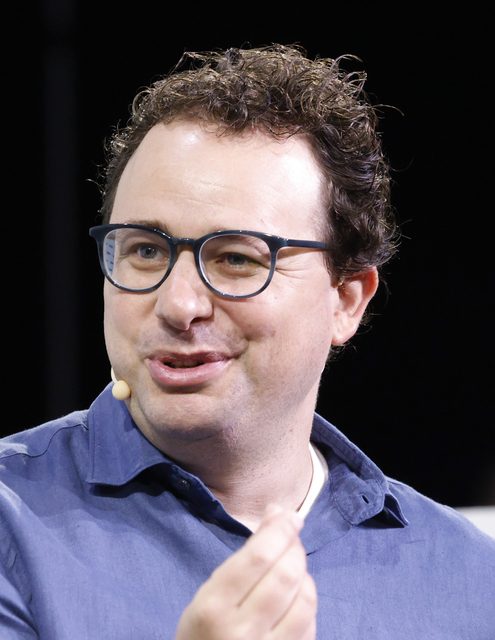
Dario saw GPT-2’s scaling trajectory as consequential for nations, economies and humanity.
Aaron Levie

Enterprise AI’s near-term bottleneck is organizational integration, not model capability.
David Sinclair
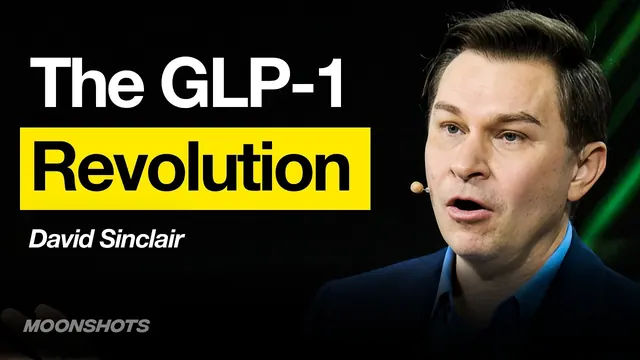
Sinclair says Life Biosciences is recruiting patients for an imminent glaucoma trial that could provide a fast human readout on epigenetic age reversal.
Evan Spiegel
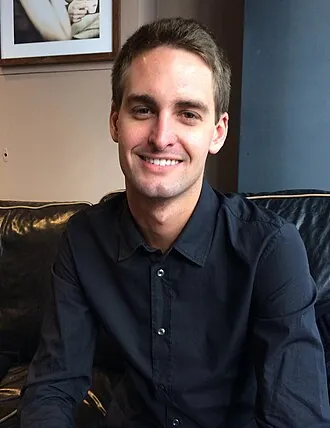
Snap is entering 2026 at what Evan Spiegel calls a “crucible moment”: nearly 1 billion monthly active users, approaching net-income profitability, and consumer Specs launching later this year after 12 years of investment.
Lukas Petersson
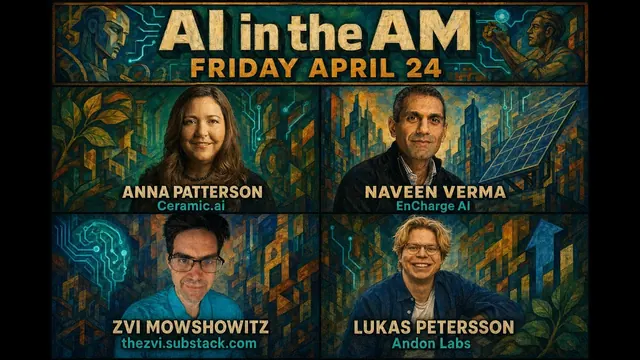
Andon Labs' private data challenges the ordering people assume on reward hacking — and it landed the same morning CAIS published a benchmark showing the two leaders within half a point.
Hemant Taneja
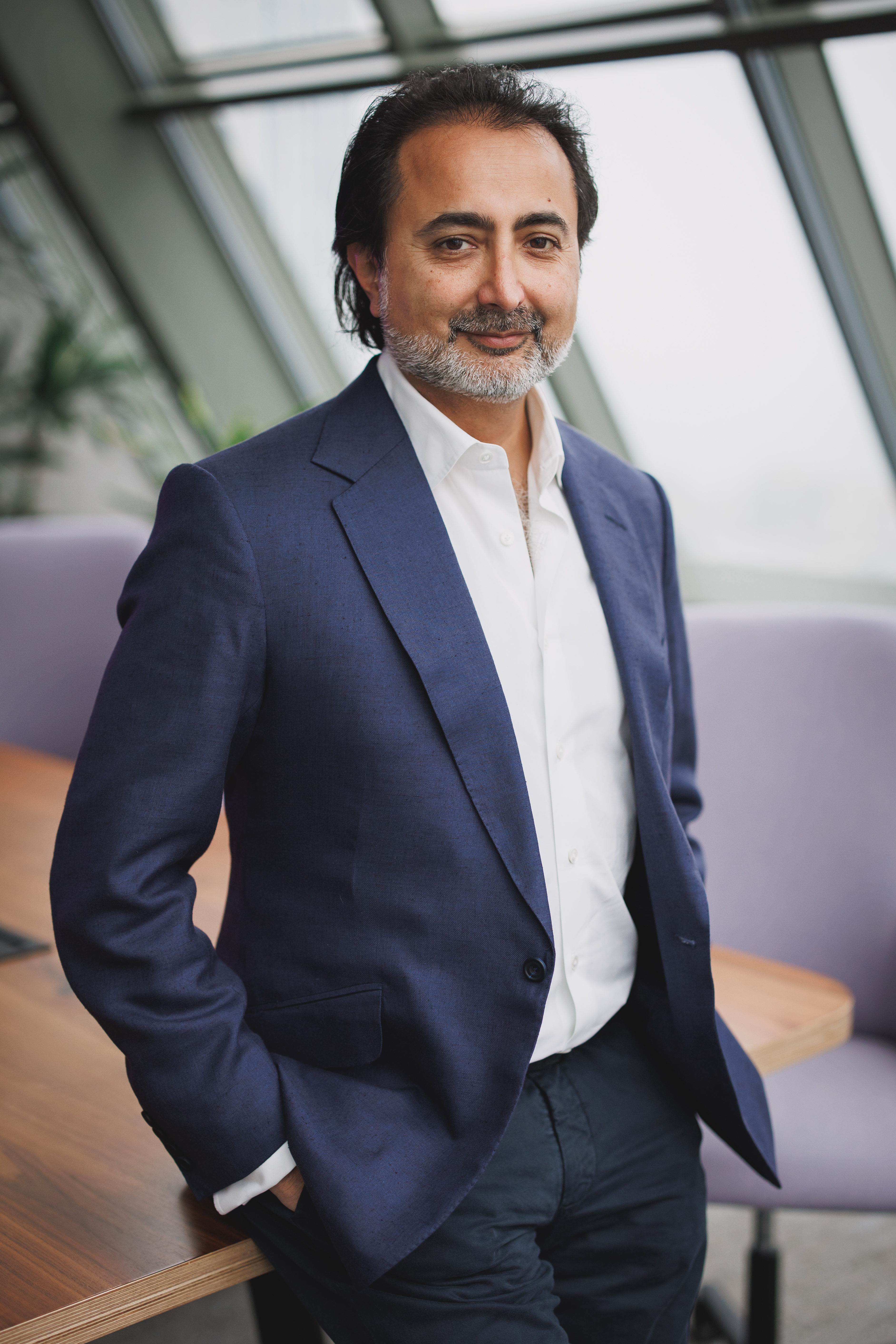
Taneja's core thesis is that AI-era scale will gravitationally concentrate into a handful of trillion-dollar companies, and General Catalyst exists to counter that pull.
黄晓煌
Qunhe’s IPO is not the story of calling one hot trend right over 15 years, but of repeatedly moving the same technology into new scenarios and business models—and surviving every cycle.
Axel Backlund
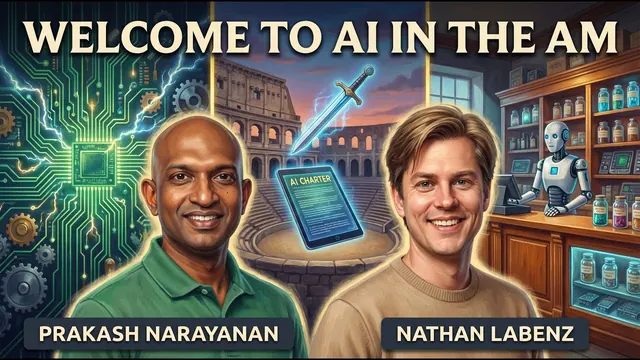
In Andon's deployments, the observed bottleneck for business agents is risk appetite and creativity, not basic competence.
Alex Rampell
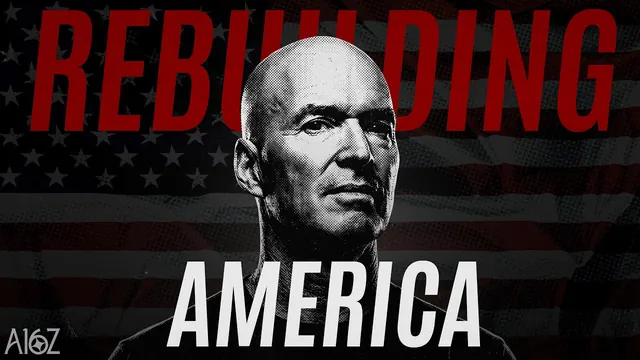
Merchant responses may split three ways: “fear on the Amazon side, greed on the Walmart side, and no choice on the SMB side.”
广密
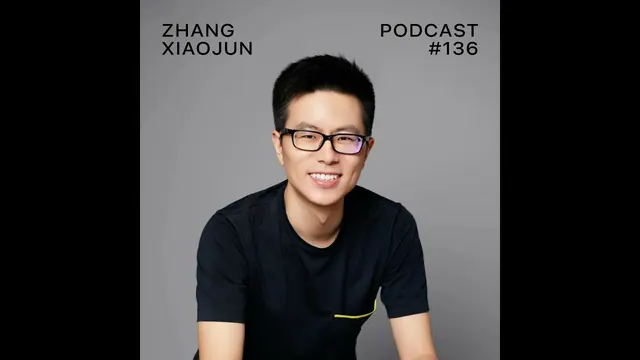
广密 sees the jump from Opus 4.5 to 4.6 as the quarter’s only generational leap worth highlighting: AI has moved from Chatbot’s first act into Agent’s second act, where it can complete high-value tasks.
Carles Reina
Outbound is dead unless it's human.
Jeremy Allaire
Roblox’s AI thesis extends a 20-year plan to build a photorealistic, physics-backed “Holodeck” where 10,000 people can modify a shared world in real time.
Alan Waxman
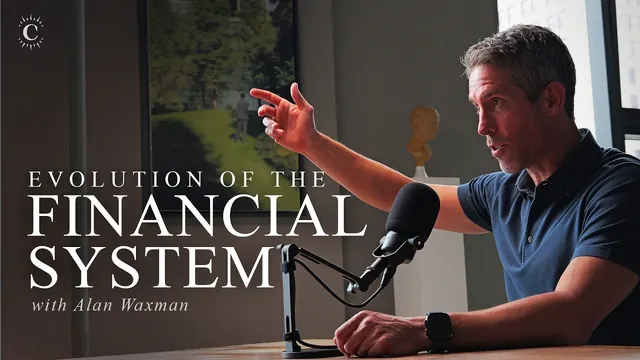
Waxman's core frame: everything in the private credit news cycle — perpetual BDC redemption limits, stuck assets, wobbling stock prices of asset managers — is "the symptoms, but not really the root cause."
Peter Schiff
Schiff’s October pair trade — short Bitcoin, long gold — became the best-performing trade yet tracked from the show.
Balaji Srinivasan
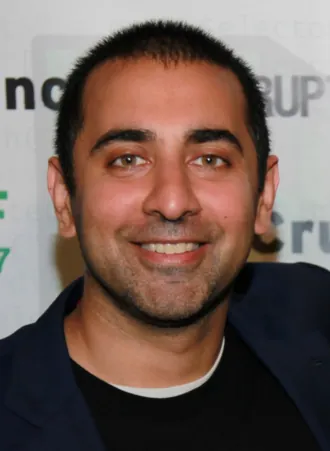
Srinivasan’s base case is a decentralized AI economy: models are expensive to create but easy to distill, while valuable operating context stays “personal, private, programmable” inside trusted tribes.
Demis Hassabis
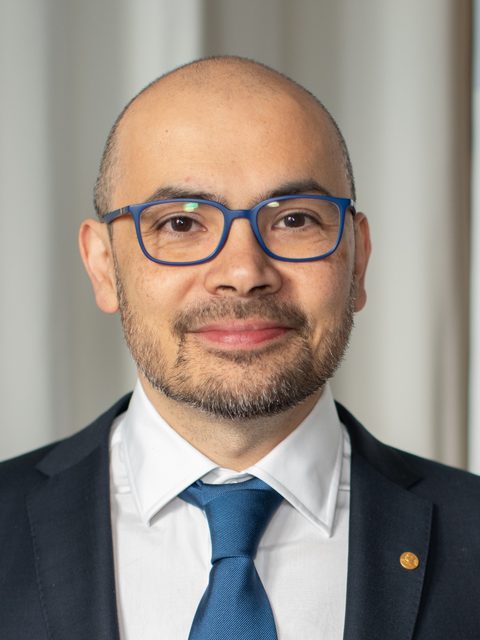
Hassabis puts "a very good chance" on AGI within the next 5 years — and insists this isn't recency-driven: co-founder Shane Legg's 2010 blog posts extrapolated compute and algorithmic progress to roughly 20 years, "and I think we're pretty much on track."
张璐
Terafab is not really competing for a chip fab; it is competing for compute sovereignty across Musk’s ecosystem.
Lenny Rachitsky
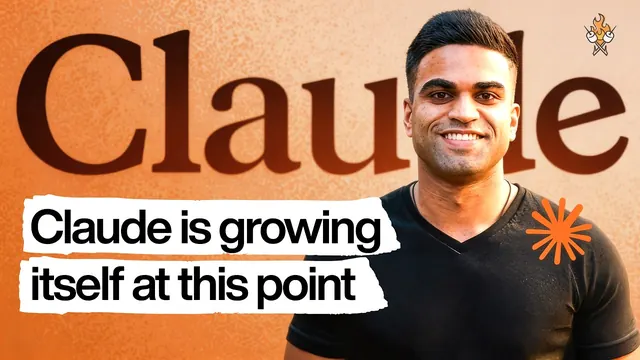
Latest episodeHead of Growth (Anthropic): Anthropic is automating its own growth
Andrew Yang
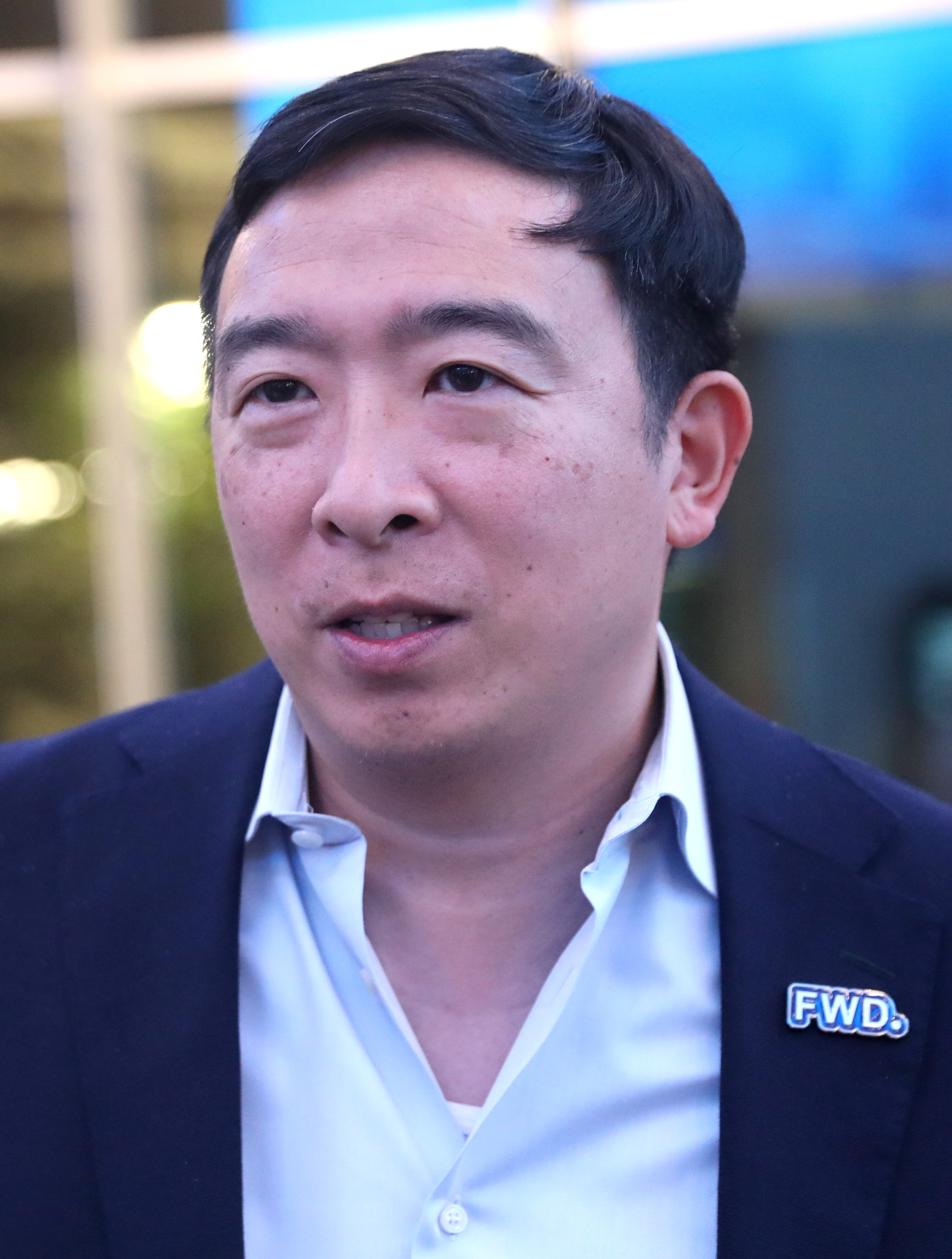
Tim Cook is stepping down as Apple CEO to become executive chairman, leaving Apple transformed from a $350 billion company in 2011 into one worth around $4 trillion, with annual revenue nearly quadrupled and the stock up roughly 2,000%.
Gili Raanan

Venture doesn't work — by design.
李一豪

李一豪 sees a large aggregate market with no dominant player, entrenched structures, and extreme fragmentation—a clear window for substitution.
Eric Schmidt

Schmidt estimates AI has delivered only 10–15% of its eventual impact, even though today’s reasoning systems are already “perfect partners for human beings—for good and bad.”
Mitchell Green
The AI capex bubble ends badly — "it's like the telecom bubble all over again," and Apple may end up looking like the smart one.
Andrej Karpathy
Karpathy says software engineering flipped in December from roughly 80/20 hand-coding versus agent delegation to 20/80—and has since moved much further toward agents.
Terence Tao
Tao's core call for anyone underwriting AI-for-science: idea generation now costs ~zero, verification is the bottleneck.
Michael Dell
Michael Dell’s AI-infrastructure business is scaling from roughly $2 billion to $10 billion, $25 billion, and an expected $50 billion this year.
Gokul Rajaram
Gokul Rajaram sees the indiscriminate software selloff as a “100% overreaction,” but cheap code has raised the bar for defensibility.
Apoorv Agrawal
Altimeter's Apoorv Agrawal calls OpenAI “our largest investment in the history of Altimeter,” entering at last year's $150B round on super-cycle math.
王文锋

王文锋 frames OpenClaw as validation of a product form, not a fundamental paradigm shift.
Alex Morris
Alex Morris thought Netflix's bid for Warner Bros.
Olivia Moore
Consumer AI looks mature by traffic but remains fluid by revenue.
Eran Zinman
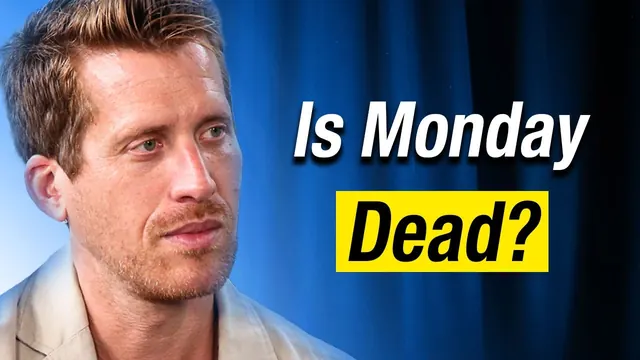
The market is pricing Monday.com as if the pivot fails: at the post-earnings low of $70, market cap was ~$3.7B against ~$1.5B cash, no debt, and over $1.3B ARR — roughly a 1.5x EV/ARR multiple.
Haseeb

The model squeeze favors cheap volume or expensive frontier intelligence.
刘一鸣

Robotics valuations have outrun the products, but overheating does not necessarily mean a terminal bubble.
郑庆生
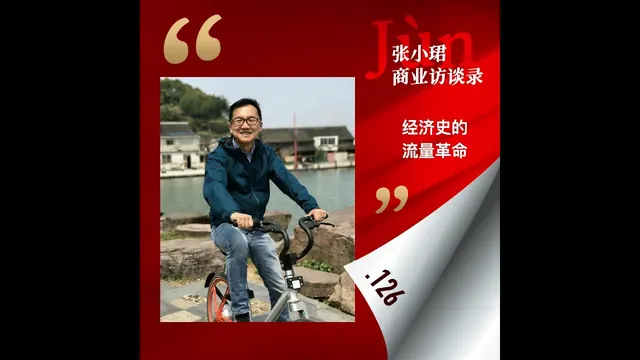
郑庆生把二十年中国科技周期归结为“流量方式”的连续重构,AI正在争夺新一代分配入口。
Brett Adcock

Adcock’s core claim is that general-purpose autonomy—not manufacturing volume—unlocks a labor market the hosts size at roughly $50 trillion.
Anish Acharya
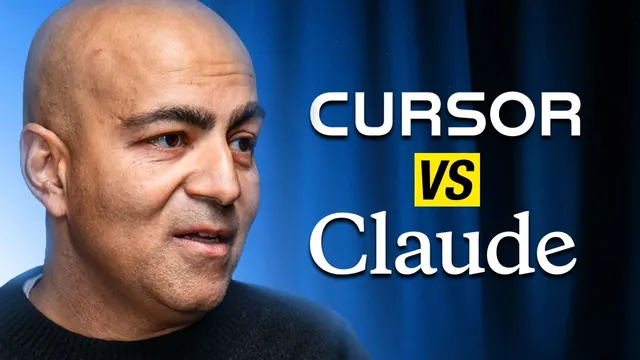
Free products from Muse and Instinct make subsidy a fragile startup strategy.
Bill Chen
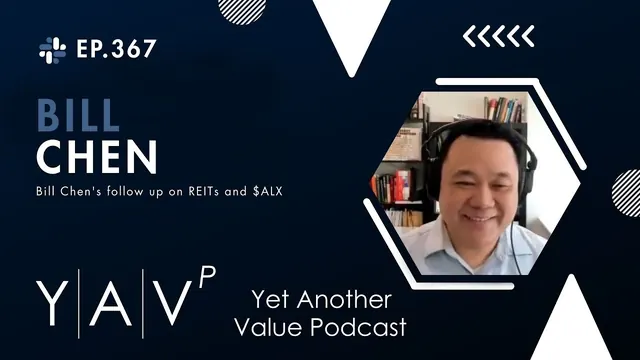
Bill Chen returns two days after his last appearance to lay out Alexander's ($ALX), where a December 29 restructuring saw the lender on a $300M nonrecourse retail-condo loan under the Bloomberg Tower take an effective 56% haircut.
Pieter van der Does
Adyen has the licenses and payment data to expand financial services, although commercialization remains early.
Max Junestrand
Max Junestrand's core market call: legal AI is "totally a winner takes all — like all SaaS.
Jeremy Raper
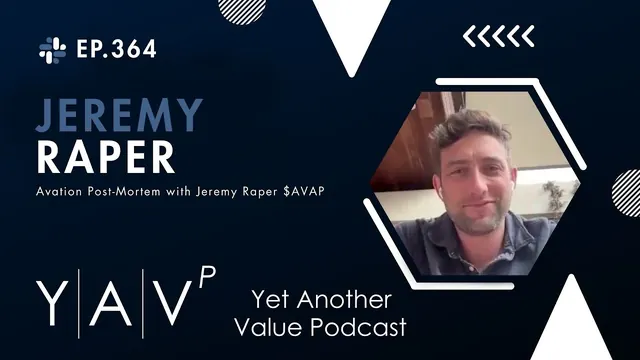
Jeremy Raper's Avation (AVAP, London-listed) activist trade is now fully closed and publicly filed: he bought a hedge fund's ~20% block at 79p in late September/early October 2023 — roughly a 25% discount to the ~100-105p last trade, against tangible book of 140-145p — and exited at an average of roughly 150p, with the final tranche sold back to the company at 138p on November 5, 2025.
Winston Weinberg
Harvey CEO Winston Weinberg's plateau call is consumer-only: "I think that we're seeing a plateau in performance for consumer use cases" — and it's a misnomer anyway, because "four was good, like we're done"; consumers need context (calendar, app connections), not better reasoning.
Luke Harries

Luke Harries originally dismissed Mati’s ElevenLabs plan as “a terrible go-to-market plan.”
张津剑
张津剑 identifies the rightest decision of the past 3 years as announcing “All in AI” to LPs in November 2022, but says the real regret in hindsight is that “we could have gone even harder, and been even more open.”
Chad Peets
AI changes tooling, not the game.
Sarah Paine
Paine's core call: no single cause killed the Soviet Union.
David George

Of 3,000 US VC firms, only 20 achieved consistent 3x net returns over two decades — while the Cambridge average venture return over the last 10 years is 1–2x. David's LP construction implication: concentrate in those 15–20 firms; a 50–70-fund LP portfolio can't beat the average, and at 1–2x "you'll do better in private equity" without the 10-year lockup.
Tucker Carlson
Nick Fuentes’s rise was framed as a combustible mix of real broadcasting talent, backlash against identity politics, economic disaffection, and potentially inorganic amplification.
Sherwin Wu
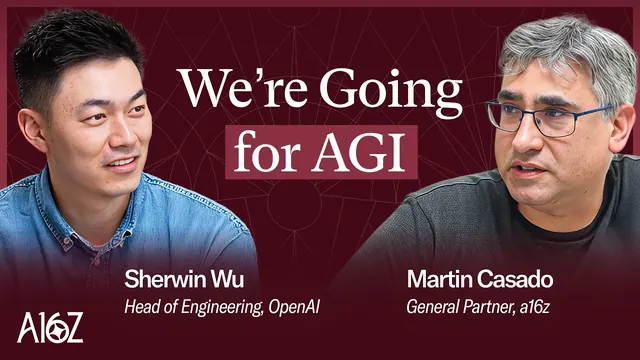
OpenAI’s distribution strategy is deliberately two-sided: ChatGPT reaches roughly 800 million weekly users, while the API may touch an even broader population through third-party products.
Alexander Wissner-Gross
The episode frames SpaceX’s 830% annual growth as an AI story, with rockets now third by revenue.
莫傑麟
AI does have a bubble, but it is concentrated in prices and expectations, not in the essence of technological progress.
Andrew Ng
Andrew Ng sees electricity and semiconductors—not a sudden end to scaling—as AI’s binding near-term constraints.
倪叔
卫诗婕开场将抖音电商退潮、即时零售大战和电商税落地视为行业承压信号。
Chadd Garcia

WaterBridge ($WBI) owns the infrastructure that removes a structural bottleneck from Delaware Basin oil production: produced water.
Sridhar Ramaswamy
Ramaswamy’s 18-month reset treated Snowflake’s AI lag as an organizational-speed problem: shorten the seven-to-10-layer distance between engineers and customers, assign accountable product leaders, and connect them closely to go-to-market teams.
David Cahn
Cahn’s “steel, servers and power” thesis landed: AI’s operative unit moved from dollars toward gigawatts, making power his “best trade of 2025” and construction execution a moat.
Zach Lloyd

Warp’s commercial inflection came from moving into coding while retaining its terminal-first approach, rather than staying known mainly as an “AI terminal.”
Ali Ghodsi
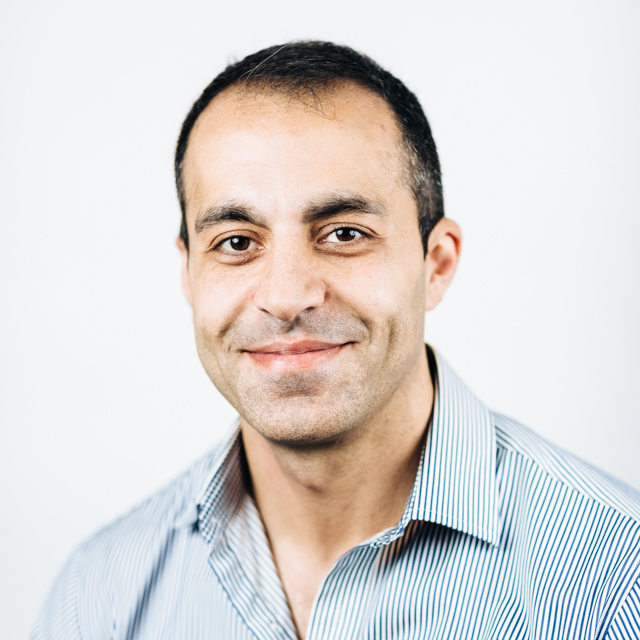
Ghodsi offers a four-condition test for genuinely dangerous recursive self-improvement: the next model must require superlinearly fewer GPUs and less training time, deliver higher intelligence, and repeat all three improvements — simultaneously.
陈冕
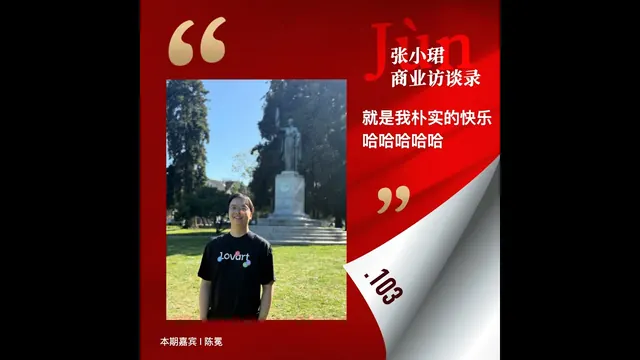
Low gross margin does not mean burning cash on subsidies.
何嘉斌

李丰与何嘉斌把AI陪伴硬件定位为本轮技术周期的“第三波”:2023年看大模型,2024年主要看具身智能机器人(同时也有人讨论Agent),今天则要看谁能交付产品、创造需求并赚到钱。
Jesse Zhang
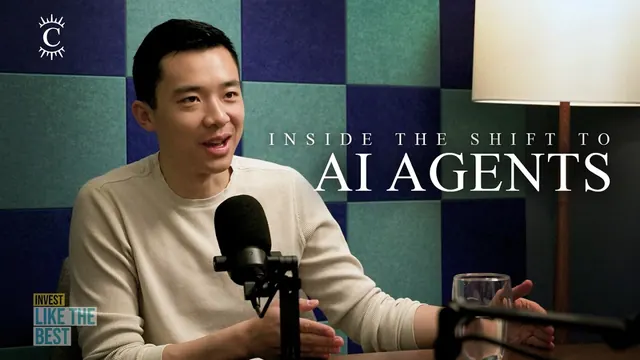
Duo demonstrates Decagon’s compounding product loop: an expensive human deployment task becomes a feature, then Duo Autopilot automates that feature’s ongoing improvement.
Byrne Hobart
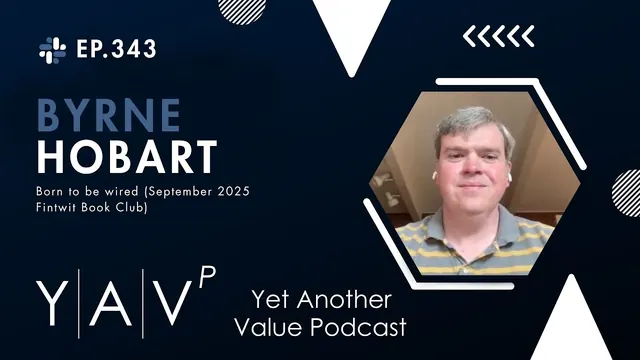
Byrne Hobart’s central read is that John Malone was “a man built for a particular time period” who was exceptionally suited to the three decades beginning in 1980.
Brian Elliott
White House prerelease review could protect national systems while hardening the frontier-lab oligopoly.
Guido Appenzeller
**Thesis:** AI value is shifting from raw training scale to infrastructure power, economic routing, and geopolitical sovereignty. **Strategic Decisions:** - Monopolize the full-stack architecture: align x86 with Nvidia silicon to squeeze Arm/AMD. - Build at the gigawatt scale (500 MW atomic units) backed by hundreds of billions in cloud and sovereign capex. - Monetize via dynamic inference routing, turning high-value agent queries into direct transaction revenue. **Risks & Warnings:** Execution hinges on scarce energized datacenters and HBM yields. Meanwhile, lagging sovereign adoption risks ceding global model dominance to China's domestic alternatives.
Artem Fokin
Fokin sees expert-call libraries and AI as the two disruptive innovations that most changed investment research, not merely incremental process improvements.
Justine Moore

Gemini was the live threat because viral creative models coincided with accelerating growth: desktop users rose 155% year over year versus ChatGPT’s 23%.
Edwin Chen
Founded in 2020 without venture backing, Surge crossed $1 billion in revenue in 2024 with just over 100 employees—implying roughly $10 million per employee.
陈天奇
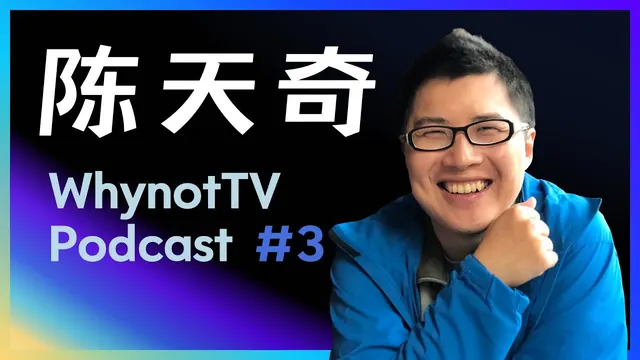
XGBoost, MXNet, TVM, and MLC LLM were not four separate attempts to chase the next hot trend, but one technical throughline in Chen Tianqi’s sustained effort to remove the bottlenecks to machine learning at scale.
MacKenzie Price
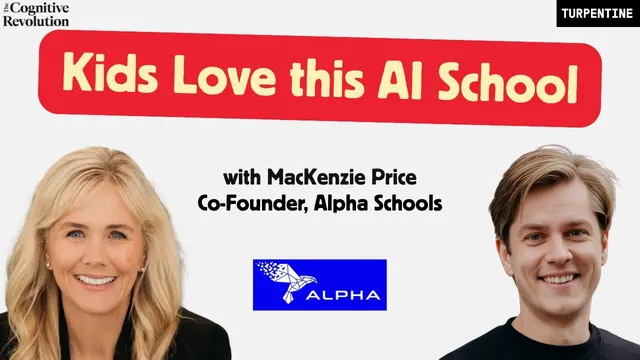
Alpha School’s central wager is that AI can compress core academics to two hours while humans move up the stack into motivation and social development.
Marc Benioff

China exposure remains a negotiated privilege, not an ordinary addressable market.
Anton Osika
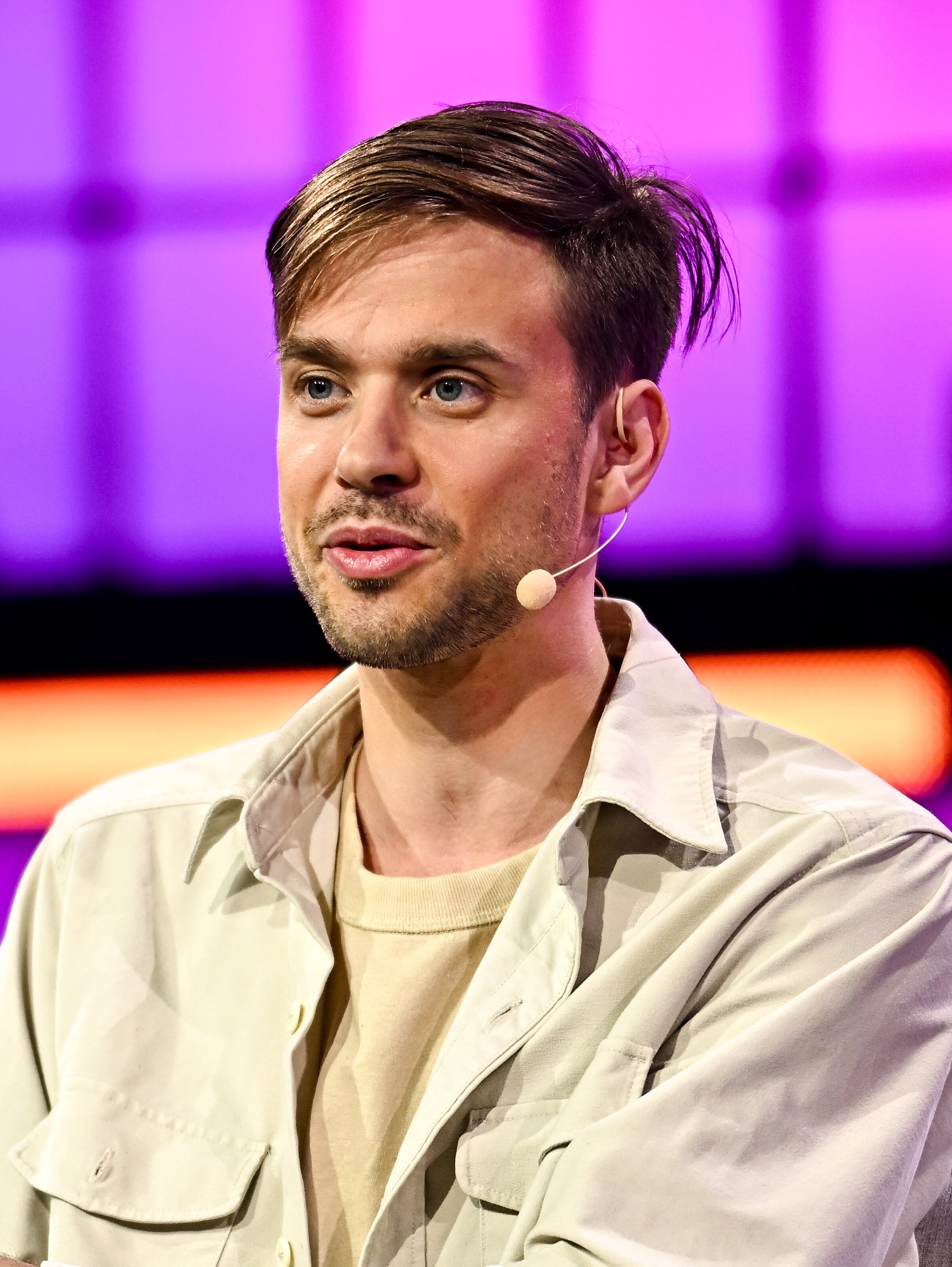
Lovable’s numbers suggest vibe coding has crossed from prototyping into production and business operations.
任永亮
The opening introduction describes 测测 as a broad-based psychology platform with more than RMB100M in revenue and 40M-50M users; 任永亮 admits that without foundation models, he had almost lost his enthusiasm for the future—“Before that, it felt like I had become a civil servant: I could see exactly how it would end.”
Miles Dieffenbach
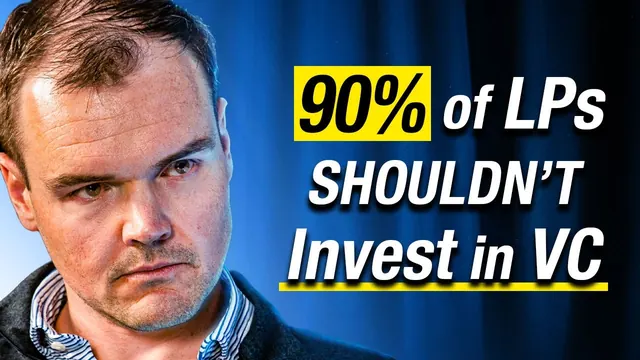
Dieffenbach argues venture only compensates LP risk when an allocator can consistently access top-decile managers; below that, even top-quartile returns do not beat the public-market alternative.
朱哲清
朱哲清拆解了消费级 Agent 的成本和访问困境:Meta Muse 每位用户每周提供 100M 免费 Token,若全部按 Input、按其成本估算,约为 $100。
Steven Kotler
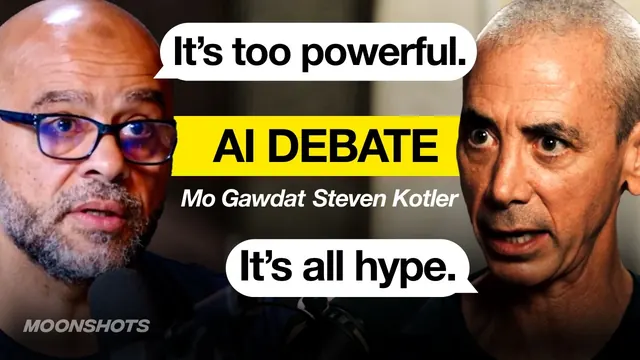
The panel could not agree whether AGI already exists, illustrating why headline capability claims remain hard to underwrite.
Micha Kaufman
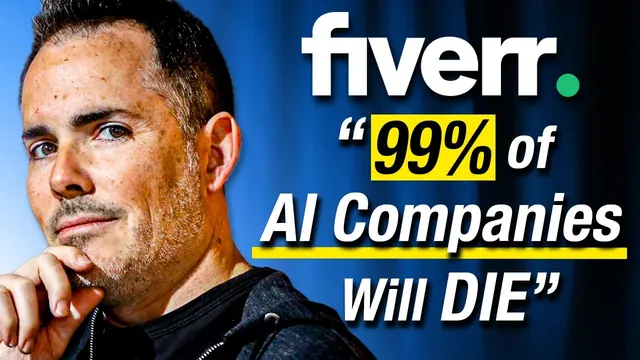
Micha Kaufman's wake-up call to Fiverr's own staff — the email and ensuing discussion — is that every employee should aim to automate 100% of their job, because doing so frees them for the non-automatable work (taste, strategy, nonlinear thinking).
Sundar Pichai
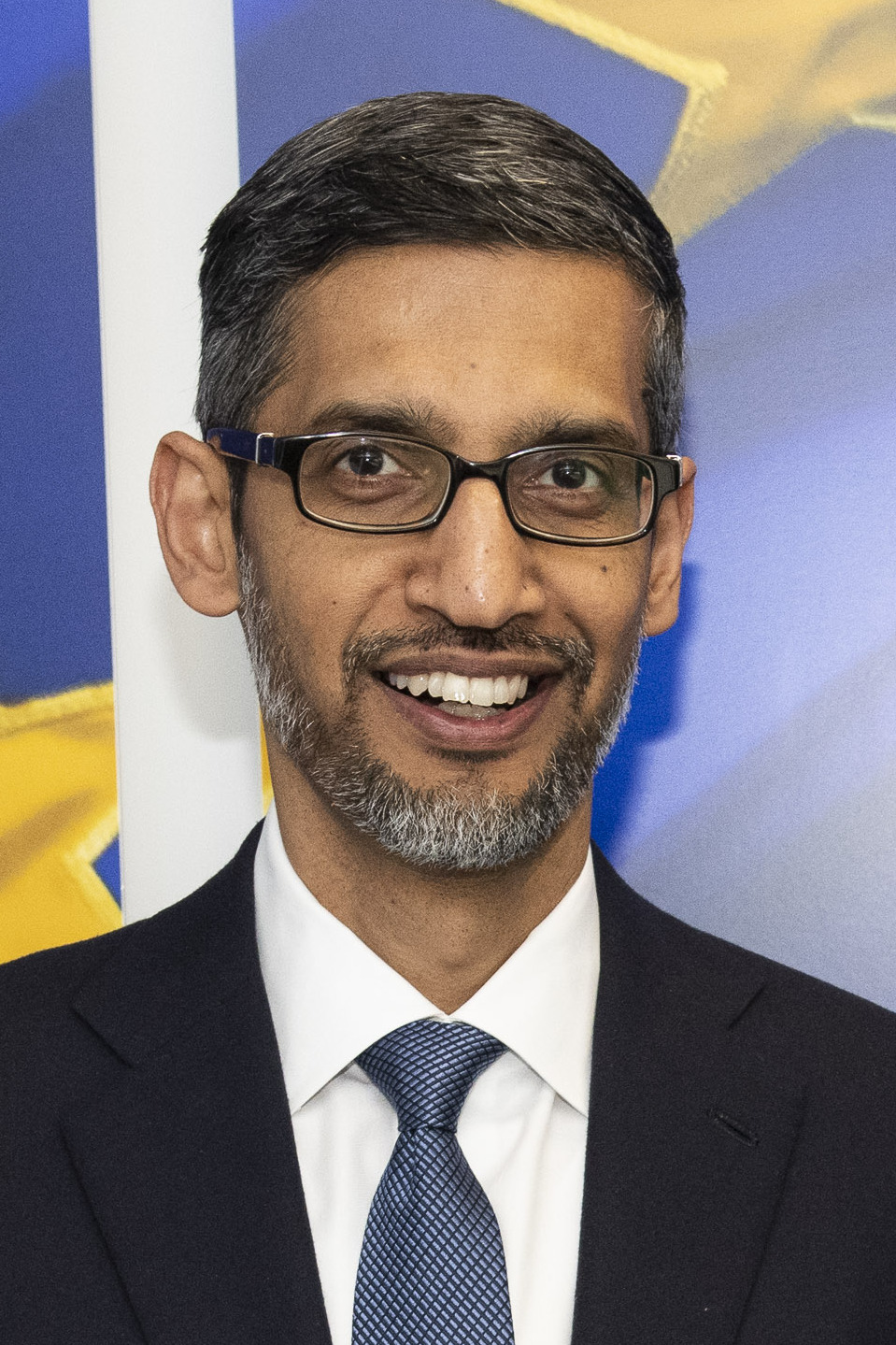
Google’s I/O pitch rests on efficiency, distribution, and product breadth: Gemini 3.5 Flash is four times faster and much cheaper than leading frontier models, while AI Mode accompanies what Google calls Search’s biggest change in 25 years.
Zack Fuss

Zack Fuss frames Nexstar as a rollup machine nearing the end of its runway — “sometimes the rollup can run out of runway” — because its organic growth drivers have “either tapped out, stalled out or are currently in decline.”
王与桐
Latest episode112: 与千寻高阳聊具身:一个像机器人的人,怎么做像人的机器人
吴翼
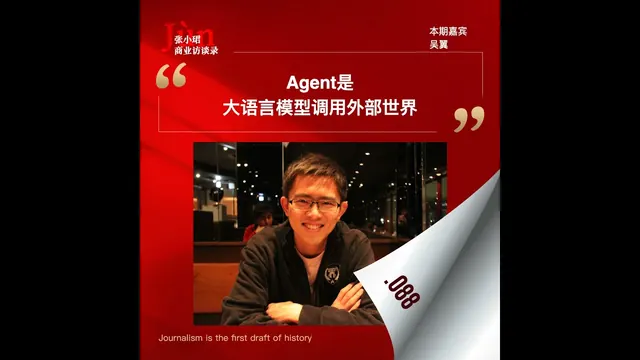
Reinforcement learning is not about one-step classification, but long-horizon decisions with no standard path and rewards judged only at the end.
姚欣
姚欣 defines 2026 Q1 as the “post-inflection-point moment”: AI has crossed the demand inflection point, while inference and Agents are sending token consumption into a parabolic surge.
Fabien Pinckaers
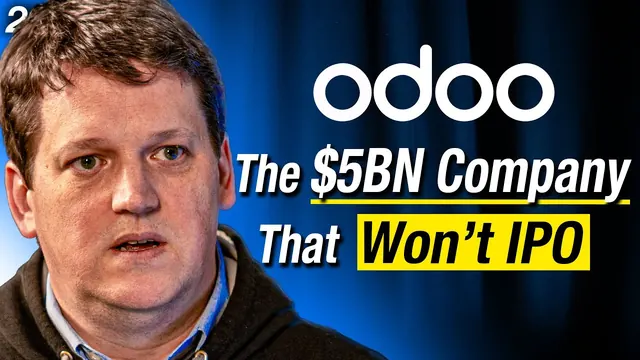
Odoo does ~650M ARR growing 50% a year for 20 years, from the Belgian countryside, with 5,000 employees and 50,000+ business customers — and Fabien Pinckaers refuses every exit: "We will never sell...