Will AI Replace Traditional Universities?
Examining AI disruption to conventional higher education and emerging skill-focused alternative colleges.
3 sourcesVoices in this topic
All paragraphs
Oct 27, 2026
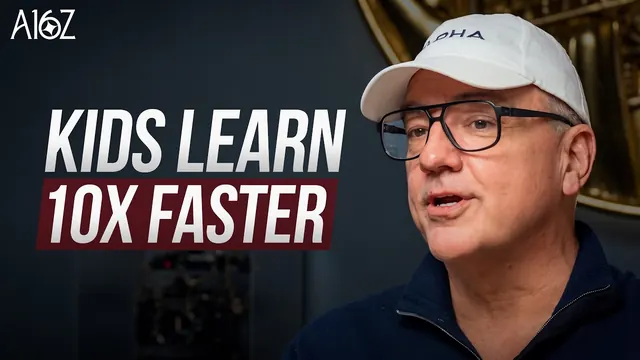
- Joe Liemandt Liemandt says Alpha delivers twice the learning in two academic hours a day. His broader claim is that learning science and LLMs enable instruction “ten times faster,” freeing afternoons for life skills. Alpha has …
- The university opportunity is to organize learning around consequential work. Among more than 70 interns from MIT, Stanford and UT, Liemandt says only one expected university to prepare them for the world after …
- Education adoption depends on local proof and committed founding families. Alpha’s New York campus opened with roughly 10–12 students after information sessions struggled to convert interest; Liemandt says it is now …
- Founders School puts a financial guarantee behind entrepreneurship education. Liemandt promises students will build a business earning $1 million in profit during high school or receive all tuition back. The …
Oct 26, 2026

Oct 25, 2026
Sep 28, 2026

Sep 27, 2026

Sep 23, 2026

- Amjad Masad Amjad Masad's core thesis is that the social function of young people is heresy — “the utility of young people is to question deeply held beliefs” — and today's college does the opposite: “it kind of beats any outside thought out of them.” The old bargain is dead: “You can do really well in college and you can still be unemployed with a huge debt,” and the civilizational cost …
- Gagan Biyani Gagan Biyani's Academy is positioned as the missing middle between a rigid four-year degree and a $50K teen startup check: two years of exploration with “no grades, no tests,” where Silicon Valley brings resources to students rather than forcing side quests underground. He wants the investor track “way underutilized” for teenagers — grants yes, ten-year commitments at 18 no — and argues a lower-stakes …
Sep 22, 2026
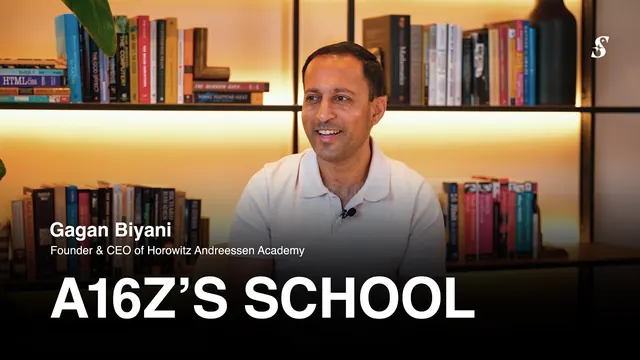
- Gagan Biyani Gagan Biyani is launching Andreessen Horowitz Academy — an unaccredited, residential, post-high-school program in the heart of San Francisco, backed by $40M raised deliberately for "a few years" of runway rather than 18 months. His reasoning: "there's a big difference between starting a school and starting an AI app" — students need to know the institution won't run …
- The business model is unapologetically for-profit with three revenue streams: tuition, corporate partnerships, and equity connected to businesses students join or start. The founding class fellowship (September 2027, one year, 50 students, applications open now) is tuition-free apart from room and board; the …
- Biyani says founding partners include Anthropic, Coinbase, Meta, and Replit, and calls NVIDIA a core partner; Molly also names Anduril, OpenAI, Palantir, Stripe and others. The wider partner network supplies compute credits, curriculum input, and hiring connections. Biyani's structural argument for why this …
- Pedagogy is built around the "rise of the super IC": students learn to "orchestrate 30 agents at a time… agents that are orchestrating agents," with 75–80% of time on self-chosen projects and classes that are "didactic only." Admissions run on proof of work, not grades — the internal filter phrase is "you did what?", exemplified by a 16-year-old in Tennessee …
- On reports of students booing AI at commencements and a friend's report from Columbia, Biyani is unbothered: "we want the AI boomers," and self-selection is the feature — most students should not fit a 50-person class. He says AI is here and coming more strongly, and the academy will embrace it by giving students resources to build with AI, subject to …
- The talent-pipeline thesis is concrete and trackable: Alpha School students are now starting at Berkeley and Stanford, and Biyani expects the transition from a high-agency environment to college to be difficult — "I am going to be tracking this like a hawk." The addressable market is the builder-misfit archetype nationwide, screened through portfolios, interviews, and planned IQ, personality, and …

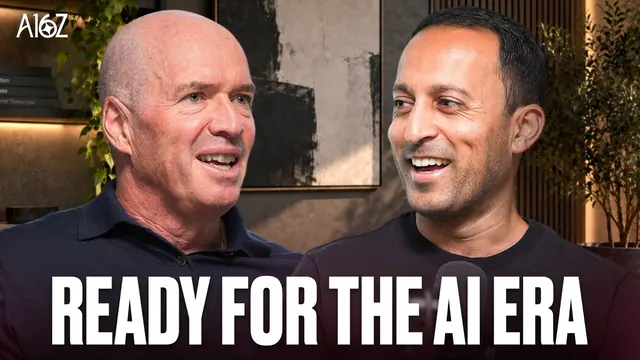
- The a16z Show The academy is a bet that the AI era is making the default link between college and work preparation obsolete. Ben Horowitz argues that college remains a strong fit for aspiring scientists or professors, but is a costly, time-intensive proposition for …
- A credible alternative must recreate college’s whole value proposition, not merely deliver vocational training. Horowitz argues that many earlier efforts focused too narrowly on training or a hybrid, while Biyani says other initiatives have lacked the …
- Ben Horowitz AI could give young people an unusual capability advantage over people with decades of experience. Horowitz calls this an Edison-or-Ford moment in which an 18-year-old might understand the emerging world better than someone with “30–40 …
- The a16z Show The academy treats social environment as infrastructure rather than extracurricular decoration. AI may eventually pull people away from screens by handling machine interaction, making human connection, motivation, trust, and teamwork …
- Its commercial structure is designed to make student outcomes the governing incentive. The academy will remain connected to a16z’s opportunities and brand while operating separately so it can expand beyond technology into …
- Ben Horowitz As execution becomes cheaper, problem selection and experiential judgment become the scarce assets. Horowitz urges young people without a billion-dollar idea not to settle for a million-dollar one, but to attack difficult problems and …