Trillion-Dollar AI Capex and Bubble Risks
Assessing big tech capital expenditure, circular financing, ROI timelines, and market bubble debates.
11 sources · ↑1.6×Voices in this topic
All paragraphs
Oct 27, 2026


- Jeremie Eliahou Ontiveros The compute commitments look manageable to the panel because liquidity and revenue have grown alongside them. Jeremie contrasts $500–600 billion of commitments with over $100 billion already on the books and prospective funding taking resources above …
- SemiAnalysis Enterprise budgets offer substantial runway, with Q4 seasonality an unresolved counterweight. Joey puts Anthropic at roughly 0.1% of Fortune 500 operating budgets and expects a strong 2027 as formal AI budgeting expands. But the prior …

Oct 26, 2026

Oct 23, 2026


Oct 22, 2026

- Kevin Kevin lays out the AI CapEx hurdle: roughly $4T through 2029 at a 12% return implies about $500B in free cash flow, or $1T of revenue at 50% gross margins. Another speaker argues there are plausible ways to reach the numbers: Anthropic grew from $5B in Q1 to $16B in Q3, while Nvidia is growing …
- Delphi Digital The near-term AI risk is reflexive demand, not simply debt. New labs trying to compete with Anthropic and OpenAI have raised $40B since 2024, and much of that money may go toward training and model …
Oct 21, 2026
Oct 20, 2026

Oct 19, 2026


Oct 18, 2026
Oct 17, 2026

Oct 16, 2026

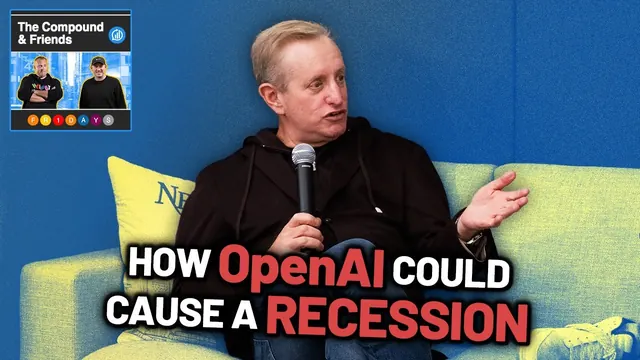
- The Compound Eisman agrees that an OpenAI failure could trigger a US recession, while saying it would not match the scale of 2008. This is hypothetical: Josh says, “I’m not making that prediction.” Eisman points to concentrated exposure, including five customers …
- Insurance funding and government ownership raise questions about who bears AI investment risk. Michael says policyholders might have received 3% interest where investors would have demanded 12% if they understood the exposure. Eisman …
Oct 15, 2026

- Jensen Huang Jensen Huang’s core compute call is that AI demand compounds twice: reasoning consumes vastly more inference, and useful intelligence gets hired for vastly more work. Agents preserve “strategic optionality,” explore alternatives, reflect, prune and use tools; memory systems and software harnesses turn …
- Huang expects falling intelligence costs to expand ambition rather than reduce spending or work. Gerstner cited roughly 10,000 agents and an estimated $4 million of compute behind the cited Navier–Stokes advance, while estimating that a …
- The capex case does not require OpenAI and Anthropic to reach trillion-dollar revenue because Huang sees AI infrastructure demand distributed across three large pools. Roughly one-third is conventional processing and simulation growing about 30–40%; perhaps a quarter of compute, representing not quite …
Oct 14, 2026

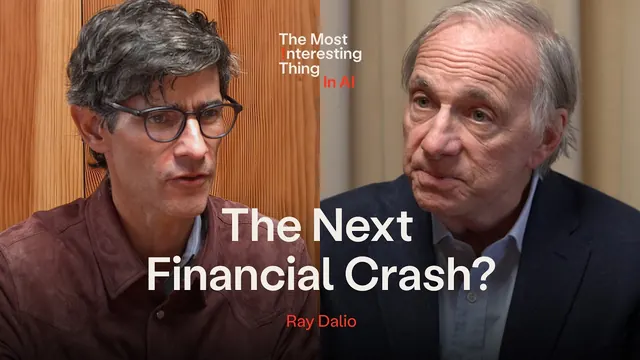
- Ray Dalio Dalio’s central warning is that transformative AI can still be a terrible investment at the wrong price. Previous breakthroughs—from household electricity to radio, cars, and airplanes—attracted capital because their potential was real, yet …
- Nicholas Thompson The bubble mechanism begins when paper wealth grows much faster than available cash. A company can raise $50 at a $1 billion valuation, instantly creating nominal wealth, but “wealth is not money”: spending requires owners to …
- Ray Dalio Dalio’s bubble indicator puts current conditions in the same order of magnitude as 2000 and 1929. He characterizes 2008 as a smaller, more debt-intensive housing bubble; today’s danger is unusually concentrated across GDP, wealth, …
- Nicholas Thompson A productivity miracle only solves the debt problem if it becomes taxable income quickly enough. Thompson’s bull case is a 10-fold productivity era powered by “geniuses in the data center”; Dalio concedes that sufficient income growth …
Oct 12, 2026

Oct 9, 2026

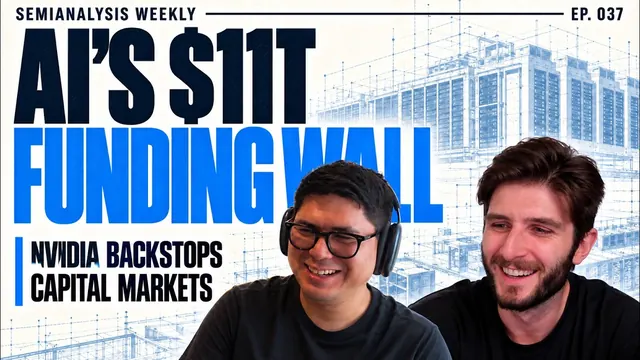
- Dylan Patel SemiAnalysis argues that viral charts materially understate the scale of the AI buildout. Dylan Patel estimates next-year US capital spending near $2 trillion across data centers, chips, and the supporting supply chain—roughly …
- Big Technology Triple-digit capex growth must slow, but SemiAnalysis does not yet see the demand signal that would mark a bust. Hyperscaler capex was growing 116% year over year in Q3 2026, while engineering capacity, cooling, chips, capital, and the ability to …
- Dylan Patel The payback math looks less absurd when infrastructure life and revenue lag are included. Dylan models GPUs over six years and data centers over 15: $1 trillion invested today might require about $1.5 trillion of cumulative …
Oct 8, 2026
Oct 7, 2026


Oct 6, 2026
Oct 3, 2026

Oct 2, 2026

- Steve Eisman Steve Eisman sees AI’s immediate danger as concentration, not lack of demand. Nvidia grew revenue roughly 110%, yet 70% of its accounts receivable came from five customers; meanwhile, OpenAI and Anthropic reportedly …
- OpenAI looks like the weaker link because its costs are outrunning already-rapid revenue growth. Eisman cited roughly $6.5 billion of quarterly revenue against about $12 billion of costs, with revenue rising $1 billion while costs rose …
- The capital loop can hold only while the model companies keep growing and their strategic backers keep funding them. Eisman had assumed venture capital supplied most of the money, but said Amazon, Google, Microsoft, Nvidia and SoftBank are the major …
- Hyperscalers retain scale moats, but AI capex has transformed their cash-flow profile and exposed them to fragile customers. Eisman cited approximately $700 billion of hyperscaler AI spending this year, Oracle’s heavy dependence on OpenAI commitments, and Google …
Sep 30, 2026
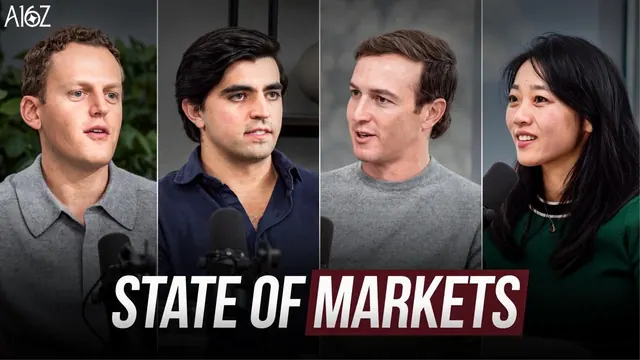
- The a16z Show The AI investment cycle is enormous, but the panel argues that earnings—not multiple expansion—are driving the market. Since the referenced presentation came out almost four years ago, the market has risen 90%, or 17% annualized; stocks recently gained …
- Hyperscaler spending is becoming an industrial cycle whose scale keeps outrunning forecasts. Alphabet, Amazon, Meta, Microsoft, and Oracle are investing about $780 billion in 2026, up from $416 billion in 2025, with expectations of …
- AI’s buildout is merging with a much broader “new age of atoms.” Global infrastructure needs are estimated at $90 trillion through 2040, spanning chips, power, cooling, factories, water, roads, transit, …