Sports and Entertainment Capital Moves
Analyzing live sports asset acquisitions and media rights valuation strategies.
2 sources · ↑2×Voices in this topic
All paragraphs
Oct 26, 2026
Oct 23, 2026
Oct 20, 2026
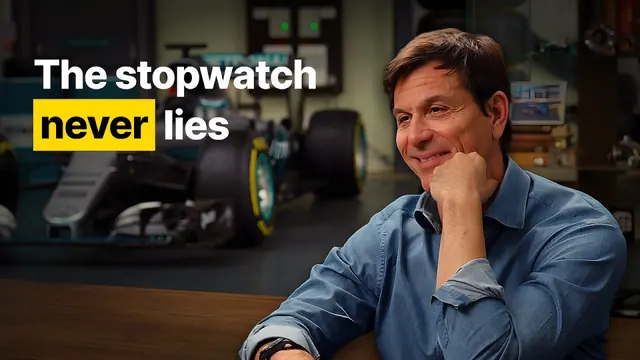
- Toto Wolff Mercedes now has operating profits to support its valuation alongside the scarcity of owning an F1 team. Wolff reports around $1 billion in revenue and a 30% margin, with dividends and limited stadium-related capital expenditure. Collison’s …
- F1’s spending limits exchange some scientific freedom for closer competition. A cost cap of “$200 million and a bit” forces choices between near-term lap time and longer-term research, although Wolff rejects the claim …
- F1’s audience growth combines entertainment with a sporting outcome viewers believe is real. Wolff initially doubted Netflix and declined the first season, but now describes a year-round reality show whose foundation remains …
- Wolff wants durable private ownership with management that can eventually operate without him. He doubts public markets suit a sport that moves “from mania to depression within a week,” despite Collison’s argument that today’s audience …
Oct 19, 2026
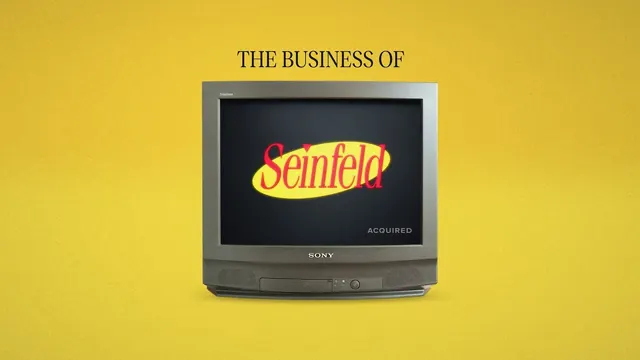
- Acquired Seinfeld is still arguably the single most valuable piece of television ever made: Ben verified with Nielsen that 60 million Americans watched the show in the first six months of 2026, rising to 72 million through the end of August — nearly three decades after production ended. Netflix's 2019 deal, reported at well over $500 million over five years, was the largest sum a streamer had paid an outside studio for an …
- The economics are “essentially a complete accident of history,” shaped by the FCC's FIN-SYN rules, which prevented NBC from owning a financial interest in the show it aired. Because NBC guaranteed production before a studio was attached, Jerry Seinfeld and Larry David held all the leverage and reportedly took …
- Ben argues that Jerry turning down Jack Welch's offer of $5 million per episode — $110 million for a 10th season — was “the best business decision Jerry Seinfeld ever made.” David calls that an interesting hypothesis and sees its logic: going out on top may have helped preserve the show's appeal. The hosts cite …
- Castle Rock made a costly timing bet: it sold to Ted Turner in December 1993 for roughly $400 million all-in, before the first syndication cycle generated over $500 million in 1995. The hosts estimate Castle Rock's share of the waterfall ultimately produced $2–2.5 billion — captured instead by Turner and then Warner …
- The product thesis is “no hugging, no learning”: static characters with little development made Seinfeld “the most perfect syndication show ever created,” watchable in any order and across generations. The hosts identify counter-positioning as a source of value today: Friends and The Office are tied to their owners' streaming strategies, …
- Everything about the show violated conventional wisdom and it nearly died more than once: the pilot memo said “no segment of the audience was eager to watch the show again,” NBC passed on it for The Nut House and Sister Kate, and the show got a four-episode order using the budget for a canceled Bob Hope special. Larry's response: “It's fine. I think four episodes is all I got in me anyway” — he went on to head-write 135 episodes. The hosts' caveat on …
Oct 7, 2026
- Ari Emanuel The $4.2 billion UFC acquisition was a wager that scarce live sports would force distribution platforms to pay, not merely a bet on fight promotion. Fox’s sale, the blocked AT&T transaction, Comcast’s disinterest and Amazon’s withdrawal briefly left Emanuel with “nowhere to go,” but …
- Emanuel created much of the UFC deal’s value after the acquisition by refusing to treat the first acceptable contract as finished. The initial ESPN agreement was $300 million with eight televised events; Dana White demanded 10, while Emanuel argued that stars could not …
- His acquisition doctrine is to pay decisively when the strategic asset matters more than the last increment of price. When a rival bid roughly $1.9 billion for IMG, Emanuel’s side offered $2.3-$2.4 billion and Egon Durban urged them to “take it off the table …
- The William Morris merger shows that “merger” can conceal an expensive contest for operational control. Emanuel and Patrick Whitesell spent four years weakening the incumbent, then paid departing leaders $24 million and $20 million, absorbed …
- TKO and MARI express the same scarcity thesis through different ownership vehicles. TKO is positioned as pure live sports, while MARI is being assembled across art, car auctions, tennis, participatory sports and …