Personal AI Assistants Adoption and Monetization
Discussing interaction paradigms, privacy safeguards, and revenue models for consumer AI assistants.
3 sourcesVoices in this topic
All paragraphs
Oct 27, 2026
Oct 24, 2026
Oct 23, 2026
Oct 21, 2026
Oct 19, 2026



Oct 18, 2026
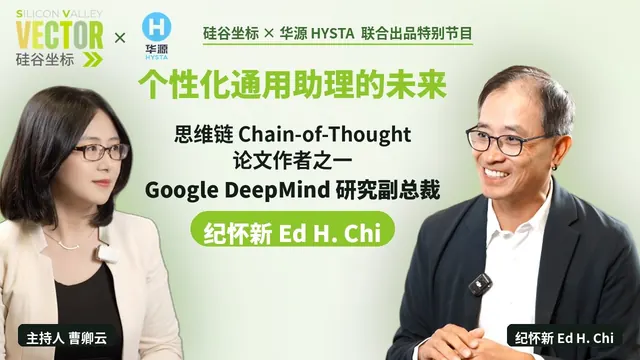
- Ed H. Chi(纪怀新) Ed Chi says general-purpose assistants are still at a very early stage, and expects their relationship and interface with AI Mode Search to become clearer in 6–12 months. Permissions and reliability are the sticking points: people worry that giving an assistant their credit card will lead to a spree of …
- He expects the next wave of commercialization to come from consumer products: much of Anthropic’s and OpenAI’s revenue is driven by enterprise subscriptions, while consumer services are one reason he stayed at Google. Reasoning has advanced from solving grade-school math problems with 33% accuracy 3–4 years ago to tackling mathematical problems such as …
Oct 15, 2026
Oct 12, 2026

- 莫子皓 子皓 believes personal agents have the ingredients to become consumer products, but the distribution loop is still broken. He doesn’t think the opportunity faded after OpenClaw’s moment in the spotlight. OpenClaw’s problems were that its use cases were hard to …
- The underlying variable behind demand is the cost of accessing intelligence; interaction is his biggest non-consensus opportunity. “If you can just say what you need and it does it for you, maybe everyone will use it a lot.” He compares it to an extended-range electric …
- He sees ChatGPT and Claude among the eventual competitors, while distribution is a major constraint for independent products. He believes the opportunity for these products in China is limited in part because reliance on big tech distribution leaves startups exposed …
- He believes personal AI can develop network effects between agents, and that the timing is right for consumer applications. He cites a colleague @-ing his Hermes bot in a Lark group to ask it to review a document: products don’t need A2A to come first. Users build …

- Alexandr Wang The strategic product thesis is that “the model is the product,” making superficially similar agents materially different underneath. Personality, proactivity, tool behavior, memory, reliability and judgment are trained into the model rather than exposed as conventional …
- Cheeky Pint Agentic commerce could create demand rather than merely redirect or improve conversion. After Muse began planning baking sessions with Zuckerberg’s daughter and ordering ingredients, he went from barely using Instacart to …
- Mark Zuckerberg Meta expects subscriptions, commerce, APIs, enterprise distribution and improvements to its existing business to fund the buildout. Zuckerberg wants a strong free Spark tier to maximize network effects, then paid Wonder usage and potentially a small share of the money …
Oct 11, 2026
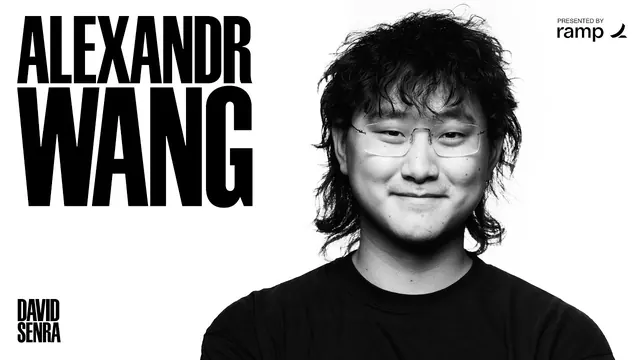
- Alexandr Wang Muse began with Meta Superintelligence Labs’ June 2025 “Personal Superintelligence” thesis: build powerful AI that “lifts the human experience” by helping people pursue what they want, not merely automating work. Wang argues Meta is uniquely positioned for that consumer future because Instagram, WhatsApp, and Facebook already map people’s interests …
- The catalytic moment came in early 2026, when Opus 4.5 and OpenClaw showed Wang and Nat Friedman what personal agents might become. Friedman’s agent monitored whether he drank enough water through security footage; Wang let his own agent conduct what felt like “3 years of …
- Meta then spent seven months turning an occasionally magical prototype into a reliable consumer product—a period Senra calls roughly a decade in conventional technology time. The team enumerated more than 100 required behaviors, built evaluations for each, and refused to launch while even 20 rows remained below …
- Muse was built by fewer than 200 people because Meta treated it as a “single work of art,” not a committee-produced feature bundle. Wang says large-company products often become a “Cronenberg amalgamation” or “smoothie” of conflicting product-manager agendas; Muse instead …
- Wang would disclose only “millions” of users, while pointing to graphs he had amplified that implied Muse was the fastest-growing consumer AI app of all time. Distribution created awareness, but growth depended on an early wow moment and an escalating “trust fall”: users hand the agent a small …
- Muse’s breakout marketing combined concrete user benefits, screenshot-native design, and Wang’s increasingly risky meme campaign. His feed was personally written, not generated by “a hundred Muses”; he wanted both Muse and Meta to break through a “torrential stream” of …

Oct 8, 2026
Oct 7, 2026

Oct 5, 2026
Oct 3, 2026
Oct 2, 2026

- Sharp Tech OpenAI’s Dots launch exposes a positioning mismatch: it looks like a friendly mass-market product but behaves like a narrowly useful, unfinished productivity agent. Andrew calls the result “confused and confusing”; Ben sees the missing coordination layer Codex needs, yet finds Dots “weirdly neutered” and …
- Ben had largely written off OpenAI’s consumer prospects after Gemini 3, but Amazon may give the company another route to monetization. OpenAI could become an agentic surface for Amazon products and ads: “Access our products, no problem. They also show our ads. That’s the …
- Consumer agents should be sold as pain relief, not as accessories for the “grind lifestyle.” Ben’s pitch is the “modern-day Tylenol, the modern-day Advil”: technology has become painful for normal people, from roughly 700 apps to …
Oct 1, 2026

- Lewis Muse’s lead is first and foremost a productization win, not a breakthrough in underlying technology. Tools such as Claude Code could already connect to Gmail, but Muse turned “check subscriptions, chase hospital emails, handle refunds” into …
- For Personal Agents, the key data gateways are Gmail, Calendar and long-term behavioral data, making privacy and trust a core barrier. Lewis declined to try Instinct because its terms allowed it to use the data it accessed, but was willing to use Muse; he also cautions that …
- Open APIs in the US gave Muse a window, while China’s walled gardens make the Agent opportunity more dependent on super-apps. Google’s principle is closer to “the data belongs to the user,” allowing third parties to call Gmail; platforms such as WeChat and …
- Privacy, security, inference costs and the chip roadmap are all pushing Personal Agents toward the edge: a high-end Mac Studio costing about $12K is advertised by Apple as capable of running trillion-parameter models, and online examples already exist; Qwen 27B is sufficient for a large share of day-to-day tasks. Lewis believes “the era of Edge Compute has arrived,” citing a chip-industry view that in 6 or 7 years, many models that run in the cloud …
Sep 29, 2026

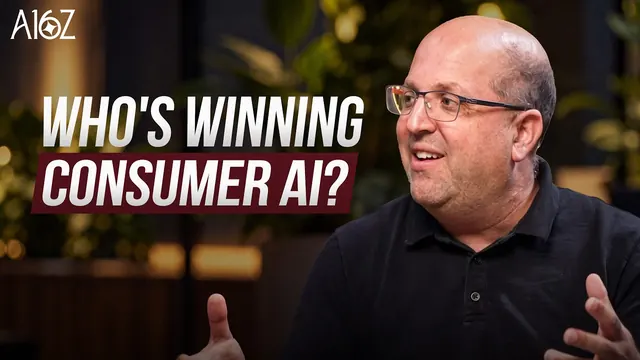
- The a16z Show The consumer winner will sell “free money,” not a 10% productivity gain. David Pawlan argues that “the general population does not care about being 10% more efficient.” The conversation’s examples include …
- David Pawlan Proactivity may be the category’s real moat—and one unauthorized action can destroy it. Pawlan sees “massive defensibility around proactivity,” particularly when an agent drafts an email, checks in a flight, or obtains a refund …
- Travel generates the viral demos, but recurring administration may determine retention. Among more than 1,200 assistant enthusiasts in Pawlan’s group chats, travel ranks only fourth despite producing the most visible stories; …
- Voice becomes magical when users are occupied, not when they are staring at another interface. During a 30-minute bike ride, Pawlan used ChatGPT Voice and its connectors to categorize emails, apply labels, reply, and send calendar …
- The a16z Show Social agents work best when they listen quietly instead of taking “the mic.” A promising model is a silent agent in a group chat that records decisions and privately follows up with the responsible person; an agent …
- Agent-to-agent commerce threatens businesses built around human attention and friction. Acharya contrasts Shopify’s merchant-focused model with Amazon’s advertising economics, while Pawlan discusses how removing eyeballs could …
Sep 28, 2026
- Noah Shinn Instinct is approaching $1 billion a year in transaction volume on a very small, invite-only user base, growing about 10–11% day over day with $0 spent on marketing. Noah Shinn frames the compounding starkly: “That’s not just $1 billion flowing through the platform now. That’s $1.1 billion tomorrow,” then …
- Shinn’s envisioned business model is a blanket transaction take rate, rather than ad-funded persuasion; he contrasts it with subscription as a shorter-term alternative. He benchmarks Shopify at 2–3%, Amazon at “upwards of 10%,” and Apple in-app purchases at 30%, and notes that boutique hotels have offered to …
- Trust is associated with unusually strong retention. Three weeks in, about 40% of the user base has shared a personal credit card with Instinct. Shinn treats time to first credit card, …
- Compute is the existential constraint: demand can double “effectively every week,” while compute has a lead time of several months—so mis-sizing the buy can cost 3–4×. Shinn spends about 40% of his time on this. His math: even 5–8% daily compounding over a 3–4 month procurement lead time could imply 100 …
- On serving cost, Instinct claims performance comparable to Opus 5—matching engagement, A/B-test, and internal-evaluation results—at a low cost through customized inference deployments. Background workloads that can finish in minutes or hours run on deployment shapes “3×, 5×, or 8× more efficient,” contributing to Shinn’s …
- The incumbent thesis: businesses monetizing user attention are exposed; businesses monetizing the underlying service may see volume rise as agents reduce friction to nearly zero. Patrick says products dependent on consumer laziness or inertia are “toast,” while Shinn argues that proactive agents—a car always lined up …