Open Source vs Closed Source AI
Examines open-source competition, aggressive price wars, and the restructuring of proprietary business models.
7 sources · ↑1.6×Voices in this topic
All paragraphs
Oct 27, 2026
Oct 26, 2026

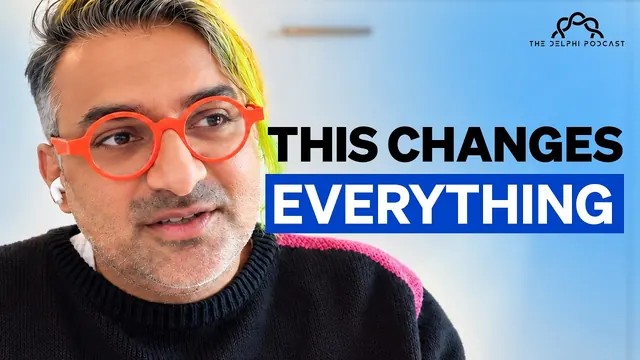
- Tarun Chitra Robot Ventures led Nous Research’s $90 million round on a thesis that Hermes can own AI’s user relationship. Tarun Chitra compares the opportunity to investing in Phantom or FOMO: harnesses control preferences, context and access to users, while …
- Hermes’s product advantage comes from years of research compounding into better defaults. Tarun argues that Nous’s work on training, inference and context management lets it absorb decisions that OpenClaw leaves to users. His …
- Tommy Enterprise customization gives Hermes a second distribution path alongside its consumer community. Businesses can add permissions, compliance, privacy and internal data connections. Tarun says Microsoft and NVIDIA participated in the …
Oct 23, 2026

Oct 22, 2026
Oct 21, 2026

Oct 20, 2026

Oct 19, 2026



Oct 18, 2026

Oct 16, 2026
Oct 14, 2026
- Nathan Lambert Lambert’s literature-based estimate is that distillation helps Chinese labs by a few months, but its role in today’s RL-heavy post-training is hard to establish. His evidence: open post-training recipes are “stuck using a really outdated Qwen model” because it is hard to get the teacher right, and he …
- He opposes government action on distillation, while supporting labs securing their own products if they choose. He questions government involvement in what he calls a terms-of-service violation; labs can cancel access, and restricting models to …
- The open-model economy runs on a slower exponential than closed labs but can end in real ownership — “model weights, no terms and conditions,” and the ability to run them on your own hardware. Closed labs have integrated inference and reach high-value markets like coding first; the revenue there has gone from zero to $100 billion …
Oct 13, 2026

Oct 9, 2026
- Misha Laskin Reflection AI’s wager is that frontier open intelligence requires a full-scale lab, not merely a post-training layer. Misha Laskin says the company grew from roughly 30 to 300 people in a year, assembled pre-training, mid-training, and reinforcement-learning …
- Open models could capture most token volume without eliminating valuable closed-model businesses. Laskin says gateway traffic has flipped in about six months from roughly 70/30 closed/open to 70/30 open/closed, and he expects a Linux-like …