Macro Asset Allocation in High-Interest Regimes
Examining valuation dynamics of US equities and commodities amid persistent inflation and high rates.
4 sourcesVoices in this topic
All paragraphs
Oct 27, 2026
Oct 26, 2026

Oct 25, 2026
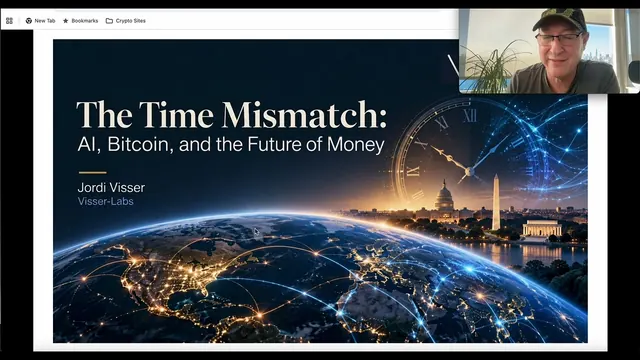
- Jordi Visser Crowding and compressed time horizons make leverage dangerous even when earnings keep improving. Positions accumulated over 18 months are being unwound in 75 days, while ineffective index hedges push funds into stock shorts and possible …
- Credit contagion challenges the bottom call, but corporate profits and employment still support his distinction between financial liquidation and economic deterioration. French ten-year yields stand 173 basis points above Germany’s, and European banks suffered their worst relative week since SVB. Against …
Oct 23, 2026

Oct 21, 2026

Oct 20, 2026


- 高能量 Li Feng’s bottom line: global capital markets have entered a “no one has enough money” phase. The money printed in 2020–2021 was “more than humanity had ever seen”; after flowing and concentrating through 2022–2024, it pushed every …
- A market top does not mean an immediate crash. After a cycle peaks, it usually takes “2 or 3, 4 rallies of different sizes” before it snaps, and the break is typically triggered by a …
- China is rebalancing portfolios ahead of a possible rapid downturn. Proposed rules on public-fund style drift are set to take effect on December 1, with a 1-year transition period, and would curb “narrow bets …
Oct 18, 2026
- Flood Kyle’s central macro claim is that AI’s demand for financing is setting the marginal price of money. The 10-year Treasury reached roughly 5.3%, yet yields subsequently fell alongside AI stocks despite hot CPI and PPI releases. His mechanism: …
- Higher rates could eventually strengthen the debasement case rather than undermine it. Kyle follows Jeffrey Gundlach’s framework: sufficiently high sovereign debt can turn attractive Treasury yields into a warning about fiscal …
Oct 16, 2026

Oct 15, 2026

Oct 14, 2026
- Yet Another Value Podcast Indices mask a "bloodbath underneath the hood": the S&P is up ~13% and Russell ~10–11% YTD, yet Walker's small/value-investor friends are "borderline despondent." Of ten sector ETFs, all are roughly ±5% on the year except energy (+~45%) and tech (+~35%, concentrated in semis) — if you weren't long …
- The "Russell is a broken index" critique — it "cuts its winners and waters its losers" — has perversely worked in its favor. The Russell rode SMCI's 10x in 2024, booted it, and missed the ~80% accounting-allegation collapse; this year it kicked AI winners like …
- Ray Dalio The sovereign-debt backdrop is the “plaque” that could turn an AI correction into an economic heart attack. Dalio’s approximate arithmetic has Washington spending $7 billion against $5 billion of revenue, carrying debt equal to roughly six times …
- Dalio’s fiscal prescription is to reduce the deficit below 3% of GDP before the ship “hits the rocks.” He sketches a politically neutral mix—perhaps raising taxes and cutting spending by roughly 4%–5% each—while ensuring AI succeeds and …
Oct 13, 2026
- Shanghao Jin Shanghao Jin sees the source of the liquidity shock starting to heal, but expects the downstream recovery to lag. Rates and rate volatility were the source; drivers included the Fed’s stance that it would not manage the long end, the link between oil and …
- The rate spike was driven by the Fed’s stance on the long end and a once-stronger link between rates and oil; the Brent-rates correlation has since eased. Rates rose from about 4.5%–4.6% to 5.3% in a very short time, a move of more than half a percentage point, and nobody wanted to catch the …
- Energy remains a tail risk, with little margin for supply-side error. Oil exports have recently fallen but are broadly back to prewar levels; natural gas exports have recovered from near zero to roughly …
- The downstream recovery is uneven: volatility in G3 currencies such as the euro and yen has eased as dollar rate vol fell, while carry-trade volatility in EM FX ex-RMB has not fully subsided. Sovereign credit spreads in France, Germany and Spain have yet to recover. CDS investors focus on spreads, while many buyers of high-yield …
- The equity outlook is mixed, but the market is resilient and investors risk being left behind. Fundamental long/short funds are underweight; if indexes rise, they may chase. Higher skew and stronger call than put demand suggest …
- Paul Tudor Jones Paul Tudor Jones still sees a “two-speed market” resembling 1999, split between businesses adopting AI and those that are not. His near-term playbook is “short-term weakness” followed by strength into year-end, as midterm-year markets typically bottom in late October …
- Jones’s bearish 2027 case rests primarily on deteriorating equity flows, not merely elevated valuations. Buybacks and M&A have powered demand since 2009, but IPOs, secondaries and unlocks—including a roughly $2 trillion SpaceX figure and coming …
- Debt supply is the other potential breaking point: Jones put 60/40 odds on markets moving toward a forced resolution of unsustainable fiscal deficits. AI-related issuance could reach 3.6% of GDP—50% more than the railroad buildout and triple highways or telecoms—just as sovereign borrowing …
- Squawk Pod He is also long and bullish oil, seeing another $20-$25 of upside while warning that equities would “absolutely totally hate it” if oil rose that far.
Oct 6, 2026

- Shanghao Jin Shanghao Jin locates the source of current risk in rate volatility, not the absolute level of rates or inflation itself. July was mainly a deleveraging event in equities, especially AI-linked assets; now overall market liquidity is “starting to crack,” …
- Long-end Treasuries have lost the Fed’s former pricing anchor, and the market has turned to crude oil and diesel instead, allowing energy volatility to feed into rates. Jin says that even in 2022, when inflation expectations were running out of control, the market still believed the Fed would hike and …
- Jin relayed Bill Ackman’s view that rate hikes could actually push more capital into AI, but said explicitly that it was not his own view and was somewhat one-sided; he only agreed with part of it: AI could still absorb liquidity as rates rise.
- The real danger is a sharp spike in swaption vol hitting a highly levered rates market, with an impact far larger than a few percentage points of equity downside. Bank rates desks and hedge funds finance long bonds to earn the term premium, while insurers use 10-year swaps to hedge duration; leverage …
- Cross-asset signals are converging: the France-Germany spread has widened from roughly 80bp to 139bp, while US and European high-yield spreads and US investment-grade spreads have all surged within a week. Downside skew on the euro, volatility in the Swiss franc and EM currencies, and pressure on the Mexican peso and carry trades are also …
- Equities have not yet taken a real hit, partly because July already forced deleveraging and partly because valuations and positioning are not high, single-stock correlation remains low, and AI volatility is still falling. Jin estimates current valuations are only about 7% above the worst point of the April 2025 tariff shock, while earnings over the next 2 …
Oct 2, 2026

- All-In Sacks presented a broad economic acceleration case: stronger GDP, jobs, manufacturing, income and inflation data than the prevailing narrative implies. He cited Q2 GDP revised to 2.2% from 1.5%, Q1 to 2.5% from 2.1%, Q3 tracking near 3.7%, August payrolls of 162,000 versus 55,000 expected, …
- Rates are the strongest counterweight to that bullish macro picture, with a specific bank-equity catalyst approaching. Friedberg said short-term Treasury yields had climbed 60 basis points in roughly 30 days and estimated that 95 of 4,295 positive-equity …
Oct 1, 2026

Sep 30, 2026

- 1000x Jonah reads Iran’s apparent weakness and recovering traffic through the Strait of Hormuz as bullish for risk assets, while Avi initially dismisses most macro commentary as “astrology for men.” Throughput fell from more than 20 million barrels per day to below 10 million, then recovered through 11 and 13 million—possibly 14 …
- They ultimately agree that macro earns its keep when it identifies a five-year regime or bottleneck, not when amateurs trade every central-bank adjective. Their mega trends include AI, copper, biotech, Bitcoin, tokenization, military expansion, chip reshoring, nuclear power and uranium. Jonah’s …
- Retail investors’ structural advantage is the ability to endure volatility without institutional career risk. A Millennium PM cannot put 15% into copper if a 5% drawdown ends the job, whereas an employed individual with a real five-year thesis might …
Sep 29, 2026

- Shanghao Jin The real inflation risk right now is not crude oil but refined products such as diesel and a crack spread as high as about 100. Four forces are squeezing supply at once: disruptions to Middle East supply chains, damage to Russian refineries, China's export quotas, and …
- Whether China increases refined-product exports by 1M–2M barrels per day is the key variable for global inflation and Europe's winter risk. China's refinery utilization is about 66%, inventories are about 1.1B barrels, and the domestic crack spread is about 20 versus more than 70 …
- He still considers U.S. inflation transitory because the forces pushing it higher are relatively short-lived, while falling rents and the downward pressure AI is putting on employment and wages will last longer. He says about 0.8% of core PCE is still attributable to tariffs, with tariffs contributing about 0.6% month over month, and that effect will …
- Rising expectations for a rate hike in Q4 do not amount to a long-term reversal in the logic of U.S. risk assets; the real danger is volatility in 10-year yields. Kevin Warsh's hawkish remarks, combined with the synchronized hawkish turn by global central banks, have markets pricing 1 more hike in Q4; …
- A near-term correction is almost unavoidable, but the medium-term bull case for AI and semiconductors is unchanged. A weak 10-year auction, September Treasury and credit-bond supply, widening IG/HY spreads, and about $32B of month-end rebalancing selling …


- 张思齐 A Super El Niño is not a “button that makes every commodity more expensive”; for a weather shock to become tradable, it must hit a critical growing period and coincide with low inventories, concentrated exports, disrupted logistics or tighter policy. 张思齐 breaks pricing into five groups of variables—supply, demand, inventories, policy and logistics, and financial conditions—with weather …
- 硅谷101 The regions that deserve the closest watch this time are maritime Southeast Asia, India and Thailand, and Australia, while the same climate event could have opposite effects in South America and the US. Indonesia and Malaysia face drier, hotter conditions for palm oil, Robusta coffee and rubber; a positive IOD could further amplify drought …
- 麻花 A rally in raw-material futures does not mean consumers’ bills will rise in lockstep; supply-chain length, finished-goods inventories, substitute formulations, brand pricing and hedging determine how much gets passed through. Palm oil, which 麻花 says accounts for roughly 15%—20% of the cost of an instant-noodle product, can still see the shock absorbed by …
- 硅谷101 The market is really trading exportable surplus and the size of the buffer, not an isolated percentage decline in production. A 20% drop in output from a small producer in a fragmented commodity may have limited impact; a marginal 3%—5% cut in a country responsible …
- Food inflation cannot be blamed on El Niño alone, with energy, fertilizer, war and trade protection adding to supply risks. Citing a September 7 Goldman Sachs report, 麻花 said the agricultural spot index was up 24% year on year and wheat was up 41%; JPMorgan …
- Traders should watch regional weather, crop calendars and market confirmation rather than a single ENSO index, while agricultural technology can still invalidate the worst-case view. In April, the market was heavily positioned for a cotton production decline, but subsequent feedback from key growing regions pulled the …
Sep 27, 2026

- Jordi Visser Visser's central frame is a "time inconsistency": there is "a bear market happening inside a bull market," and which one you see depends on whether you think linearly or exponentially. IWM vs. QQQ is at new lows since the iPhone in 2007; the Magnificent 7 (over 50% of the S&P 500) keeps making highs while rate-sensitive …
- The rate-doom trade fails his fact check: he sees no crisis signal in credit spreads, jobless claims, or earnings. He says crisis spreads widen and concludes the current credit-spread chart is not showing the signal he seeks; unemployment claims "don't …
- Rates aren't a bug, they're the culling mechanism: "Betting is a way to get rid of the weak." AI-driven nominal GDP keeps rates up, forcing out debt-dependent incumbents in favor of debt-free, AI-native businesses — "these companies …
Sep 26, 2026
- David Hunter David Hunter remains very bullish: S&P 10,000, NASDAQ 36,000, Dow 70,000, Russell 4,000 and SMH 800—roughly 30–40% upside by his math. He says the 43-year secular bull became a 44-year bull in August and expects the final leg to be parabolic if his thesis is right.
- Jimmy Connor He still expects a global bust, with the broad market potentially falling as much as 80%. His core reason is unprecedented debt and derivatives leverage; he says there is a very good chance the bust arrives next year, though the …
- Hunter is very bearish on oil: in Connor’s above-$90 scenario, he expects oil back into the 70s and 60s this year or in Q1, and into the 30s during the bust. He argues supply is larger than commonly assumed and demand falls as prices rise.
- He believes bonds are near a double bottom and rates a double top versus 2007, with a major bond-market bull move possible over the next 12–18 months. He expects inflation and GDP eventually to roll over and the Fed to fall behind in easing.
- He targets silver at 200 and gold at 7,000 over three to six months, while believing the recent lows near silver 55 and gold 4,000 may hold. He sees fearful, angry investors as potential fuel for the next move.
- His main market-top signal is all-in sentiment: institutions remain cautiously invested, while debt delinquencies and pressure on lower-income consumers are already building. He also sees widespread legalized gambling as a late-cycle warning.
Sep 25, 2026
- Yet Another Value Podcast Andrew Walker’s central market call is that equities have not ignored higher rates, but still do not look fully adapted to them. The 10-year yield moved from 4.2% at the beginning of the year to 4.6% at August-end and 5.1% by September 24, while the S&P 500 remained …
- The refinancing calendar may matter more than today’s apparently healthy free cash flow. Companies termed out debt during 2015-22, insulating earnings when rates first rose; debt issued around 2021-23 may roll between 2028 and …
- Higher rates have reset the arithmetic of special situations, even when investors’ instincts have not caught up. A guaranteed $100 merger consideration received in one year is worth roughly $95 at a 5% interest rate—and less after allowing for break and …
- The disappearance of prolonged bear markets could reflect stronger safeguards—or a system accumulating hidden fragility. Circuit breakers, rapid Federal Reserve support, and less cyclical business models may explain why the global financial crisis, COVID …
Sep 24, 2026

- Warren Pies Warren Pies has flipped back to overweight equities after a brief August downgrade, targeting S&P 500 8,000 "within the next few months." He cut exposure on August 10 at 7,753 fearing an unpriced September Fed hike; with the hike delivered and guidance he reads as "two hikes, …
- Full Signal The bull market lives or dies with AI, and semiconductors are its heart. Semis are nearly 20% of total market cap, and across ~60 S&P industries the spread between index performance on semi-up versus semi-down …
- What flips him bearish: a full 2022-style hiking cycle and political backlash against AI. He worries the market's calm reaction "emboldens" the Fed and that "deep down Kevin Warsh wants to be a hawk"; meanwhile data-center …
Sep 23, 2026

- 1000x The episode's core trading rule: only go long demand-driven stories, never supply squeezes, because supply always shows up. Diamonds are "the anatomy of a bad product" — a De Beers monopoly disrupted by $6/carat lab-grown supply — while copper, "the most widely …
- The bond-market paradox both hosts discuss: AI is ultimately deflationary, but for now rising equity returns force yields higher — "why hold a bond with a yield of 5% if the stock market yield increases from 11% to 16%?" This period is a devaluation of the U.S. dollar, and Jonah's proposed hedge isn't TIPS: "You should buy stocks to avoid it."
- The casualty is real estate: multifamily and hotels get pressured by rates — luxury hotels now cost over $2M per room to build, and 2010s deals underwritten for 2% refinancings can't refinance below 7%. Jonah's playbook is to wait for the 2009 analog — capitulation, fire sale, then a long liquidity-recovery wave — while noting the hotel …
Sep 20, 2026

- Jordi Visser A brutal bear-porn week produced almost nothing: hawkish 25bp Fed hike, 10-year at 5.02% (2007 levels), Brent at 110, hot PPI and CPI, an Anthropic researcher's ">10% chance AI kills all humans" — and S&P futures finished the week down ~30 basis points. Since June 25 oil went 67→92 and 10s went 4.30→5.02, yet the Mag 7 sit near all-time highs and HYG/IEF made new one-year highs. His kicker: …
- Visser argues that rates and oil transmit less forcefully to this market: Nvidia alone is $5.25 trillion versus roughly $1.5 trillion for the consumer-discretionary, household-durables, retail and restaurant companies excluding Amazon, and "the Mag 7... have no rate sensitivity whatsoever." The consumer bear market is real — restaurants at 52-week lows, Goldman's low-income basket near lows, …
- The sentiment setup is statistically rare and bullish: the AI bear reading was 53 — not an AAII reading — and had reached that level only during 2022 and the tariff panic in the prior four years. Since 1990, that level occurred about 4.5% of the time. Combined with VIX under 20, the setup was positive about 89% of the time; adding S&P …