Legacy Software Buyouts and AI Overhauls
Exploring acquisition models for undervalued legacy software assets and their AI-driven transformations.
0 sourcesVoices in this topic
All paragraphs
Sep 30, 2026
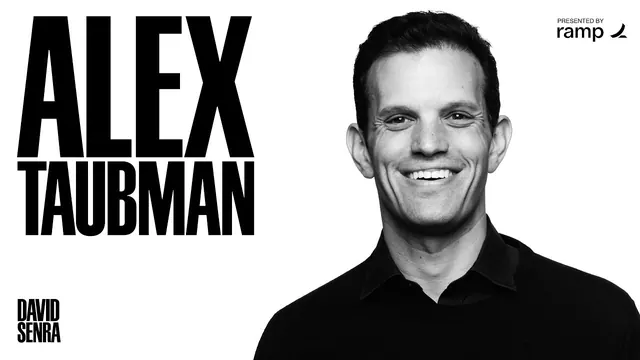
- Alexander Taubman Long Lake’s announced $6.3 billion take-private of American Express Global Business Travel is a bet that century-old customer trust can become a scaled distribution channel for AI. The 111-year-old company serves close to half the Fortune 500, much of the Global 2000, and government and military customers; Taubman sees …
- The combined business is expected to exceed $4 billion of revenue next year while retaining the economics of established, profitable service companies. Long Lake targets businesses already producing 20-25%+ EBITDA margins, and Taubman says existing cash generation means it may never need to …
- Long Lake combines an enormous opportunity set with an unusually selective capital-allocation process. It reviews 4,000-5,000 deals annually across 15-20 force-ranked industries but enters only one or two new sectors a year; it has acquired …
Sep 28, 2026

Sep 24, 2026
- Michael Lee Sequence Holdings, founded just 20 months ago, is partnering with the Dell family office on what Sarah described as the largest private AI acquisition to date: the family office's $7.7B acquisition of Baldwin. Lee's core bet, formed when ChatGPT appeared and made scalable architectures seem real, is that AI's impact will be uneven: startups win …
- Lee's structural case for why incumbents struggle to transform themselves is the episode's sharpest framework. DIY faces a talent and culture problem because "every company on the planet has a person of note"—at Blackstone, that person is the …
- The differentiation from PE is deliberate scarcity and duration: "We try to do one deal a year. That's all." Sequence is not organized around a fund deployment cadence or an investor group pressing it to invest, versus typical buyout …
- The BankSouth pilot delivered hard numbers: average consumer-loan underwriting volume down 94% since March, the average loan timeline cut from 30 days to 11 after commercial-loan underwriting was implemented, and Q2 loan volume doubled versus Q1 with a smaller underwriting team and no change in underwriting standards. Counterintuitively, "the regulated nature of the bank was a feature, not a bug"—clearly defined rules and clean data hygiene "work extremely …
- The Baldwin/brokerage thesis rests on structural protection from startups: more than $2T in annual premiums, insurers that have "made almost no money from underwriting since the beginning of time" and earn the bulk through investing, 90% retention, and brokers whose clients don't pay them—making price competition difficult. Sequence screens for "organizational physics": dense, centralized operations where anything built at headquarters amortizes across every …
- The reusable asset is Atlas, a four-layer platform (data ontology, agent builder, "lattice" orchestration, "artifacts" app builder) built on the observation that 80% of a business's atomic units are homogeneous across industries. But Lee is candid that the binding constraint isn't code: "We have an engineering problem and a human engineering problem, and the human …
Sep 23, 2026
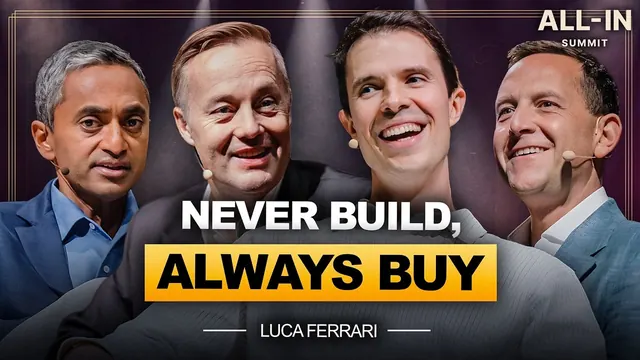
- Luca Ferrari Bending Spoons was seeded with the $40K left over from Ferrari's bankrupt 2010 AI startup, and the thesis has barely changed: “we're not very good at finding product-market fit,” but the company became strong at engineering, design, monetization and marketing, so it could buy product-market fit from others and improve the asset. The first deal in 2013 was a ~$10,000 unmonetized iPhone keyboard app bought for its users and app-store positioning. The host later put …
- The real product is an internal operating system of 50+ proprietary technologies that replaces the technology foundation of acquired businesses. About 800 people form a significant part of the value, moving between assets under the same tools and rules. Supplier consolidation probably …
- The debt is partly insulated from rates, but not entirely rate-proof: Ferrari said existing debt costs about 9% on average, is fully hedged, and matures in 2031; he also said the company has “about half the leverage,” without a comparator in the exchange. Unlevered returns have historically been consistently above 25%. He thinks higher rates would be a net positive in most scenarios because …
- The moat is time, technology and talent: Ferrari says the platform cannot be replicated overnight because competitors would not know what to build without years of experimentation. Almost every acquisition process has had other bidders, but he thinks Bending Spoons may benefit from private equity having raised less …
- Ferrari's deal criteria are scale, five-to-six-year earnings predictability, and value-creation headroom. Transformation effort does not scale linearly with revenue, so a small number of large deals is preferable to a million small ones. An …
- Customer-facing synergies have been tested but remain marginal. Ferrari said they worked only marginally; the host suggested that might amount to roughly 3%. Most value has come from behind-the-scenes …