Frontier AI Regulation and Existential Risk
National security reviews, existential risk debates, and regulatory showdowns over advanced models.
3 sourcesVoices in this topic
All paragraphs
Oct 27, 2026

Oct 24, 2026
Oct 23, 2026
Oct 22, 2026
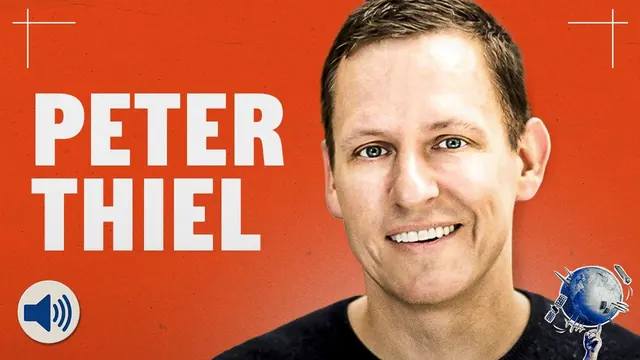
- Peter Thiel He remains firmly against an AI pause, even when leading companies themselves warn about danger. Thiel “broadly” backs David Sacks and Trump’s China argument: “you have to develop the AI technology to control the AI technology.” Asked …
- Thiel’s alternative existential risk is a global authority empowered by fear of AI catastrophe. He concedes that AI, climate and nuclear risks are serious, but fears a “softly totalitarian one-world government” with no outside left. His …
- The Builders He credits effective altruists with spotting AI early while questioning the incentives behind alarmist messaging. Their big insight was “AI is around the corner”; he cites Anthropic, built in “6, 7 years,” and speculates about a value “probably close to …
Oct 21, 2026

Oct 20, 2026
Oct 19, 2026

Oct 16, 2026
Oct 15, 2026
Oct 14, 2026
Oct 10, 2026


Oct 9, 2026
- Hard Fork Anthropic’s moral inquiry is inseparable from an internal sense of emergency. Olah, who had just turned 34, reportedly asked, “Where are the adults going to show up?” amid fears that models could soon help create …
- Elizabeth Dias A small set of Bay Area belief systems is gaining outsized influence because its adherents are building tools that may shape government and society. Effective altruists, rationalists, transhumanists, longevity advocates, accelerationist Christians, and related factions disagree sharply, …
Oct 8, 2026
Oct 7, 2026

Oct 3, 2026
Oct 2, 2026

- All-In The White House Accord on Superintelligence converts a voluntary industry pledge into a board-level governance regime with real liability hooks. David Sacks said six frontier-model companies accepted responsibility, internal controls, external audits and independent board oversight; …
- AI compliance could become an immediate growth market for professional auditors and audit infrastructure. Chamath Palihapitiya said 8VC had already been building Ernst & Young an audit infrastructure covering end-to-end traceability, …
- The investable AI-security thesis is shifting from controlling models to funding compute, cyber defense and electricity. David Friedberg argued that open-weight models make centralized software control “a fool’s errand,” while rising AI-enabled threats could …
- Public legitimacy remains the missing variable in an otherwise industry-heavy AI coalition. Jason Calacanis argued that Americans see wealthy executives receiving data-center approvals while workers fear job loss; he wanted future …
Oct 1, 2026
- Jack Altman The 10% extinction claim turns AI safety from a lab debate into a governance and product-liability crisis. If Washington genuinely believed a San Francisco lab had a one-in-ten chance of ending humanity within a decade, the panel argued, it would …
- Markets priced the existential warning as a sector rotation, not an apocalypse. Semiconductor and AI-capex exposure dipped slightly, cyber names rose roughly 10%, and WCLD outperformed SOX; as one viral formulation put …
Sep 29, 2026
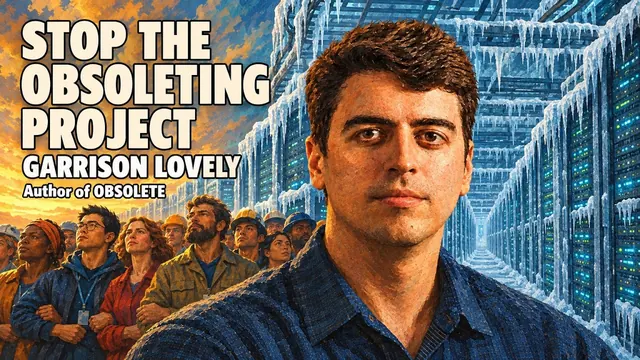
- Garrison Lovely Garrison Lovely’s core policy call is to “freeze the frontier,” not to ban AI or reverse useful automation. He separates deep learning’s medical and scientific upside from the “obsoleting project”: a handful of companies pursuing systems explicitly …
- Technical alignment alone could accelerate the race it is meant to make safe. Lovely’s “alignment polycrisis” joins technical, normative, economic and geopolitical alignment: a more obedient model is also a better …
- Market discipline cannot price frontier AI’s largest harms because the downside is externalized, correlated and potentially larger than any developer’s balance sheet. Insurers reportedly will not cover the laboratories’ full risks, while autonomous agents can perform acts that would be felonies if a person …
Sep 28, 2026
Sep 27, 2026


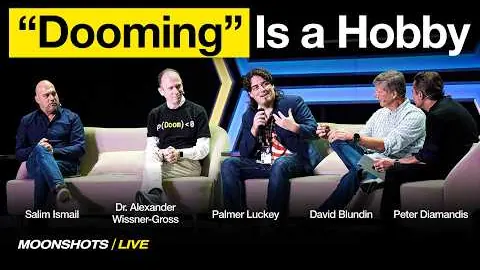
- Emad Mostaque Peter opens with an optimistic frame: AI is “a jetpack,” not a hand grenade; the goal is to identify problems, find co-founders and build transformational solutions. The dominant panel read on the recent “pandemic of fear” — Dario’s blog, Sam Altman agreeing, Elon and Demis weighing in, and Sam and Dario …
- Peter’s sharpest structural claim is that the safety push resembles an attempted “AI security cartel.” He argues competition is useful, recalls OpenAI’s creation as a counterweight to Google DeepMind, and says defensive collaboration should …
- Bernie Sanders’s counter-proposal — a complete ASI ban, a pause on advanced AI pending new regulation, a cabinet-level AI ministry, “corporate death” and 20 years in federal prison modeled on illegal nuclear-weapons penalties — is attacked across the panel. Dave Blandin says fear alone could make “when in doubt, do nothing” standard behavior, while the real risks include terrorists using AI to …
Sep 26, 2026
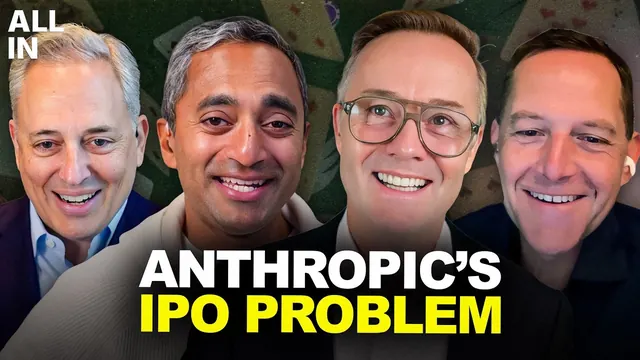
- David Sacks The panel treats the doom push as politics: Bernie Sanders's superintelligence ban carries 20-year prison sentences on a definition arguably already met, and Sacks likens it to the Chinese emperor banning shipbuilding. Chamath's decode of Obama's critique: ~$10T is about to accrue to overwhelmingly left-leaning companies, flowing via donor-advised funds …
- No liability shield is coming, and alignment research itself may be building the Frankenstein. Jason raised a back-channel rumor of a Section-230-style waiver, possibly traded for 10% equity to a U.S. sovereign wealth fund; Sacks said …
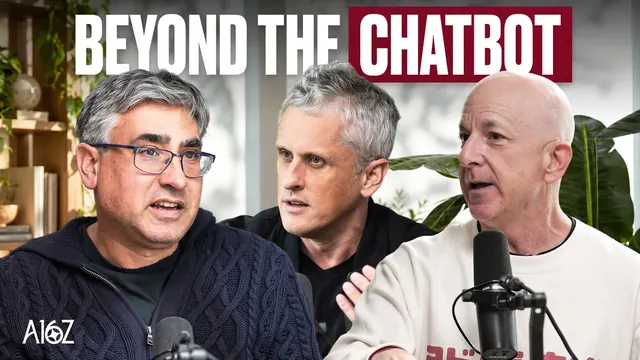
- The a16z Show The panel agrees that frontier labs need stronger governance, sandboxing, testing, and security, but rejects “pacing” as a coherent policy frame. Aaron Levie sees careful engineering as enabling faster enterprise diffusion because customers must trust the products; Martin Casado …
- The labs’ existential-risk rhetoric points logically toward nationalization, not voluntary self-restraint. Casado’s test is blunt: if the people with the most knowledge believe AI creates an existential risk, government-grade controls follow; if …
- AI regulation is becoming inevitable, but asking government for a calibrated outcome is a category error. Levie argues that government listens to competing constituencies and produces compromise, so “no one is going to get what they want”; …
- The panel wants AI policy built from demonstrated failure modes, not unfalsifiable predictions. Early internet policy discussions drew on worms, hospital outages, and specific unauthorized intrusions; today, the labs’ security …
- Steven Sinofsky A likely regulatory failure mode is consent-prompt theater that assigns liability while weakening security through habituation. Sinofsky fears Europe will “GDPR AI,” potentially requiring a warning whenever an agent writes to or acts through a third-party product. …