Digital Banking and Modern Wealth Management
Exploring global neobank expansion and integrated wealth management for ultra-wealthy clients.
1 sources · ↑1.5×Voices in this topic
All paragraphs
Oct 25, 2026
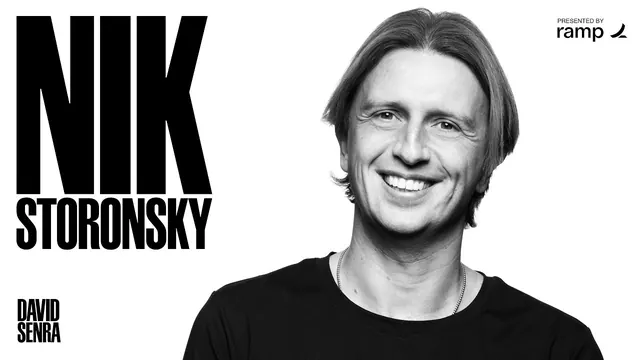
- Nik Storonsky Storonsky wants Revolut to become the number one bank in at least 100 countries, using shared technology to undercut fragmented incumbents. He puts its footprint at “probably thirty-eight” countries, adding 10–15 markets every one to two years. One configurable platform and …
- Bank licensing is central to Storonsky’s mass-market adoption thesis, and postponing it created a costly sequencing problem. Faster e-money licensing brought millions of customers, but applying for a UK banking license with seven or eight million customers made …
- The eventual destination for banking cash flow includes technology bets beyond financial services. Revolut has built Pragma, a transformer model trained on transaction data, with 30 million transactions generated daily. Storonsky would …
Oct 18, 2026
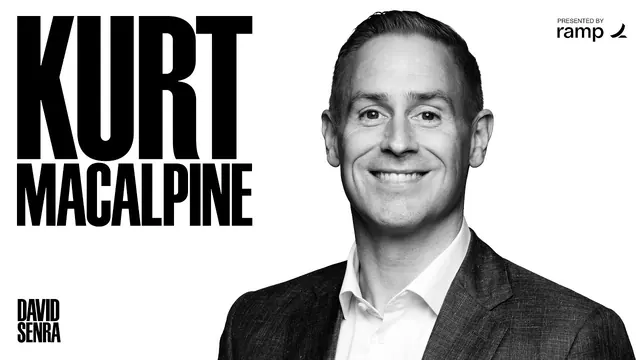
- Kurt MacAlpine Kurt MacAlpine built Corient—now managing about $525B across 15 jurisdictions—by diagnosing wealth management as “built on a fundamentally flawed structure” and rebuilding it as a professional-services partnership. In many advisory businesses, independent-contractor advisers can take clients from colleagues, leaving the client experience tied to the …
- The alignment mechanics are central to Corient’s model: about 3,000 employees on one compensation plan with no exceptions, one P&L with no chargebacks, and a fee-only fiduciary standard. MacAlpine claims Corient is “the largest business in the world that operates under that standard of care,” so any larger firm has the …
- The M&A engine—about 50 deals—targets entrepreneurs hitting a scale ceiling, not retirees cashing out. MacAlpine’s thesis: a wealth firm can reach $3–5B with a limited service set, but the investments required to reach $50–100B can make the …
- On September 2–3, 2025, Corient announced it was buying the largest and second-largest ultra-high-net-worth wealth-management businesses in Europe. MacAlpine says no truly global UHNW wealth manager exists outside Corient: in his view, multi-jurisdictional banks’ regional P&Ls and …
- The operating philosophy is built around a long horizon: full day-one integration of acquisitions, brand advertising in every market where Corient operates, and a Miami headquarters chosen from a clean slate. MacAlpine wants “the forever business in ultra-high-net-worth wealth management”; he contrasts that with temporary owners thinking in …
Oct 13, 2026
- David Vélez Vélez's core thesis is that fintech disruption is still in its first inning: global consumer financial services is a ~$10 trillion industry, and something like 90% still goes through branches and is owned by incumbent banks. His analogy: it's "as if ninety percent of the world were going to Blockbuster to get VHS tapes and DVDs" while Netflix-like services held …
- The cost math is the moat: Nubank serves 140M customers with 10,000 employees versus competitors' 100M customers with 100,000 employees and 6,000 branches — a cost to serve of about 3% of a traditional incumbent's. In the US, $15T of retail deposits earning about 40bps in a 4.5–5% rate world means roughly $600B a year going to banks to pay for branches rather than staying in consumers' pockets — a profit pool Vélez says competition will eventually erode.
- On moats in the AI era, Vélez argues scaled neobanks sit in the "sweet spot": startups have speed, but "you still can't really get ChatGPT to get you a banking license." Nubank's 20,000–30,000 data points per customer across 13 years fed a proprietary foundation model for financial services and credit, …
- Nubank is launching in the US and announced a stablecoin-backed account in upwards of 35 countries — its 2013 seed deck was always a global thesis, not a Latin American one. The metrics Vélez would give buy-side analysts: customer growth, NPS, cost to acquire, LTV/CAC, and ROE — Nubank charges no fees yet earns …