AI Data Center Power Bottlenecks
Analyzes mounting grid deficits, captive on-site power solutions, and growing public scrutiny over water consumption.
1 sourcesVoices in this topic
All paragraphs
Oct 24, 2026

Oct 21, 2026

Oct 20, 2026

Oct 19, 2026

Oct 18, 2026
Oct 15, 2026

Oct 10, 2026

Oct 3, 2026
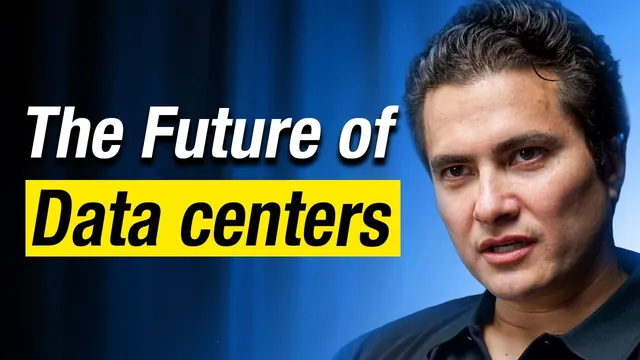
- Chase Lochmiller Crusoe’s founding thesis was that energy would become the bottleneck to scaling AI, so compute should migrate to wherever power is cheap and available. Bitcoin mining initially monetized excess energy while Crusoe built its AI platform; ChatGPT’s November 30, 2022 launch then made …
- The data-center shortage is ultimately a shortage of places where GPUs can be connected, powered, and put to work. Crusoe promised roughly 200 MW in Abilene within one year versus the next-best 2.5-year proposal, then manufactured a medium-voltage …
- Chase Lochmiller argues that the loudest community objections to AI data centers—water use and higher power prices—are contradicted by Crusoe’s operating evidence. A roughly 140 MW Abilene building uses about as much annual water as 10 homes because GPU cooling is closed-loop; he says energy prices have …
Oct 2, 2026
Oct 1, 2026
Sep 27, 2026

Sep 22, 2026

- Blake Scholl The most tradeable reveal: Boom’s supersonic engine core, with the fan removed and a generator attached, becomes a 42 MW behind-the-meter data-center power-generation setup that “doesn’t need any water” because it is designed to run hot at Mach 1.7. Scholl calls it “an incredible money-printing business,” claiming “tens of gigawatts of demand in my inbox”; the first engine is due to run …
- The Rolls-Royce breakup—“one of the dumbest things I ever did was try to outsource our engine development”—that led people to declare Boom dead is now, in a “bizarre twist of history,” what Scholl says makes the startup financially valuable. Boom is vertically integrating from raw materials through turbine blades and assembly, with a factory whose first parts were made last week, …

Sep 21, 2026

- Naveen Rao The energy math driving the thesis: Google alone crosses 3.2 quadrillion tokens per month; at 10 joules/token that’s 12 GW — against ~40 GW of total US data-center power and under 100 GW worldwide. Rao’s estimate: “we’re going to run out of energy pretty fast, in about 3 years or so,” and since ~50% of the cost of serving a token is …
- The investor kicker is Jevons’s paradox: Rao says halving the price can lead to more than 2× consumption, while making something 1/1,000th the price can lead to consuming more than 1/1,000th as much. He thinks a 1,000× disruption of a roughly $1 trillion 2030 AI market — “maybe it’s bigger than that” — will create “the largest market that …