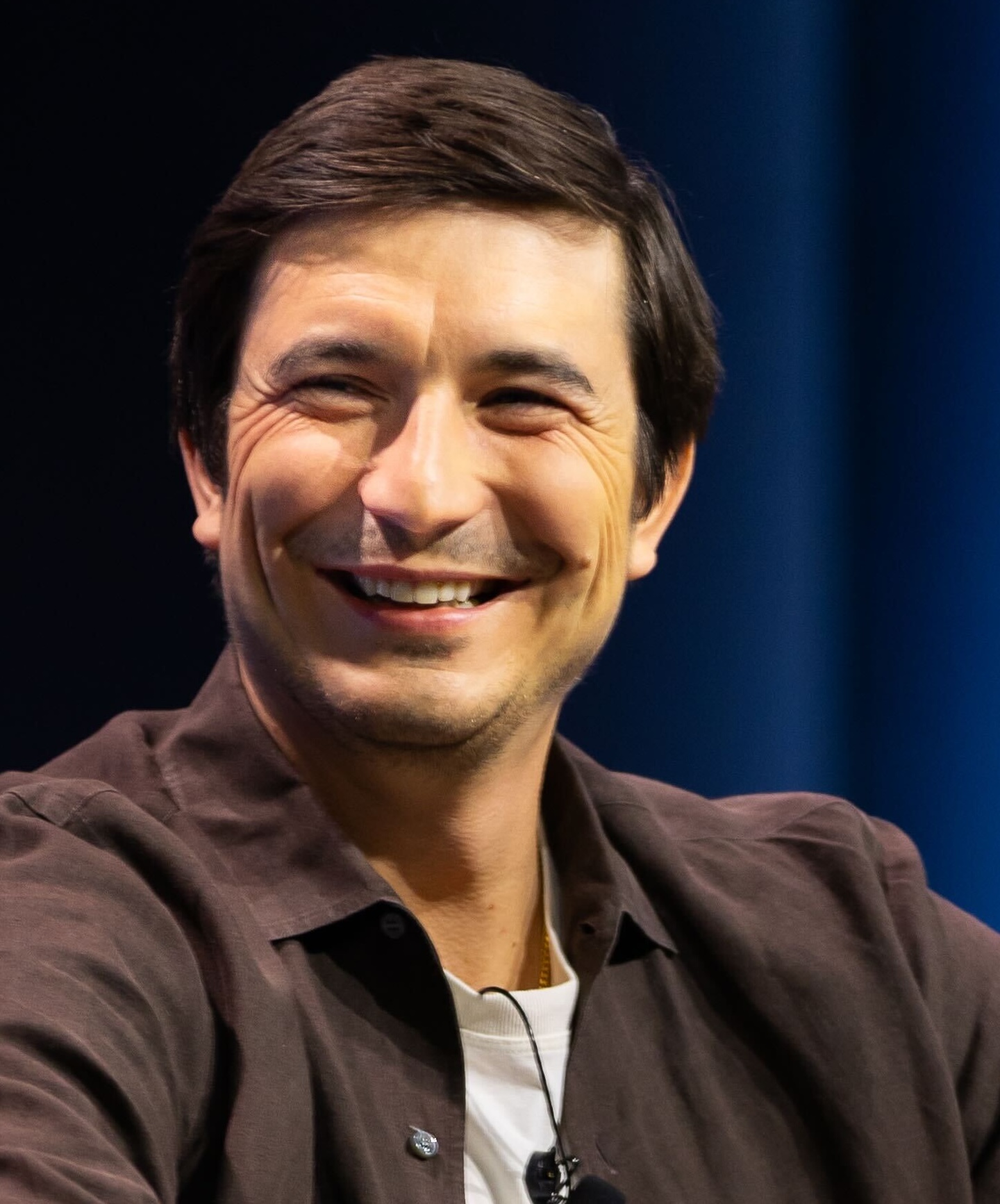
Vlad Tenev
Frontier Insights
Core Frontier Thesis
Vlad Tenev’s endgame is “universal financialization”—democratizing liquidity by tokenizing non-public assets (e.g., SpaceX, OpenAI) and scaling prediction markets without issuer friction, powered by AI-lean cost structures.
Strategic Decisions
Robinhood is expanding beyond public equities into capital-as-a-service, stablecoins, and private banking. Concurrently, frontier mathematical verification (via engines like Harmonic’s Aristotle) points toward certified, machine-validated systems running mission-critical execution.
Risks & Warnings
Industrialized retail speculation creates acute gambling externalities and intense regulatory blowback. Furthermore, marrying synthetic private assets with black-box AI and autonomous code invites severe systemic fragility and cybersecurity vulnerabilities.
Key Views & Dialogues
Robinhood CEO’s Shocking Prediction On Stocks, The AI Bubble, & Gambling Controversy | Vlad Tenev
- 🗓️ Date:
2026-08-23| 🎙️ Show:The Iced Coffee Hour
Robinhood reached $125B in AUC, up 50% year over year, as record trading, #1 retail options share, and prediction markets producing hundreds of millions in annual revenue extend its “financial home for life” strategy. Default ownership, private markets, and tokenization are the next growth avenues, but agentic trading remains early: 100,000+ accounts, agents sometimes refusing trades, and US stock tokens unavailable.
View Dialogue Notes & Key Takeaways
Tenev says there isn’t one metric he obsesses over; the idea he wants Robinhood to own is broad ownership — now ~65% of US households, up from the low 50s pre-Robinhood, with a 95%+ target. His framing: “a future with relatively few owners is inherently fragile,” and the path runs through default ownership — 401(k)-style matches, Trump Accounts putting “$1,000 funded by Treasury” into every newborn’s account — plus private markets and tokenization to “force the rest of the world to catch up.”
Robinhood grew to $125B in AUC, up 50% in 1 year, through record trading plus becoming a “financial home for life.” Q2 set record equities trading, and the latest quarter’s equities trading exceeded 2021’s GameStop peak “organically through compounding.” Robinhood crossed to #1 in retail options market share, while prediction markets — a rare first-mover launch, shipped within weeks of legalization — hit “hundreds of millions of annual revenue, our fastest growing business line of all time.” Deposit bonuses help, but Tenev says bonus-driven AATS activity is only a minority of the overall money moving in and out of the platform.
Agentic trading has 100,000+ accounts and, per Tenev, no serious competition — “nobody non-trivial is working on agentic trading besides us.” The catch: agents sometimes refuse to trade because they are not optimized for trading, and Tenev says trading activity likely isn’t in the training data — “you don’t have agentic trading traces like you would programming traces.” He admits he doesn’t look closely at whether agent traders make money.
His clearest bubble tell: every interview question suddenly became “when are you going to add Korean stocks,” and hedge funds are anecdotally buying AI chips just to resell them. “If a lot of the supply is being bought by speculators, that’s when you can kind of get into trouble” — even for assets with real fundamental growth like chips in an AI demand environment.
Private markets are “the next frontier of our mission”: Robinhood Ventures Fund 1 includes pre-IPO OpenAI, Fund 2 does seed/Series A with YC at tens-of-millions valuations, and the end state is trading individual private names — requiring continued product innovation and accredited-investor reform. The premise: OpenAI and Anthropic are going into the trillions in valuation while “a small circle of wealthy insiders” captures the gains.
Robinhood Chain is pitched as “the hottest chain in crypto right now” — top-five DEX volume, stock tokens in 120+ countries — but the US will probably adopt tokenization late. The tokens are not currently available in the US. Overseas users without functional banking leap straight to tokenized stocks; in the US, enabling 24/7 access would be “going from your very fast train to a high-speed train… you can already get from New York to DC in 2 hours. Shaving it to 1 hour maybe isn’t the biggest delta.”
Financial advisers will likely survive AI, but their fees may compress: expect a middle ground between robo-advisory’s ~25bps and full-service’s 1%+. Responsibility is a key moat — “it’s hard to have the AI take responsibility” — even as Graham Stephan’s Claude portfolio review saved him $16k/year, which Tenev notes “doesn’t even need AI”; banks still hold trillions earning near zero because of inertia and relationship strength.
A California billionaire tax could be an “own goal” on Tenev’s model of Hollywood’s policy-driven network breakdown — and, depending on implementation, could force people like him to sell company shares. Wealth taxes “start very very popular, but then eventually they cover everyone,” and the threat alone has already pushed significant taxpayers out. Parting hot take: more software engineers and more lawyers in 2035 than today.
🔗 Original source & video: Robinhood CEO’s Shocking Prediction On Stocks, The AI Bubble, & Gambling Controversy | Vlad Tenev
Mathematical Superintelligence: Harmonic’s Vlad & Tudor on IMO Gold & Theories of Everything
- 🗓️ Date:
2026-02-18| 🎙️ Show:The Cognitive Revolution
Harmonic’s Aristotle pairs frontier-model expressiveness with Lean certificates checked by a small kernel, while its 2025 IMO gold-medal-level performance supports reinforcement learning built around verifiable rewards. That architecture could shift mathematical peer review and safety-critical software toward computational certification, but confidence still depends on correctly specified theorems and kernel foundations as systems gain broader APIs and autonomy.
View Dialogue Notes & Key Takeaways
Harmonic’s core bet is that mathematics is reasoning, and formally verified output can turn AI capability into something users can trust. Aristotle produces annotated Lean code whose steps are checked by a small kernel against three basic axioms, subject to the crucial caveat that the kernel and theorem statement were set up correctly. The product ambition is an “amazing calculator”: frontier-model expressiveness with calculator-like reliability.
Aristotle’s gold-medal-level performance at the 2025 IMO supports Harmonic’s thesis that reinforcement learning can scale unusually efficiently around verifiable rewards. Harmonic, OpenAI, and Google DeepMind all missed Question 6, which Achim estimated was perhaps 5x harder even for humans and unusually dependent on spatial reasoning, but Harmonic saw “signs of life” from further runs. The founders expect a broadly smooth capability exponential and say Harmonic is already “punching well above our weight” relative to larger labs.
Lean 4 and Mathlib could replace substantial parts of mathematical peer review with computational certification and open-source distribution. Mathlib is framed as “every math textbook in the world merged into one in a self-consistent way,” while Lean lets contributors submit proofs through a GitHub-like workflow in which correctness is tested rather than socially conferred. Prestige could migrate from journal gatekeepers toward stars, forks, dependencies, and reuse—opening serious mathematics to contributors outside elite institutions.
Formal verification may become the control layer for AI-generated software, starting where bugs are most expensive. The founders describe API users checking cryptographic implementations for collision properties and considering whether autopilot controllers admit unstable input sequences; they also say users are using Aristotle to check safety-critical software. Longer term, the founders question why AI should write Python or Java, languages optimized for human readability. If agents can produce a roughly 1.5-million-line browser or a 5,000-page proof, manual review stops scaling, creating a path from artisanal formal methods to “formal vibe coding.”
Harmonic is using open access as both a distribution strategy and a decentralized mechanism for mathematical taste. Rather than employ an internal group to decide whether Navier–Stokes matters more than P versus NP, Harmonic exposes Aristotle through an API and web interface, letting community demand allocate compute. The founders prefer a future of millions of tool-empowered researchers over “a giant AI lab with a two-gigawatt data center” capturing every discovery and its value.
The training philosophy favors scalable search over human aesthetic supervision, while treating hallucination as necessary exploration. Harmonic has done essentially zero mathematician-panel A/B testing for elegant proofs; instead, researchers optimize what Achim called the “net present value of future proofs,” penalizing approaches that solve easy tasks through brute force but fail to build reusable competence. Pretrained models remain useful starting points, potentially complemented by higher-entropy systems less anchored to human methods: “Hallucinations are what allow a model to explore something that has never been encoded by a human before.”
The 2030 vision is theoretical abundance rather than immediate omniscience: many coherent explanations, followed by a new data bottleneck. Achim imagines perhaps five internally consistent theories unifying quantum mechanics and general relativity, with increasingly high-energy experiments needed to distinguish them—“theoretical explanations for everything,” but not knowledge without observation. Harmonic’s present Lean-only action space limits operational risk; the founders expect cybersecurity concerns to rise once such systems gain APIs and autonomy, and insist that “humans should be in charge and calling the shots.”
🔗 Original source & video: Mathematical Superintelligence: Harmonic’s Vlad & Tudor on IMO Gold & Theories of Everything
Robinhood CEO Vlad Tenev on tokenizing stocks, expanding access to private shares, fintech’s future
- 🗓️ Date:
2025-09-15| 🎙️ Show:All-In
Robinhood’s tokenization thesis prioritizes access to inaccessible, illiquid assets over 24/7 trading, using stablecoin-like reserves and one-to-one minting to offer exposure to assets including OpenAI and SpaceX across 31 countries. Public stocks provide the cleaner regulatory starting point, while private shares offer greater long-term significance but raise issuer-consent and disclosure issues; Robinhood is also expanding its integrated financial platform as Harmonic develops formally verified mathematical reasoning and software.
View Dialogue Notes & Key Takeaways
Tenev says tokenization’s biggest payoff is not 24/7 trading or instant settlement, but making inaccessible, illiquid assets available. Robinhood’s France demonstration launched in 31 countries and included giveaway exposure to tokenized OpenAI and SpaceX; Tenev said Robinhood was “I think, the first” to tokenize them. The model resembles a stablecoin: hold an asset reserve, then mint and burn one-to-one tokens that can trade publicly across blockchains.
Sacks argued that public stocks offer the cleaner regulatory starting point, while Tenev sees private shares as potentially more meaningful long term. Sacks pointed to existing disclosures and broad public ownership, as well as the GENIUS Act’s stablecoin framework signed in July, as reasons public securities are natural candidates for global, continuous blockchain trading. Private companies care who owns their shares, however, and regulators have less public information to rely on.
Tenev frames retail ownership of private AI companies as a way to align households with technological disruption. His thought experiment: if 20% to 30% of someone’s net worth were invested in AI companies, that person would want AI to succeed rather than merely fear it. Companies worth “hundreds and hundreds of billions” currently have zero retail ownership. Citing Cathie’s presentation, he linked expected negative inflation, high GDP growth and giant productivity gains to significant labor-force disruption.
Tenev is reluctant to control retail risk-taking. He wants accreditation relaxed toward self-certification, potentially using an explicit warning that investors could lose 100%, complete with “a skull and crossbones.” His shorthand—“No crying in the casino”—came with a firm condition: products must be clear, but opportunities available to wealthy investors should generally be available to retail.
Robinhood’s expansion thesis is that additional financial products deepen rather than cannibalize brokerage relationships. Retirement-account users increased individual-account funding, while customers making Robinhood’s credit card top-of-wallet also moved more money onto the platform. Against a coming transfer of more than $130 trillion to younger generations, Tenev calls Robinhood’s existing quarter-trillion-plus assets “just a drop in the bucket”; the opening montage also cited 3.5 million Gold subscribers and the company’s addition to the S&P 500.
Tenev’s separate AI company, Harmonic, targets mathematical superintelligence and formal verification. Founded two years ago, it announced International Mathematical Olympiad gold-medal-level performance and, to Tenev’s knowledge, was the only formal model to do so. Jason contrasted that result with informal models from OpenAI and Gemini; Tenev said Gemini’s informal model got silver last year. Formal methods can strengthen reinforcement-learning rewards and help verify generated software because, as Tenev put it, “human verification just doesn’t scale.”
🔗 Original source & video: Robinhood CEO Vlad Tenev on tokenizing stocks, expanding access to private shares, fintech’s future
Robinhood Founder & CEO, Vlad Tenev: Robinhood’s $85BN Resurgence & Tokenizing SpaceX & OpenAI
- 🗓️ Date:
2025-07-14| 🎙️ Show:20VC
Robinhood’s $35B-to-$85B re-rating reflects a strategy finally gaining credibility, with active-trader focus and near-100% engineering AI adoption reshaping its operating model. Tenev’s expansion thesis is tokenization without issuer opt-in, solving retail access’s adverse-selection problem as 200+ EU stock tokens move toward 24/7 trading, self-custody, and DeFi, with US regulation unresolved.
View Dialogue Notes & Key Takeaways
Robinhood’s market cap has gone from $35B to $85B in the eight months since Tenev’s last appearance, and he attributes the re-rating not to new strategy but to time: “we’ve been saying the same things and articulating a strategy pretty clearly over the past 2 years, and I think it just takes time to understand that it’s working.” The under-told part is AI-driven cost structure — engineering AI-code adoption is “close to 100%,” human-written code “the minority,” and support runs on an in-house system he claims is “best-in-class… even stronger than the dedicated customer support AI companies.”
The tokenization thesis is the episode’s core call: Tenev says tokenization will be the biggest innovation in finance in the last decade, with two extreme benefits — stock tokens as the easiest ex-US access to US assets (the stablecoin playbook), and unlocking illiquid assets (private companies, real estate, art) for US retail. The key innovation: it “work[s] without the opt-in of the companies that are being tokenized” — solving the adverse-selection problem where “the only companies tapping retail are the ones that don’t have any other options.”
The end state Tenev is building toward is “capital as a service” — dismissing crypto purists’ on-chain issuance dreams (“nobody gives a [__] about onchain issuance”), he describes founders pressing a button and having money hit their bank account, competing in a marketplace at all stages down to the earliest stages. “If we succeed in doing this, there will be more startups” — crowdfunding’s promise, actually delivered.
Crypto will stop being a segment and become the layer behind everything: stablecoin interest is akin to a savings account, prediction markets run on crypto rails, and the crypto wallet becomes “a first class experience for all these tokenized assets” — a wallet that “up until recently has not even been monetized.” Public stock tokens (200+ live in the EU, headed to thousands) progress in three phases: mint/burn against NASDAQ/NYSE → trading on Bitstamp unlocking 24/7 → self-custody and DeFi, “when things start to really get interesting.”
Against Airwallex founder Jack Zhang’s (likely; “Jack Jeang” in captions) stablecoin bearishness, Tenev offers a lived operational case: weekend crypto settlement used to mean counterparty risk, expensive credit lines, or capital-inefficient prefunding — in 2021 Robinhood’s answer was “raise lots of capital and prefund and hope that it was enough.” Now: “we can just send the dollars over the weekend… problem solved.” Stablecoins also “basically obsoleted American Express travelers checks” ex-US.
The turnaround’s real cause was recognizing active traders as the core business, not first-timers: zero commissions incidentally attracted high-volume traders who were resilient (“bearish strategies… when the market’s moving down, they remain active”), Robinhood ignored them until 2022, then put “some of our most hardcore people” on serving them — “actually the number one reason behind our business turnaround.”
Next expansion: digital private banking “rolling out very very quickly” — including DoorDash-style cash delivery, because “nothing ruins the private banking vibe more than having to go to a 7-Eleven” — plus the current account (“we have to get people’s paycheck”). Tenev wants all his personal stuff on Robinhood and thinks it’s “maybe a couple of years” from servicing his needs. Five-to-ten-year vision: anyone, individual or business, can “buy, sell or hold any financial asset” — fully global, retail plus institutions.
🔗 Original source & video: Robinhood Founder & CEO, Vlad Tenev: Robinhood’s $85BN Resurgence & Tokenizing SpaceX & OpenAI
How Based is Grok 3? + Robinhood CEO Vlad Tenev on Markets For Everything + Vibecoding 101
- 🗓️ Date:
2025-02-21| 🎙️ Show:Hard Fork
Grok 3 is competitive and cheaper at $40 a month, but its X-data access has not yet created a clear product or research moat. xAI’s rapid, billion-dollar Colossus build shows capital and infrastructure can buy frontier capacity, while Robinhood’s tokenization and prediction-market expansion faces unresolved regulation and speculation risks. Robinhood, valued at $52.2 billion at recording, is pursuing tokenized private assets and prediction markets, with disclosure tiers and CFTC scrutiny testing whether access expands beyond speculation.
View Dialogue Notes & Key Takeaways
Grok 3 is competitive with leading models, but xAI has not yet produced a clear product or research moat. At $40 a month through X Premium+, versus $200 for OpenAI’s most powerful plan, it performed adequately on the hosts’ tests and can analyze X posts, yet offered little reason to switch from ChatGPT or Claude. Newton’s test for a lead is novelty: until rivals say, “Oh, we need to do that,” Grok stays “kind of in the middle of the pack.”
xAI’s real signal is its ability to convert capital and access into frontier-scale infrastructure at extraordinary speed. It went from a poor V1 to a capable V3 in roughly one year while assembling Colossus in Memphis with something like 200,000 NVIDIA GPUs—an undertaking costing billions and aided by Musk’s special NVIDIA relationship through Tesla. Unlike DeepSeek’s compute-saving innovations, Grok represents the other route to intelligence: “just build a bigger data center.”
Musk’s simultaneous leadership of an AI contender and influence inside the federal government creates a power thesis whose practical version matters even if the darkest scenarios remain speculative. The hosts entertained, but explicitly labeled remote, a future in which Washington restricts advanced AI, licenses Grok, or nationalizes OpenAI; Roose’s nearer-term concern was simpler and more concrete—expedited data-center permits, new energy sources, and privileged grid access. Musk’s earlier support for a six-month AI pause now looks to Roose like an attempt to buy time to catch up: “I think this is pure power.”
Robinhood, valued at $52.2 billion at recording, wants to become the venue for every financial asset and transaction, with Tenev arguing that tokenization could open private-company exposure to retail investors. Tenev argues crypto looks dominated by meme coins because connecting tokens to productive assets generally makes them regulated securities; a new framework could instead expose companies such as OpenAI and SpaceX. His pitch is to combine the five-minute, globally tradable token with optional disclosures—including audited financials for qualifying companies—and tiered warnings, including a “big red skull and crossbones” for unverified projects.
Prediction markets are Robinhood’s bid to turn information itself into a tradable product, but the sports use case exposed the unresolved boundary with gambling. After Robinhood offered a “pro football championship” contract to roughly 1% of users, the CFTC requested suspension over “serious concerns”; Tenev nevertheless maintained that prediction markets are “the news faster.” His strongest example was the election market reaching 95–5 for Trump before television called the result, while Roose’s LK-99 counterexample showed that markets can confidently price a false story until reporting and replication correct it.
The interview’s central conflict was whether broader access builds wealth or industrializes speculation. Tenev said open markets have historically created wealth and that retail should generally access anything institutions can; the hosts countered with Robinhood alerts for the Trump meme coin, a Dogecoin giveaway, Pump.fun rug pulls, and rising searches related to gambling addiction. He supported suitability controls but resisted paternalism, invoking Massachusetts’s 1980s exclusion of residents from Apple’s IPO—while conceding that mortgage-backed securities and credit-default swaps may be too complex or unnecessary for retail. Casey also disclosed that Robinhood owns Sherwood News, which briefly syndicated some Platformer content the previous year.
Tenev expects AI disruption to make retirement saving more important, while Harmonic is his effort to make model reasoning verifiably correct. His goal is a “super calculator” combining an LLM’s flexibility with the no-hallucination property of a calculator, especially in mathematics, where one faulty step can invalidate the answer. Whatever happens to labor, he remains “very, very confident” money, companies, and investment will persist.
Vibe coding already makes tiny, bespoke software economically rational, but it shifts technical risk from writing code to trusting code one cannot inspect. Roose built podcast and bookmark tools and a trunk-fitting app, then built Casey Newton’s “Hot Tub Time Machine” in about half an hour without writing a line; the governing ethos is Karpathy’s “I just see stuff, say stuff, run stuff, and copy/paste stuff, and it mostly works.” The trade-off is skill atrophy and opaque security: Roose could not know whether the AI inserted malicious code, while Newton argued society still needs a core of engineers who understand systems “down-to-the-metal.”
🔗 Original source & video: How Based is Grok 3? + Robinhood CEO Vlad Tenev on Markets For Everything + Vibecoding 101