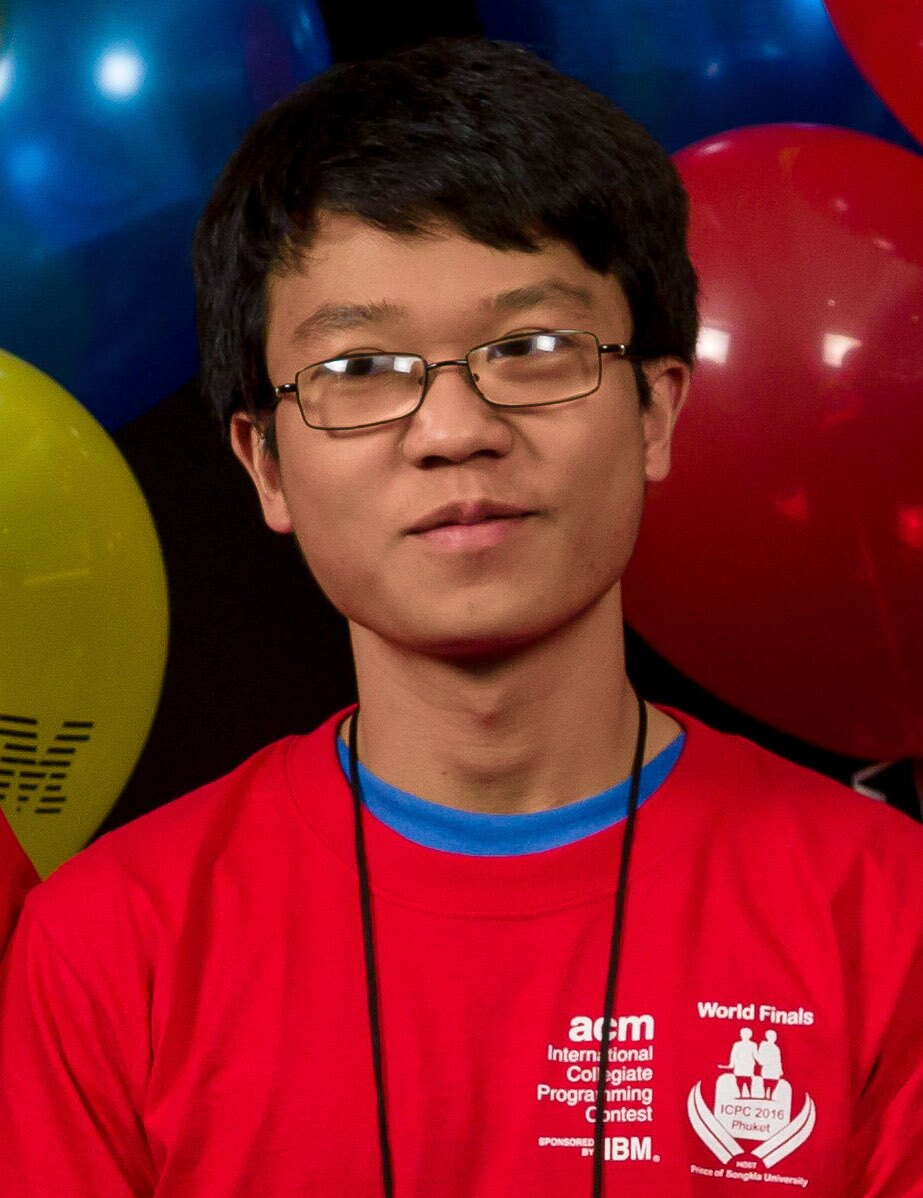
Scott Wu
Frontier Insights
Frontier Thesis: Natural language intent is transforming software into disposable, on-demand interfaces. Powered by reinforcement learning and curated data, AI will accelerate engineering velocity from 1.5–2x today to 10x within three years.
Strategic Decisions: Cognition aggressively acquired Windsurf to secure enterprise IP, customer pipelines, and go-to-market muscle, driving 75–80% of revenue from blue-chips like Goldman Sachs. Wu deliberately aligns with Anthropic for core frontier foundation capabilities.
Risks & Warnings: Delivery credibility remains precarious: an 87% SWE-bench failure rate threatens rapid three-month enterprise deployments, compounded by undisclosed, single-point model dependency on Anthropic.
Key Views & Dialogues
The Future of Software & AI | Cognition’s Scott Wu
- 🗓️ Date:
2026-06-28| 🎙️ Show:David Senra
Devin is positioned as a potential human–computer interface, with agents making single-use software economical by turning natural-language intent into throwaway code. Enterprise revenue is around 75–80%, with customers including Goldman Sachs, Mercedes, parts of the US government and Nubank; Cognition targets deployment within 3 months, but execution remains the key risk.
View Dialogue Notes & Key Takeaways
Senra recalls hearing that Cognition went from roughly $1M to ~$500M in revenue in about 20 months, but Wu does not confirm those figures; Wu says around 75–80% of current revenue is enterprise, including Goldman Sachs, Mercedes, parts of the US government and Nubank. Cognition tries to compress typical 12- to 18-month enterprise security-and-deployment cycles to within 3 months. Wu illustrates the value with organizations of 25,000 engineers costing something like $10 billion a year that believe they can move three times faster.
Wu’s core thesis is that Devin could become—not merely a coding tool—the human–computer interface. Software engineering was always a way to tell computers what to do, and the abstraction keeps climbing from vacuum tubes and punch cards toward plain-language intent.
The unpriced market, in Wu’s telling, is single-use software. Today software only pencils out if it will be used perhaps 10,000 to a million times; YouTube passes that test, but one-off white-collar tasks do not justify hiring engineers. Agents that write throwaway code on the back end could make one-time software economical, leaving humans to decide what to do.
Senra cites a METR report showing uninterrupted AI task-length growing from 10–20 seconds to hours, with the capability roughly doubling every few months. Wu argues first principles beat historical pattern-matching in the rare periods when things truly change: “why can’t that be days or… weeks or months of work?” Seconds are commands, hours are tasks, years are missions—with a manager AI dispatching agents. His hedge: “I honestly think we’ll have solved most of that over the next 5 years or so.”
Cognition’s deliberate neutrality—“we like being Switzerland”—is both a product architecture and a go-to-market stance. Devin is a compound AI system that dynamically routes subtasks across Anthropic, OpenAI, Google, open-source and Cognition’s own models. Cognition says it is not incentivized to make customers spend more on models; Wu calls token-spend ranking “directionally correct” but urges companies to measure output instead.
Wu is betting on independence over acquisition, but says they would sell if it were the most ambitious path. He will not identify a price or the number of offers. His argument channels Spotify’s Daniel Ek—“we’re just going to care way more about music than they are”—and rejects the idea that GitHub Copilot or cloud incumbents automatically eliminate room for focused startups.
The founder psychology on display is pure competition: “salty just means that you take offense to the idea of losing.” Company-building, to Wu, is “a tree search” through possible moves toward victory. Devin’s launch drew both “coolest thing ever” and “totally a scam” reactions; its SWE-bench result was 13% versus a prior best of roughly 3–4%, still failing 87% of the time but helping Cognition plant the AI-as-coworker flag.
🔗 Original source & video: The Future of Software & AI | Cognition’s Scott Wu
Cognition CEO Scott Wu on Acquiring Windsurf: The Process, The Deal, The Rationale
- 🗓️ Date:
2025-07-18| 🎙️ Show:20VC
Cognition acquired Windsurf in a weekend, signing Monday after a Friday cold call, with stock and cash consideration undisclosed. Wu says Google left a valuable customer book, code, data, IP, and go-to-market teams, but Anthropic revenue dependence remains undisclosed after Windsurf’s cutoff. He sees engineering productivity rising from 1.5–2x today to 10x in three years, while foundation-model consolidation and enterprise differentiation remain unresolved.
View Dialogue Notes & Key Takeaways
Cognition’s Windsurf acquisition was a weekend deal built on a cold call: Scott Wu learned of the Google deal Friday “the same time everyone else did,” reached out cold that evening, got verbal agreement Saturday, hashed terms and legal Sunday, and signed by Monday morning. His model for the urgency: “the bank goes into receivership Friday night — you got to have an answer by Sunday and by Monday morning.” Consideration was a mix of stock and cash; he wouldn’t disclose the split.
Against the “deteriorating husk” read (the scale comparison), Wu argues Google left a treasure chest behind: “the entirety of the customer book,” all the code, a lot of the data and proprietary IP, plus GTM/marketing/finance teams that complement Cognition’s engineering/product focus. On founders, he’s pointed: “there’s an unspoken covenant that as a founder you go down with the ship… it’s changed a bit over the last year and I think it’s a bit disappointing to be honest.”
Wu defends Meta-scale talent spending as “quite reasonable” because at least 100 and certainly fewer than 10,000 people — “probably a good bit less” — are helping determine AI’s trajectory, and even frozen at today’s capabilities AI would already be “bigger than the internet.” Competition for talent is “actually greater even in the application layer” than at the foundation labs.
On the Anthropic dependency that burned Windsurf once already, Wu deflects — value accrues “wherever you are able to establish real differentiation” — and flatly refuses to say what percent of Cognition’s revenue goes to Anthropic: “I have to pass on that one.” He describes competition in the foundation layer, including Kimi and Grok, as the natural equilibrium.
The capability call: RL is “the biggest breakthrough of the last year and a half” — “you roughly can solve any benchmark” given clean environments and success criteria — and the data story has shifted from mass quantity to small curated sets (“a lot of compute, not a lot of data”), illustrated by Cognition’s Kevin 32B outperforming other models on CUDA kernels.
Productivity math for the value chasm: AI makes engineers 1.5–2x faster today, “no reason that shouldn’t be a 10x” in 3 years, with 10x more code written (Jevons paradox) — and Devon prices usage “about 10x cheaper than the value of your time.” Devon usage grew 5–10x since January, and Wu claims growth roughly matching the 0-to-80-million ramp Stebbings cited for Lovable over 6–8 months, Windsurf excluded.
The portfolio bet: private foundation labs (OpenAI, Anthropic, X, SSI, Thinking Machines, ~$500B combined) and the app layer ($50–100B: Perplexity, Sierra, Decagon, Harvey, Cognition, Cursor) both go “way up” in 5 years. Forced to pick one: “Anthropic has quadrupled their revenue since they were valued at 60 billion — seems like a fair one to pick” over OpenAI at $300B. He sees 3–5 surviving foundation players; Stebbings insists on two.
🔗 Original source & video: Cognition CEO Scott Wu on Acquiring Windsurf: The Process, The Deal, The Rationale