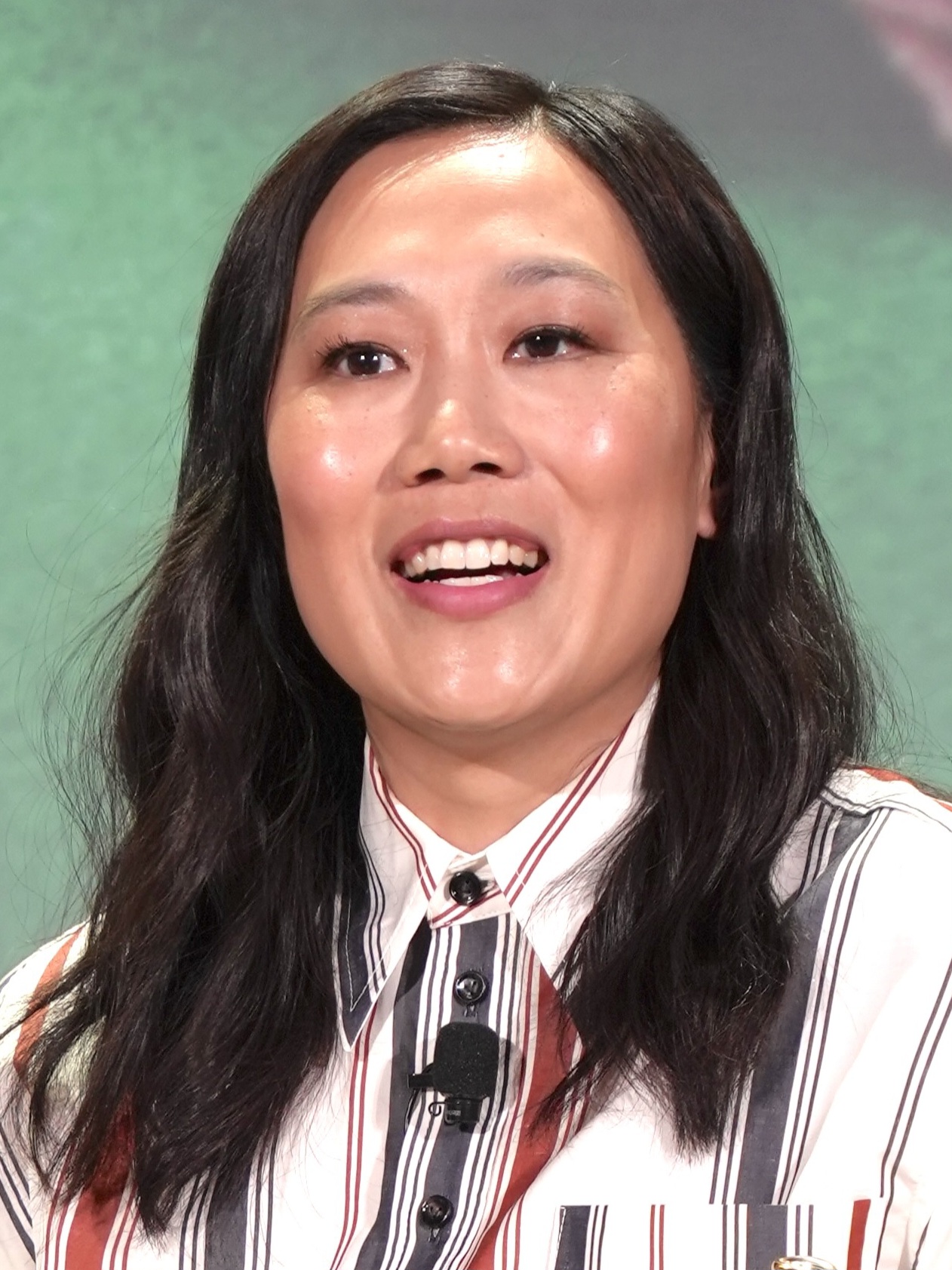
Priscilla Chan
Frontier Insights
Frontier Thesis: Biology is fundamentally a data-generation and compute problem. Chan Zuckerberg Biohub bets that combining dedicated wet labs with foundational AI (like ESMfold) and open-access infrastructure will turn cellular biology into an engineering discipline, culminating in predictive “virtual cells.”
Strategic Decisions: Commit $500M+ across 10–15 years into shared instruments, open-source platforms (CELLxGENE), and scaling compute from 1,000 to ~10,000 GPUs. They prioritize high-throughput data flywheels—targeting 1B+ cells—to drive community-led discoveries that standard academic funding cannot support.
Risks & Warnings: High capital intensity, biosecurity threats, and the massive chasm between in silico directional simulations and validated clinical, N-of-one therapeutics.
Key Views & Dialogues
Biohub: The Future of Biology is Open-Source with Co-Founders Mark Zuckerberg, Priscilla Chan, and Head of Science Alex Rives
- 🗓️ Date:
2026-06-10| 🎙️ Show:No Priors
Biohub’s $500 million, 10- to 15-year commitment targets purpose-built biological data, combining frontier AI with wet labs from proteins to cells and whole systems. ESMfold predicted structures for more than 1.1 billion proteins and produced nanomolar binders from 96 synthesized designs without antibody-specific training, while open release could accelerate research but leaves biosafety and clinical translation unresolved.
View Dialogue Notes & Key Takeaways
Biohub’s $500 million virtual-biology commitment is a patient-capital bet that a major constraint in biology is purpose-built data, not merely larger models. Unlike internet text, much of the necessary biological data does not exist: researchers must invent new imaging, cellular-engineering, and sensing methods to produce it. Zuckerberg argues that this demands “frontier biology and frontier AI,” backed by a 10- to 15-year horizon.
The operating model deliberately fuses AI and wet labs, building biology hierarchically from proteins to cells to whole systems. Each layer may require qualitatively different data and modeling, but protein interactions underpin cells, which in turn help explain systems such as immunity and inflammation. The setup aims to close an experimental loop in which targeted experiments generate cross-layer data and models support prediction and design.
The new ESMfold release is the episode’s strongest proof point: a general protein model predicted structures for more than 1.1 billion proteins and supported design capabilities without antibody-specific training. From hundreds of thousands of digital trajectories, the team synthesized 96 proteins in a 96-well plate and found nanomolar binders. “We just designed a model that could understand proteins,” Rives says; protein design emerged from that understanding.
Open source is Biohub’s distribution strategy and its central nonprofit rationale, not an accessory to the research. Zuckerberg believes wider, faster access will create more impact than monetizing the models, while Chan argues that neutral infrastructure can enlist academia, biotech, and rare-disease communities that commercial prioritization leaves behind. The caveat is explicit: open biological models bring biosafety questions that still need balancing.
The clinical destination is mechanistic, individualized medicine: connect a person’s genetics to proteins, disease processes, and a bespoke intervention. Chan contrasts that with today’s cohort-based guessing—“Am I represented in this paper?”—and says single-cell atlases could eventually help predict off-target effects such as kidney toxicity before human trials. Her target is to “treat the individual as an individual.”
Drug design may become dramatically cheaper, but the speakers do not pretend that faster molecules automatically solve clinical development. The hosts frame the incumbent process as roughly 15 years and $1.5 billion, with only about $50 million in molecule and preclinical work versus $1.45 billion in development. Chan’s “less clear” area is how clinical research, delivery, regulation, and safe deployment must change to shorten the distance from bench to patient.
Biohub’s execution wager is that a stable team of a dozen or a couple dozen exceptional researchers can make meaningful progress without hundreds or thousands, by combining frontier AI, frontier biology, compute, experiments, and new data generation. Five-year success means producing hierarchical world models that are “meaningfully better” and a unique intellectual contribution, after which Zuckerberg expects downstream idea generation to follow. His broader conviction is that AI remains “on track” along an accelerating curve, even when that trajectory feels emotionally unsustainable.
🔗 Original source & video: Biohub: The Future of Biology is Open-Source with Co-Founders Mark Zuckerberg, Priscilla Chan, and Head of Science Alex Rives
The AI-Powered Biohub: Why Mark Zuckerberg & Priscilla Chan are Investing in Data, from Latent.Space
- 🗓️ Date:
2026-02-01| 🎙️ Show:The Cognitive Revolution
CZI is making Biohub the main focus of its next decade, pairing frontier biology with frontier AI and building institutes, instruments and models to address scientific bottlenecks conventional grants cannot fund over 10 to 15 years. Its 125 million-cell ecosystem, billion-cell project and EvolutionaryScale partnership point to a compounding data flywheel for virtual-cell and N-of-one medicine research, but wet-lab validation and missing empirical data remain unresolved constraints.
View Dialogue Notes & Key Takeaways
CZI is concentrating its next decade on Biohub because science—especially AI plus biology—proved the highest-impact part of its first 10 years. Chan says they tried education, community support, and science before concluding, “Oh my gosh, this is it.” Zuckerberg now calls Biohub the philanthropy’s main focus, while carefully framing its mission as helping scientists cure or prevent disease, not claiming the cures itself.
The institutional bottleneck is that transformative scientific tools can require 10 to 15 years and hundreds of millions of dollars, while conventional grants fund smaller, independent teams. CZI therefore operates institutes, co-locates biologists, engineers, and AI researchers, and connects Stanford, UCSF, and Berkeley. The wager is that new observation tools can unlock whole fields, as “the initial telescope” and microscope did before them.
Biohub’s central asset is a compounding data flywheel, not merely a collection of models. Its single-cell effort reached 125 million cells, with CZI responsible for roughly 25% and the wider ecosystem contributing 75%; a billion-cell project is now proceeding in months at a fraction of the earlier cost. AlphaFold’s reliance on 30 years of public data illustrates the strategic constraint: “These data sets aren’t going to get created by themselves.”
A useful virtual cell must connect molecules, proteins, cells, spatial structure, time, and eventually systems such as immunity. Biohub’s proposed edge is running “frontier biology and frontier AI in sync together,” designing instruments and experiments around the data a model needs. For investors, the implied stack runs from instrumentation and compute through datasets and models to wet-lab validation and clinical partners.
Wet labs remain the validation loop even if AI radically improves scientific throughput. Chan does not know whether validation capacity will become the bottleneck; biology cannot yet support the tens of thousands of cheap tests available to language models. The nearer-term payoff is models that generate and derisk hypotheses, letting grant-constrained scientists attempt more than “singles or doubles.”
The EvolutionaryScale team makes AI organizationally central to Biohub’s next phase. The ESM3 protein-model team joins Biohub’s existing researchers, with Alex leading the combined program—an AI researcher running the overall effort alongside leading biologists. Zuckerberg also commits to frontier models and large-scale biological compute, while Chan insists that models alone are not a satisfactory 10-year outcome.
The clinical destination is N-of-one medicine: predicting how an individual’s genetics and exposures alter cells, disease pathways, and treatment response. Chan’s sharpest example is depression, where patients may try a familiar antidepressant for months before learning whether it works: “Meanwhile, if it doesn’t work, it means the person’s suffering.” This is not a proposed “CZI app”; Biohub intends to build foundational tools that partners carry into clinical impact.
The mission’s clock may depend more on AI progress than biology, but AI cannot reason its way around missing empirical data. Zuckerberg says whether the goal takes 10, 20, or 40 years will probably track the pace of strong AI, conditional on continued frontier-biology investment. The practical bridge includes virtual immune-system work and engineered cells, but “cure and prevent all diseases” means making illness detectable early and manageable—not eliminating every infection. The separate question of immortality was left unresolved.
🔗 Original source & video: The AI-Powered Biohub: Why Mark Zuckerberg & Priscilla Chan are Investing in Data, from Latent.Space
Mark Zuckerberg & Priscilla Chan: How AI Will Cure All Disease
- 🗓️ Date:
2025-11-06| 🎙️ Show:The a16z Show
Biohub is betting that shared scientific tools, not another round of small grants, can accelerate cures through $100 million to $1 billion investments over 10–15 years. CELLxGENE standardized single-cell data and created a network effect: CZI funded 25% of the resource while the broader community contributed 75%, supporting a model-to-experiment flywheel. Biohub plans to expand from roughly 1,000 GPUs toward 10,000, but virtual-cell models remain quite early and must prove that directional predictions can reliably derisk costly wet-lab work.
View Dialogue Notes & Key Takeaways
The Biohub thesis is that shared scientific tools—not another round of small grants—are the highest-leverage route to faster cures. Mark Zuckerberg said major breakthroughs usually follow new ways to observe phenomena, yet tools such as imaging systems and virtual-cell models can require $100 million to $1 billion over 10–15 years. “We’re not going to cure all diseases”; the strategy is to help the scientific community do it.
AI changes the timetable only if frontier models and frontier biology form a closed data flywheel. Biohub intends to design experiments and instruments around model blind spots, generate purpose-built data, retrain the models, and repeat. That bridges a striking cultural split: biologists considered curing disease “crazy ambitious,” while AI researchers thought it was “kind of boring—that’s just automatically going to happen.”
CELLxGENE demonstrates how open infrastructure can acquire a network effect larger than its original funder. Built to clear an annotation bottleneck, it standardized formats and metadata across single-cell labs; CZI funded only 25% of the resulting resource, while the broader community contributed 75%. Vineeta Agarwala’s shorthand: “Come for the annotation, stay for the virtual cell model.”
Virtual cells could expand biotechnology’s risk budget before expensive wet-lab work begins. Vineeta Agarwala argued that even directional predictions could let researchers test bolder hypotheses in silico before costly experiments, without risking years of work, publication, or tenure. Zuckerberg likened the model to “the new fruit fly” and said a perfect simulation is unnecessary; a directional signal could still be useful. The ambition is human-relevant modeling, tempered by the maxim: “All models are wrong. Some are useful.”
Precision medicine here means treating common diseases as collections of individually rare biology. Chan’s framing was categorical: “Most diseases should be thought of as rare diseases,” because today’s hypertension and depression treatments still rely heavily on trial and error. Connecting a mutation to downstream cells, protein expression, drug targets, and predicted off-target effects could enable more precise diagnostics and therapies.
CZI is concentrating its philanthropy around a unified operating Biohub that combines AI, data generation, and biological research. EvolutionaryScale researchers who formerly worked at Meta on protein-folding models are joining a Biohub, with its leader set to run the broader science program. Chan said, “The Biohub is really going to be the main thrust of our philanthropy,” while education and local-community work continue. They did not present centralization as a model for all science; decentralized work and outside labs remain important.
The next laboratory expansion is computational: Biohub plans to move from roughly 1,000 GPUs toward the 10,000 range. Outside scientists can apply to use that capacity for questions individual labs—with only tens of GPUs—cannot tackle. As Zuckerberg put the allocation constraint, “The GPUs are somewhat zero-sum. The data isn’t.”
🔗 Original source & video: Mark Zuckerberg & Priscilla Chan: How AI Will Cure All Disease