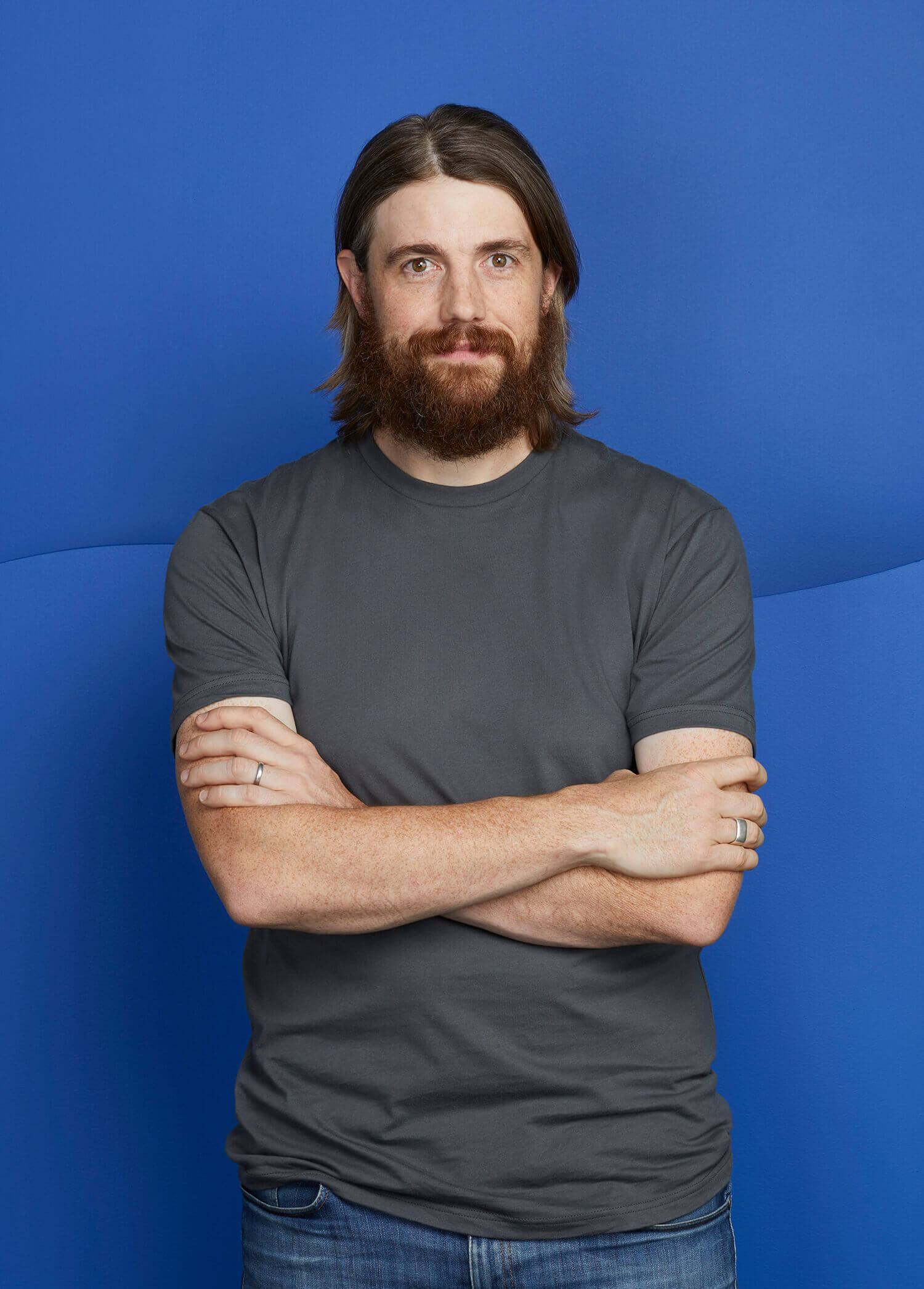
Mike Cannon-Brookes
Frontier Insights
Frontier Thesis
AI valuation outpaces reality, and the “SaaS apocalypse” narrative oversimplifies software economics. True defensibility belongs not to thin wrappers with negligible switching costs, but to systems possessing enterprise distribution, institutional workflow integration, and deep, permissioned team collaboration graphs.
Strategic Decisions
Atlassian is pivoting from raw seat counts to value- and outcome-based monetization, anchoring AI capabilities like Rovo to their proprietary graph of over 100 billion nodes. They prioritize durable ROI and enterprise context over short-term revenue extraction.
Risks & Warnings
Faster code generation simply pushes friction into auditing, mental modeling, and governance. Furthermore, enterprise adoption hinges on solving token economics; opaque credit schemes and fragile user trust remain critical monetization bottlenecks.
Key Views & Dialogues
Atlassian CEO on the SaaS Apocalypse, AI Agents & What Comes Next
- 🗓️ Date:
2026-03-06| 🎙️ Show:The a16z Show
AI is repricing SaaS before proving universal impairment, with Zendesk-like seat models exposed to agent substitution while Workday’s employee-based pricing and Adobe’s middle position may be underappreciated. Atlassian’s three great quarters, accumulated process knowledge, Teamwork Graph and extensibility strategy could make core systems stickier, but value depends on fair pricing and product design that earns trust as agents enter workflows.
View Dialogue Notes & Key Takeaways
The “SaaS apocalypse” is a repricing of uncertainty before it is proof of universal impairment. Mike Cannon-Brookes concedes that software has become riskier and “not every SaaS company is going to thrive through the next decade,” but argues markets are extrapolating two- or three-year AI scenarios while assuming incumbents remain static. Atlassian has delivered three great quarters, and for his knowledge-work business, “this is the best thing that’s happened to our business” — subject to execution through the transition.
Alex Rampell’s three-bucket test separates impaired seat models from systems whose AI upside is being ignored. Zendesk-like seats directly fund work that agents may eliminate, so without repricing “that revenue stream is 100% going to zero”; with outcome pricing, revenue might instead triple or quadruple. Workday’s employee-based seats are not tied to outcomes, while Adobe sits between those poles — distinctions Rampell says public investors are failing to price.
The durable moat is accumulated process knowledge, including edge cases that cannot be recovered from a prompt. Rampell invokes David Ricardo’s comparative advantage and the Indiana employee-on-maternity-leave problem: companies could theoretically vibe-code core software, just as they could grow their own food, but recreating decades of hidden rules while engineers have other work is terrifying and economically unattractive. Cannon-Brookes’s sharper framing is that businesses are collections of processes, not databases.
AI will affect input-constrained and output-constrained work differently. Customer support and legal teams face fixed incoming queues, so faster processing can improve efficiency and reduce cost; marketing, creative work and software development can absorb efficiency gains into more output. That split matters because the same AI capability can compress seats in one workflow while expanding activity and software value in another.
Vibe coding is more credible as an extensibility engine than as a replacement for core systems. Cannon-Brookes calls the idea of running a self-built Workday “terrifying,” but sees enormous value in cheaply generating a 20-person Miami application on top of Workday’s data and rules. Erik Torenberg characterizes that as making the underlying platform “stickier in the enterprise and more valuable,” even as bespoke interfaces proliferate.
Software pricing remains governed by perceived fairness, control and predictability — not technical purity. Customers tolerate consumption pricing when they choose the unit, as with Splunk logs or S3 storage, but AI credits feel like opaque “casino chips” that vendors can consume by adding features. Outcome pricing has another flaw: after software cuts support spending from $20 to $10, the customer resets $10 as the baseline and asks to reach $5.
The near-term AI bottleneck is product design and trust, not model capability. “Give people a chat box that can do unlimited power and they’re like, ‘Tell me a dad joke,’” Cannon-Brookes says; the models are far ahead of realized value because users need contextual workflows, understandable agent behavior and well-timed human checkpoints. Atlassian is addressing that through its AI gateway, Teamwork Graph, workflow summaries, agent integrations and Rovo’s hybrid document-and-chat interface.
🔗 Original source & video: Atlassian CEO on the SaaS Apocalypse, AI Agents & What Comes Next
Atlassian’s Most Controversial Growth Decision | Mike Cannon-Brookes
- 🗓️ Date:
2026-01-20| 🎙️ Show:Gradient Dissent
Atlassian’s market extends beyond developers, with Jira and Rovo connecting technical and business workflows through a permission-aware teamwork graph exceeding 100 billion objects and connections. Cannon-Brookes expects agents to remove workflow steps rather than eliminate workflows, while faster code generation still requires human review, accountability, and evidence of realized productivity. Atlassian’s “grow longer, not grow faster” doctrine prioritizes durable demand and future investment alongside roughly 21% revenue growth, 26% cloud growth, and 40% RPO growth.
View Dialogue Notes & Key Takeaways
Atlassian’s addressable market extends far beyond developer tooling: more than half its users have no technical job function. Cannon-Brookes’s category definition is deliberate: “We solve people problems. We don’t solve technical problems.” Jira evolved from a 2002 bug tracker into an issue tracker, road-mapping system, and broad workflow engine connecting technical teams with finance, HR, sales, marketing, and other business teams.
Cannon-Brookes expects AI to compress business processes, not make workflow software disappear. Agents will remove individual boxes and branches from a flowchart, but their files, links, comments, and outputs still re-enter processes for review, approval, or further automation. His counter-consensus call: AI is “an accelerant, not a replacement.”
The strategic asset beneath Rovo is a permission-aware “teamwork graph” containing more than 100 billion objects and connections, growing north of 50% quarter on quarter. Built since 2019 from links spanning Atlassian products and external SaaS applications, it powers enterprise search, context, ranking, and agent actions. More than 3.5 million people were already using Atlassian AI features monthly: “We don’t want to market AI; we want to ship it.”
AI is clearly increasing task-to-code speed, but Atlassian refuses to equate faster code generation with customer value or even realized productivity. Coding consumes roughly one-third of a developer’s week, while generated code shifts effort into rebuilding mental models and reviewing output. With token-heavy tools potentially costing thousands of dollars per developer and tens of millions annually across Atlassian, DX combines quantitative delivery metrics with qualitative surveys to find actual ROI.
Atlassian’s application-layer strategy is to supply context and select models rather than bet the product on one model vendor. Its production AI gateway runs north of 75 models, and Rovo Dev may use two or three on a typical task, including Claude Code or Gemini. A notable internal use case was not greenfield creation but an API change across more than 500 repositories—“mowing the lawn” at scale so engineers can return to “landscape architecture.”
Cannon-Brookes rejects both mass developer displacement and the idea that only senior engineers will remain employable. He expects Atlassian to employ more developers in five years, with a continuing economic case for pairing one senior with four or five less-experienced engineers whose output AI can amplify. Accountability remains human: whoever commits or approves code owns it, regardless of whether Rovo Dev, Cursor, Claude Code, or GitHub Copilot produced it.
The operating doctrine is “grow longer, not grow faster,” even as Atlassian reported roughly 21% revenue growth, 26% cloud growth, and 40% RPO growth. Cannon-Brookes wants durable growth north of 20%–30% five years out, not a quarter optimized by spending every available dollar on immediate revenue. His investor-relevant test is whether the company is seeding future demand or merely harvesting yesterday’s work until “the fields are barren.”
🔗 Original source & video: Atlassian’s Most Controversial Growth Decision | Mike Cannon-Brookes
Atlassian CEO, Mike Cannon-Brookes on Why Everything is Overvalued & Are We in an AI Bubble
- 🗓️ Date:
2025-10-13| 🎙️ Show:20VC
Atlassian CEO Mike Cannon-Brookes says most AI assets are vastly overvalued, with circular revenue obscuring whether scale produces durable economics and enterprise deployment still lagging magical demos. He sees low initial switching costs, limited pricing power for coding tools, and design becoming scarcer as software creation gets cheaper; per-seat pricing will likely coexist with nuanced usage models. The investable test is whether startups secure distribution before incumbents acquire innovation, while workflow changes, data quality, security, and model obsolescence delay value realization.
View Dialogue Notes & Key Takeaways
“Most of the things are vastly overvalued” — but some are undervalued and will be worth far more, and “the far more is probably overweight”: the dot-com pattern where Amazon emerged from the rubble. The circular-revenue adage — an AI company gives $100M to a model company, which gives $150M to a cloud, which gives $200M to Nvidia, “and you’re all like losing 50 million bucks on the way through” — is why “we aren’t in an era where we have a durable business model,” and anyone claiming to know where value settles “is probably not telling you the truth.”
Of at least ten CEOs Harry has asked, Cannon-Brookes is the only one who wouldn’t pay 10x for AI coding tools: “the competitive vector between them is not going to let you do that” — charge 10x and engineers switch — and coding is only 10-30% of a developer’s week anyway. Search, debugging and ops fill much of the rest, and more services — hypothetically, 100 becoming 1,000 — means more gremlins: a “Gordian loop of AI solving the problems AI created with AI.”
The moat logic investors should keep: “You cannot build a business fast that has high switching costs.” LLMs were “dropped on the whole world at the same time” — unlike PCs or mobile, which took years to permeate — so switching costs for almost everything built right now start small, and they will have to build up from value delivered, data, workflows and familiarity. The race remains: “can the startup acquire distribution before the incumbent acquires innovation?”
Per-seat pricing isn’t dying. Value-based pricing fails twice — buyer and seller must agree on measuring the outcome, and the shared-savings math works “for one loop, one lap of the world” (once the $100 support ticket costs $90, you can’t keep charging for the discount). Customers dislike consumption models, which tend to flip into another form of payment, as with unlimited storage. He expects a blended model: “the answer is probably a nuance and subtlety like always.”
More engineers in five years, not fewer — Mike spoke right before Matt from AWS, and the two “violently agreed.” Atlassian is hiring more grads than last year, some 10x engineers may become 100x with the new tools, and the roadmap is unlimited: “find me a software company that gets to the end of its roadmap.” As creation gets cheap, design becomes the scarce, hard-to-copy differentiator.
On what may take longer than expected: the “delta between magical demos and actual value delivered is quite high” — enterprise AI deployment may take much longer than hoped, requiring workflow changes, data cleanliness, security, education and more. And the future interface isn’t necessarily a chatbot (“otherwise we’d all just use the terminal”) — it’s stable UI plus prompt layers, with a better click-to-value ratio.
23 years in, the operating creed: “the founder’s job is to fight the entropy of ambition” (Tobes’s line, which Mike wrote down), and Atlassian’s defense through technology transitions is creativity — “we’re not going to be able to defend our way through it. We’re going to have to create it.”
🔗 Original source & video: Atlassian CEO, Mike Cannon-Brookes on Why Everything is Overvalued & Are We in an AI Bubble