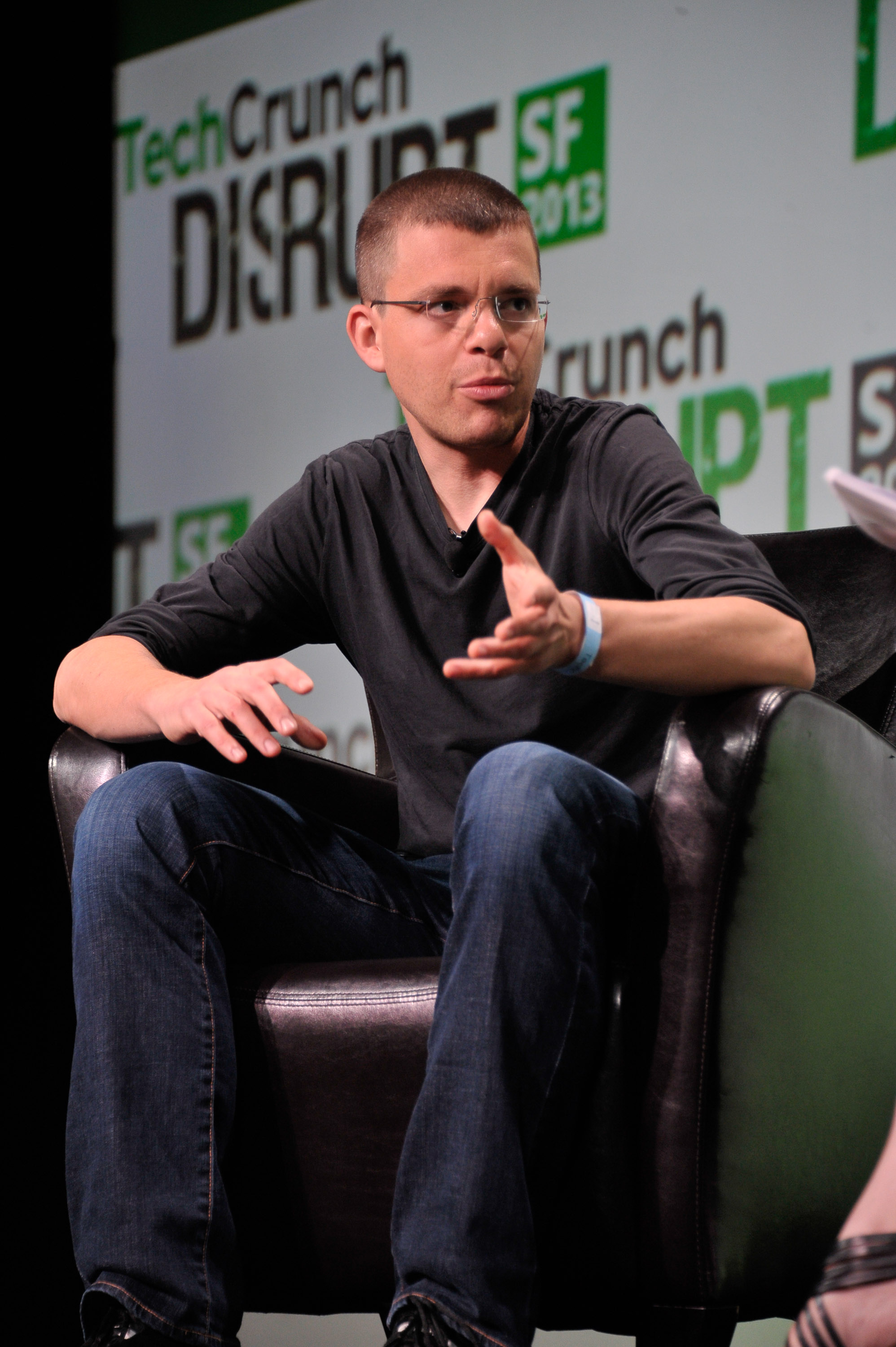
Max Levchin
Frontier Insights
Affirm Core Strategic Synthesis
Frontier Thesis: Legacy card rails—constrained by rigid 2.5-second transaction windows—are vulnerable to AI agents capable of reshaping the checkout interface. Real-time, merchant-subsidized installment underwriting unlocks systemic conversion gains.
Strategic Decisions: Affirm captures market share from Klarna via full-spectrum loan terms (45 days to 4 years), funded by merchants as an acquisition cost. Levchin backs this with hyper-disciplined execution: ruthlessly rebuilding post-prototype and running bi-weekly post-mortems focused strictly on growth, unit profitability, and verifiable AI utility.
Key Risks: Extended multi-year durations push machine learning risk models to their limits; simultaneously, consumer willingness to delegate transactional autonomy to AI agents remains unproven.
Key Views & Dialogues
Why AI Agents Could Finally Reinvent the Credit Card
- 🗓️ Date:
2026-09-03| 🎙️ Show:The a16z Show
Visa and Mastercard still impose a roughly 2.5-second transaction window, a roughly 60-year-old standard that limits room for antifraud and payment innovation even as agents could reopen the interface. Affirm shows where the economics are strongest: Beautylish installments lifted conversion 30%, merchants fund negative CAC, and products up to 3½ years require machine-learning underwriting, while whether consumers will delegate purchase choices remains unresolved.
View Dialogue Notes & Key Takeaways
The credit card remains the best payment UI, but agents may reopen the interface. In the closing exchange, Alex Rampell argues that agents are smarter than “rewritable, chipped plastic,” so negotiations could eventually make agentic commerce and payments possible. Max Levchin is skeptical of agentic shopping but bullish on agentic payments. Rampell’s caveat is that people may still want to choose themselves, as with his bike-parts example.
Payments is the world’s largest market, yet its most profitable opportunities are small-dollar niches. Rampell’s examples contrast a potentially enormous but difficult $40 trillion wire transfer with everyday payments where convenience dominates. His abandoned PayMeSooner idea exposed the B2B gap: GE can pay in 90 days, while a small merchant may factor the receivable at 15%, even though the borrowing is effectively against GE’s credit. They decided it was not a big business, while noting that accounts-payable and accounts-receivable financing can work.
Visa and Mastercard’s 2.5-second transaction window is a roughly 60-year-old fossil. Apple Pay and Google Pay use secure elements to do work before the networks process the card, but Levchin’s surprise is that the networks never introduced a newer standard—such as allowing 15 seconds for additional innovation or asking issuers to bid for better credit quality.
Levchin’s crypto verdict is earned, not reflexive. Before PayPal, he was sent away from a cryptography conference for presenting a non-anonymous digital-payments idea, and he attended DigiCash’s bankruptcy ceremony at Stanford. He admired Bitcoin’s Byzantine Generals solution but never believed it would work as a payment method; he says it has succeeded as a currency, asset, and store of value. Stablecoins have clear uses, but coffee remains the practical test: small payments are ruled by UI, while huge transfers justify optimizing safety, speed, and cost.
Affirm’s origin fused the “pajama problem” with 1800s general-store underwriting. Recognition-based credit—such as knowing a customer through social signals—could substitute for a wallet. Levchin wanted to build a strong credit score and let others lend; Rampell focused more on completing purchases from the couch. Levchin built an all-night PHP 1-800-Flowers demo using Facebook Connect, and Jim McKelvey responded positively. Product-market fit came through Beautylish, where installments lifted conversion 30%, revealing that the product solved a budget problem and could serve as a sales tool.
The mattress-in-a-box wave created room for genuine 0% loans, while Levchin attacked deferred-interest cards. An HBR article around the time of Casper said people replace mattresses every 7 years; several companies emerged, with compressed memory-foam mattresses offering high margins and MDR flexibility. Affirm also tried for-profit education, where MDRs could reach 50%, but exited after about half a year because customers often refused to pay for worthless education. Levchin’s 0% has no asterisk: no late fees, no deferred interest, and no retroactive interest.
Affirm’s underappreciated assets are negative CAC, the customer relationship, and long-term underwriting. Merchants pay Affirm to acquire customers, unlike TrialPay, where Rampell merely connected merchants and users. Affirm has transacted with more than 50 million people in America and operates in four countries, while shifting from fulfilling demand to helping merchants generate it. Some Affirm products run as long as 3½ years, versus roughly 6 weeks for BNPL, requiring machine-learning underwriting rather than a FICO or Facebook shortcut.
🔗 Original source & video: Why AI Agents Could Finally Reinvent the Credit Card
Max Levchin, Founder & CEO @ Affirm:The Biggest Surprise Scaling to $18.7BN Market Cap
- 🗓️ Date:
2025-02-05| 🎙️ Show:20VC
Max Levchin argues hiring can screen out C and D performers but cannot reliably distinguish A from B talent until people join, making integrity, incentives, and protection against insecure managers more consequential than letter grades. Affirm’s postmortem system turns failures into institutional knowledge through segregated evidence, named authors, and senior review, while its reported 35% growth, 45-day-to-four-year terms, and emphasis on durable infrastructure remain more important than an unsupported AI narrative.
View Dialogue Notes & Key Takeaways
Levchin rejects treating A/B labels as knowable at hiring: interviews can screen out C and D performance, but the distinction between a good hire and a brilliant one emerges only after joining. Strong opinions and extreme personalities are often worth their quirks; the danger is insecure B players who become managers and hire weaker teams to become “the tallest mushroom.” His non-negotiable is integrity: “Once I can’t trust you, I can’t ever trust you.”
Founders cannot expect employees to inherit their obsession, because the founder’s incentives, passion, and goals are fundamentally different. The leadership task is to discover what each person wants—quality, mastery, or a personal goal—and connect it to the work. Someone motivated by craftsmanship needs help making “every pixel” exceptional, not another demand to work Saturday and Sunday.
Affirm’s postmortem system converts operating failures into an internal library of institutional knowledge. Every blip gets a segregated data stream, a directly responsible author, a written analysis within at most two weeks, and senior review that asks whether it explains the cause rather than merely describing the event. The process must be clinical: “Get rid of all emotion; exactly describe what happened.”
The founding bet behind Affirm was deliberately uncalculated: remove fine print, never build economics around confusing customers, and accept the possibility that the model might fail. Affirm is now public and financially successful. A later infrastructure failure illustrates what “do the calculating” means: although Affirm scaled both front- and back-end infrastructure for a projected 10x launch, the front tier outpaced the back tier, creating too many backend connections and leaving the database in shambles when actual demand was modest.
Speed matters, but an MVP becomes garbage software when a company mistakes evidence of demand for permission to leave the prototype in production. Affirm lets a prototyping team ship rough experiments, then pulls successful features down and rebuilds them for beauty, scalability, and durability. Levchin reserves extra time for “the quality of the invisible parts,” particularly underwriting, infrastructure, and decisions that will persist for years.
Hybrid work is an output problem, not a location ideology, but “enough together time” is non-negotiable. Spending hours on Zoom after an unnecessary commute adds little; never meeting teammates sacrifices trust, shared context, and camaraderie. The same emphasis on presence shaped Levchin’s layoff lesson: leaders must own the responsibility and “be part of the goodbye,” not retreat to their offices.
Levchin said Klarna announced 32% growth last quarter, while Affirm announced 35% growth over the last few quarters; he said Affirm had been taking share based on estimates from those periods. He attributes that partly to serving terms from 45 days through four years and avoids speculating about competitors’ corporate strategies, preferring product and sales teardowns because “someone is making mistakes for us.” As a public CEO, he focuses on Graham’s long-term “weighing machine,” even removing Affirm’s ticker from his desktop to avoid emotional reactions.
An AI narrative without operating substance feeds the market’s voting machine rather than the business. Levchin agrees pure LLM efficiency may be approaching an upper limit, but expects systems built around LLMs—reasoning loops or multiple models debating—to amplify capability. His standard is simply whether the company is using “the most interesting available tools,” not whether it can manufacture a fashionable story.
🔗 Original source & video: Max Levchin, Founder & CEO @ Affirm:The Biggest Surprise Scaling to $18.7BN Market Cap