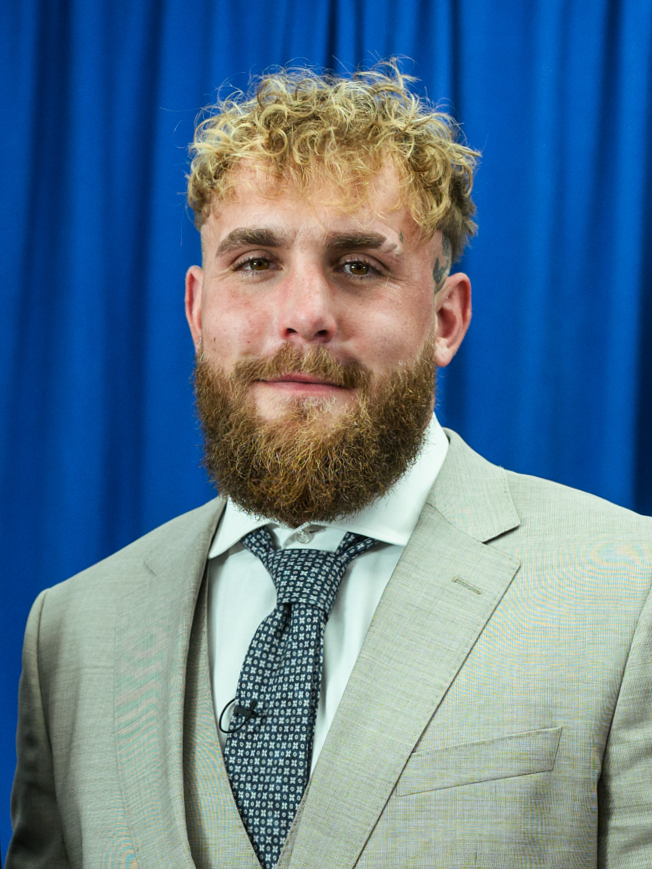
Jake Paul
Frontier Insights
Core Frontier Thesis: Capital is commoditized; sovereign distribution and cultural mindshare are the ultimate alpha. Anti Fund operates on the premise that concentrated, top-tier attention beats institutional dry powder in winning generational deals.
Strategic Decisions: Pair growth-stage capital with creator-driven reach to access elite, high-barrier allocations (SpaceX, OpenAI, Anduril). The operational playbook relies on data-driven experimentation, deep personal networks, and high-conviction asymmetric bets to compound returns toward multi-billion-dollar AUM.
Risks & Warnings: Fragmenting platform algorithms, AI-generated synthetic entertainment eroding organic audience moats, and the operational friction of converting creator buzz into enterprise-grade, enduring enterprise value.
Key Views & Dialogues
Jake Paul on Going From YouTube to Boxing to Investing | a16z ft. Anti Fund
- 🗓️ Date:
2026-06-22| 🎙️ Show:The a16z Show
Anti Fund is pairing growth capital with Jake Paul’s scarce distribution advantage, backing names including Anduril, SpaceX, OpenAI and Anthropic as Woo argues that attention, not capital, is increasingly constrained. Paul’s experiment-measure-concentrate playbook and resilience underpin the partnership, while creator monetization, political and education ambitions, platform limits and the possibility of rapid AI imitation remain important variables.
View Dialogue Notes & Key Takeaways
Anti Fund is officially announcing a growth fund paired with what Geoff Woo sees as Jake Paul’s scarce advantage: commanding attention at scale. Its announced roster includes Anduril, Etched, Cognition, SpaceX, OpenAI, Anthropic, Saronic and Modal — “maybe all the tier one names.” Woo’s thesis is that capital is increasingly abundant while mindshare is scarce, making cultural distribution a potential investing moat.
Paul’s career has functioned like disciplined capital allocation: experiment, read the numbers, then “double, triple, quadruple down” on what works. His first boxing event produced 1 million pay-per-view buys, sold 30,000 tickets and became, by his account, the most-viewed amateur event ever; those signals justified going all in while keeping content as distribution. He credits that approach with making him one of the highest-paid athletes on the Forbes list.
Woo underwrites Paul less as a celebrity than as a founder who has achieved personal “escape velocity.” Paul can move among entertainment, athletic training, negotiations, analytics and TikTok production while tolerating punches from both opponents and the internet. Erik’s economic test is blunt: “If Jake can just live his life and get a bunch of views and someone has to light $100 million on fire to get a bunch of views, who do I want to be partners with?”
The 2026 talent prescription is to maximize technical intelligence and human magnetism at the same time. Woo’s formulation is “max your IQ and max your EQ,” alongside looksmaxxing, health, charisma and “better vibes than everyone else.” The advice is to join or found alongside “the smartest, most ambitious people possible,” while still going deeper into math and computer science because understanding models improves one’s ability to wield them.
Paul argues that creator reach is harder to build than it was, so durability now depends on identity, diversification and monetization rather than followers alone. He sees himself, Logan Paul and MrBeast as rare survivors from an earlier platform era, but distinguishes a personality-led franchise from a format-led operation. The commercial bottom line: creators can have “a lot of followers, but not the cash — and cash is king.”
Attention can absorb controversy, but only for people with the resilience and business model to convert it. Paul rejects the universal claim that all press is good press, although he considers himself unusually capable of surviving it; Woo’s rule is to take calculated risks but avoid fatal ones: “Don’t go to jail, don’t die.” Both think streamer culture is nearing a platform-enforced ceiling after escalating toward ever more extreme behavior.
Paul increasingly sees politics and education as a possible next arena for deploying his audience, influence and risk tolerance. He would consider office only if he believed he were the best person to help, says President Trump endorsed the idea onstage and encouraged him backstage, and sees himself in that arena over the next 10–15 years. His first policy emphasis is education reform, financial literacy and initiatives such as Alpha School and Trump Accounts, with benefits compounding over 30–40 years.
Anti Fund’s founder filter is world-class potential plus the resilience to “eat a ton of shit,” validated through extensive references. Paul and Woo say their edge comes from years of exposure to deals, litigation, hustlers and failures, supplemented by calls to domain experts such as Palmer Luckey’s team. Woo is also considering founding another company now that Betr requires less of his time, while recognizing that “OpenAI or Claude” could reproduce a new product the following week.
🔗 Original source & video: Jake Paul on Going From YouTube to Boxing to Investing | a16z ft. Anti Fund
Jake Paul: Traditional VC is Toast & Attention is More Valuable than Cash
- 🗓️ Date:
2026-04-18| 🎙️ Show:20VC
Anti-Fund’s core bet is that attention, cultural fluency, and response-generating access will appreciate as AI commoditizes coding and financial analysis. Its $30 million vehicle targets roughly ten exceptional late-stage companies, with an ambition to manage $10–$20 billion and extend the distribution advantage into public markets.
View Dialogue Notes & Key Takeaways
The fund’s governing bet is that “attention is more valuable than capital,” and AI may make that edge more valuable. Geoffrey Wu expects coding and financial analysis to commoditize while taste, cultural fluency, and response-generating access appreciate; his provocation is whether incumbent VCs can become influencers faster than Jake and Logan Paul can become VCs. He cites Uber spending tens of billions on marketing and taking 14–15 years to show quarterly net-income profitability as evidence that distribution cannot be waved away.
The $30 million fund is merely the opening vehicle for an ambition to manage $10–$20 billion across venture, late-stage investing, incubation, and eventually public markets. Harry Stebbings proposes concentrating $10 million, $20 million, or $30 million into roughly ten exceptional late-stage companies; Geoffrey agrees the fund has an “unfair access advantage” exactly when companies need IPO-scale branding. He says AUM is already “well within nine digits,” while public markets offer trillions of dollars to pursue.
The disclosed return evidence includes a likely Aerodrome investment at 10X in 18 months and Geoffrey’s personal Ramp position at roughly 300X from a $50 million entry valuation. He also names early Polymarket exposure, Rahul’s Flock Safety stock, and high-ownership incubated company Betr. The painful counterexample is Jake declining Eric Glyman’s invitation to invest in Ramp because Paribus “wasn’t that big”: “Good luck,” he replied.
Jake treats creator taste as repeatable pattern recognition, not transferable celebrity magic. Vine taught him to calculate every millisecond of its actual 6.9-second format, and he says he and his lead content operator predict a video’s view count correctly about 85% of the time—even calling 8.5 million, 30 million, or 40 million views. That intuition informs both founder selection and his early conviction that influencer boxing could revive the sport and generate hundreds of millions of dollars.
Boxing shows how owned attention converts into unusually strong economics even without a conventional competitive “win.” Jake framed fighting Anthony Joshua as “win-win-win”: lasting against a giant would showcase heart and skill, while losing to a much smaller Gervonta Davis worried him more reputationally. He says McGregor would require at least $150 million, and because he promotes himself and negotiates directly with platforms, he keeps “nearly 100%,” with any transferred percentage going to his own company.
Jake declines to call sports defensible against AI because personalized entertainment might redirect attention altogether. If someone can generate a bespoke World of Warcraft, Minecraft, or Netflix-style film in a day, he asks, “Why would I watch the NBA?” He keeps that outcome genuinely open, but believes humans will adapt as they did to cars and nuclear technology; Geoffrey’s prescription is to accelerate and “take the steering wheel.”
Their political thesis mirrors their investment thesis: favor bold operators, but leave sovereign decisions with elected leaders rather than unelected technology executives. Jake says he would run for president only if he were the best candidate and needed to oppose someone he thought could damage the country; he strongly backs Trump while explicitly conceding, “I’m not going to agree with everything he says or does.” On defense technology, Geoffrey calls executive veto power over elected government “a breed of arrogance.”
Given a choice among becoming world number one in boxing, content, or investing, Jake chooses investing “100%.” It is a permanent game that connects him to cutting-edge technology and “the smartest people in the world,” while boxing and content keep feeding its distribution engine. Ten years out, Jake defines success as enriching LPs and shaping history; Geoffrey wants the fund beside a large share of the roughly “100 humans” he expects to change history through civilization-changing companies.
🔗 Original source & video: Jake Paul: Traditional VC is Toast & Attention is More Valuable than Cash