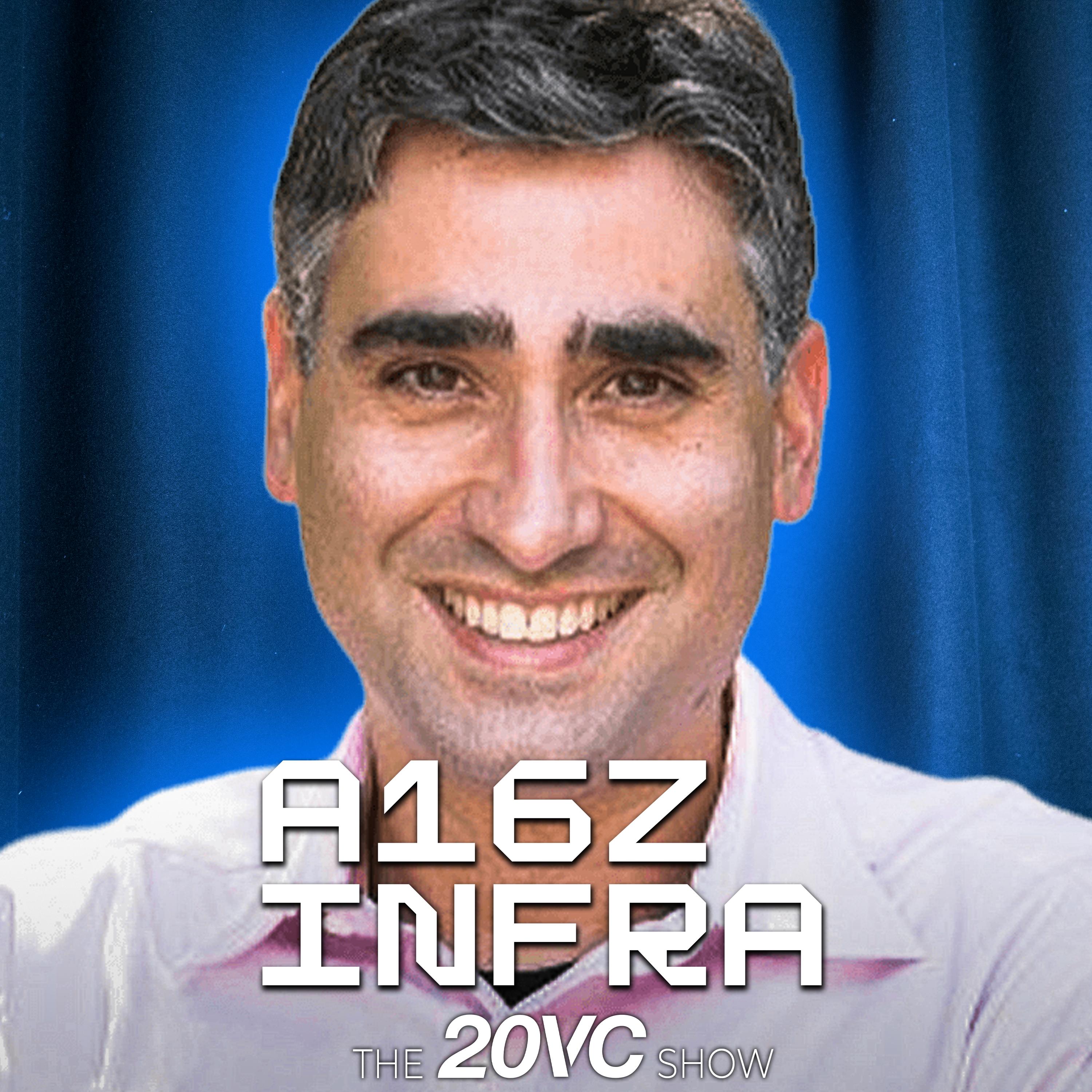
David Morehead
Key Views & Dialogues
20VC: How LPs Allocate to Venture in 2026: What They Want, What They Do Not Want | Why Fund Multiple Does Not Matter Without a Timeline | Why Velocity of Cashback is the Most Important Thing with David Morehead, CIO @ Baylor
- 🗓️ Date:
2026-09-14| 🎙️ Show:20VC
David Morehead argues that fund multiples need a timeline: three six-year 3X growth-equity funds can compound to 27X versus 15X over 15–18 years. Baylor treats growth equity as its return engine, VC as diversification, and uses 10% market-decline increments while pricing cash at 8.5%. Software’s 50–60% selloff and permitted powered land offer differentiated opportunities, but permitting constraints and the unresolved AI adoption question remain key watchpoints.
View Dialogue Notes & Key Takeaways
Morehead’s central thesis is that a fund multiple is meaningless without a timeline — what endowments need is velocity of capital. A 15X return over a 15–18-year VC fund can lose to three sequential 6-year 3X growth-equity funds, which compound to 27X — “better than 15X by like a factor of two.” His office rule: “you’re not allowed to talk about returns without also talking about time,” because “if you’re up 5X over 30 years, that’s horrible. And if you’re up 5X in five months, that’s amazing. I guess that’s SpaceX.”
“The single reason that privates exist is to make money, period, end of story” — so Baylor is winding down real assets and concentrating on VC, expansion/growth equity, and buyout. Growth equity is the biggest private allocation, annualizing around 30% against an 8–9% bogey; venture, by contrast, “is a pure diversification play for us.” About 2.5% of Baylor’s endowment is in Anthropic through managers, with no OpenAI or SpaceX exposure.
When software was down 50–60% from October 2025 into early 2026, Baylor began allocating into it based on a human-behavior read rather than a technical one. Morehead called friends running 500-person private businesses and asked if a vibe-coded app would replace their CRM — “not in a million years” — and recalled, with some uncertainty, the Salesforce CEO saying the best AI would be “93% right,” while “the issue with software is 100% right.” He thinks that, in some vertical industries, trusted incumbent software may become “the delivery mechanism for AI.”
The risk discipline is “I never wanna be all in. Things can always get worse.” Baylor allocates mechanically in 10% market-decline increments — down 20%, put roughly 20% to work; down 30%, another 20% — accepting money left on the table to avoid being fully invested before the bottom. Cash is priced at 8.5%: a 3.5% yield plus a 5% opportunity cost, based on the high odds of finding a 20% opportunity within four years. Cash was 15–16% pre-pandemic and is low today.
Tradeable read on AI infrastructure: the scarce asset has migrated from land to powered land to “permitted powered land,” and permitting pushback is the new bottleneck — something that “didn’t exist six months ago.” Data-center sites in Baylor’s book are up 50% in six months, a UK site is valuable “simply because we have a permit,” and power prices may rise until the supply constraint is solved over the next five to seven years. He’s bearish Europe broadly — “defense… Russia… behind on AI, because, because, because” — with macro hedges on European indices.
Manager discipline runs on a baseball-GM analogy: style drift gets you fired regardless of returns. “If I ever walk out on the field and I have two second basemen and no third baseman, the third baseman’s getting fired… I don’t care what your returns are” — though the line is drawn at genuine strategy switches, such as moving from post-product-market-fit companies to “two guys in a garage,” not artificial category lines. Position sizing starts from dollars per company: $2.5–3M in each underlying name for expansion and buyout, so a 5X actually matters; venture is somewhat different.
Baylor spends more time on asset allocation than manager selection: privates target 45% within a 35–55% band sized so a denominator effect never forces selling (“the number one thing to avoid is fraud, and the number two thing to avoid is forced selling”). Baylor supplements commingled vehicles with fund-of-one arrangements so it can dial single-name exposure like NVIDIA up or down. Full-year 2025’s 9.4% return versus Dartmouth’s 10.8% reflected a second J-curve from 60–70% higher private commitments in 2020, 2021, and following years, while a fund-of-one and another asset class were beginning to inflect upward; Morehead expects 18.5–19% this year. The endowment grew from $1.4B to $2.7B.
🔗 Original source & video: 20VC: How LPs Allocate to Venture in 2026: What They Want, What They Do Not Want | Why Fund Multiple Does Not Matter Without a Timeline | Why Velocity of Cashback is the Most Important Thing with David Morehead, CIO @ Baylor