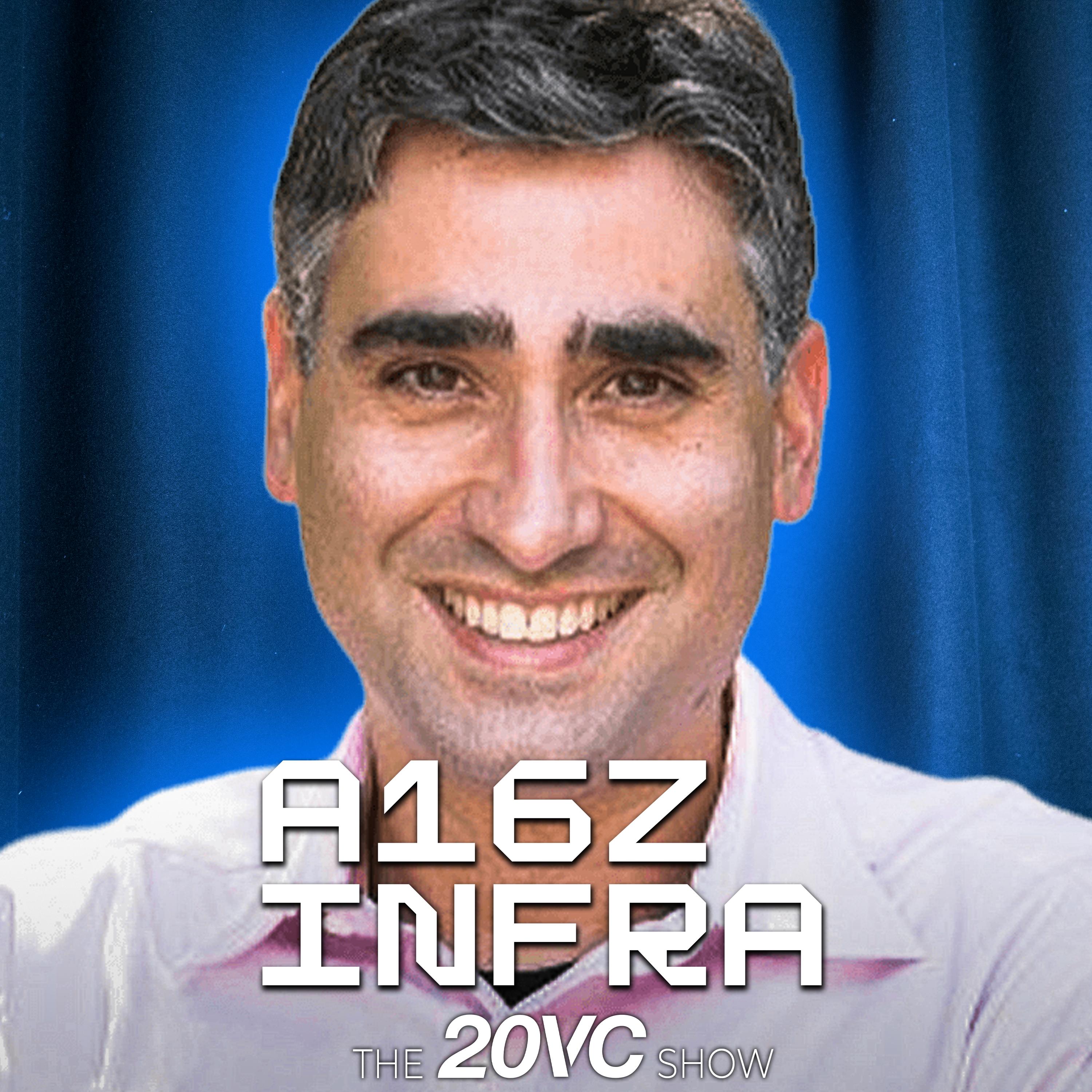
Daniel Dines
Key Views & Dialogues
20VC: Why AI Cannot Replace Humans in Enterprise | Why Work Processes Not Models Will Be The Most Valuable Asset in AI | Why Europe Has Lost and Building in the US vs EU with Daniel Dines, UiPath
- 🗓️ Date:
2026-09-21| 🎙️ Show:20VC
Daniel Dines argues enterprise AI will diffuse process by process, because models retain context without being transformed by experience, while “millions of Einsteins” are not yet hireable people. The investable asset is the portable “map of work,” with AI designing deterministic, governed software around probabilistic models; UiPath’s 14% growth and production gaps in vibe-coded procurement tools leave timing and near-free human replacements as key risks.
View Dialogue Notes & Key Takeaways
Daniel Dines argues that today’s AI can remember work without being transformed by it, making “millions of Einsteins in a data center” reasoning engines rather than hireable people. Humans alter through experience; models append context without changing their weights on the job. Until models develop human-like initiative, will, and experiential learning, Dines expects enterprise adoption to diffuse process by process—not erase employment overnight.
The durable enterprise asset is not the model but the “map of work”: the workflows, exceptions, systems, relationships, and unwritten judgment that make a company function. Models are interchangeable, so enterprises need portable documentation that lets them switch providers, train internal models, and preserve their IP. “The workflow, the map of work and the workflows around the map of work is where the real value is.”
AI’s probabilistic nature makes it the design layer, while deterministic software remains the execution layer for consequential work. Dines illustrates that a 99%-reliable step repeated 100 times leaves only roughly a 60% chance of completing the whole sequence. He therefore sees coding agents generating, repairing, testing, and auditing exact software rather than autonomously improvising through production. “You use AI to create software that runs the enterprise in a predictable, governed, auditable way.”
Workforces will shrink in many functions, but blunt AI layoffs risk removing precisely the initiative, trust, and institutional memory needed to deploy AI successfully. Dines expects fewer credentialed specialists yet greater value for employees who manage exceptions, mentor others, maintain customer relationships, and exercise judgment outside the formal job description. His prescription is a workforce ledger that captures those hidden outputs before deciding “which ones” to retain or redeploy.
Vibe coding has collapsed prototyping costs without eliminating the expensive path from prototype to production. UiPath built a procurement tool only with AI, then found missing connectors, permissions, audits, security requirements, insufficient tests, and a “completely bogus” database schema that required human intervention. Dines’s warning: internal replacements may eventually cost as much as purchased software while consuming the company’s best technical bandwidth.
Enterprise model traffic should concentrate in cheap models, while strategic value accrues to workflow owners, open-model infrastructure, and contextual data systems. Dines predicts 90% of operational flow will use cost-efficient models, with responsible enterprises maintaining an open-source fallback. He would “probably” invest in Fireworks at $15 billion if it can secure the compute needed for scaled inference, potentially requiring tens of billions in capital. In legal AI, the difference between a model call and a valuable company is whether it maps and operates the full legal workflow. He also argues Jensen is “bound by the success of open source,” since a closed frontier duopoly could eventually make its own chips.
Dines sees Europe as technologically “largely irrelevant” despite possessing the talent and chipmaking machinery, because US companies make faster, larger bets. He advises builders of universal technology to move to America, while identifying European demand for on-prem software, model sovereignty, and optionality as a real countervailing market. UiPath’s bull case rests on supplying the “map and rails” beneath enterprise agents; its bear case is genuine, near-free “Einsteins” capable of replacing whole people.
🔗 Original source & video: 20VC: Why AI Cannot Replace Humans in Enterprise | Why Work Processes Not Models Will Be The Most Valuable Asset in AI | Why Europe Has Lost and Building in the US vs EU with Daniel Dines, UiPath