Chris Camillo
Key Views & Dialogues
An Unfiltered Conversation with Chris Camillo
- 🗓️ Date:
2026-05-14| 🎙️ Show:Thread Guy
Chris Camillo argues culturally connected retail traders can spot shifts in human attention before they become transactions, earnings surprises, or consensus narratives, with social platforms now functioning as open information maps. The edge depends on filtering roughly 100 signals down to one or two consequential, underappreciated opportunities, while concentration, options, institutional constraints, macro shocks, and unknowable sellers can still overwhelm a correct thesis.
View Dialogue Notes & Key Takeaways
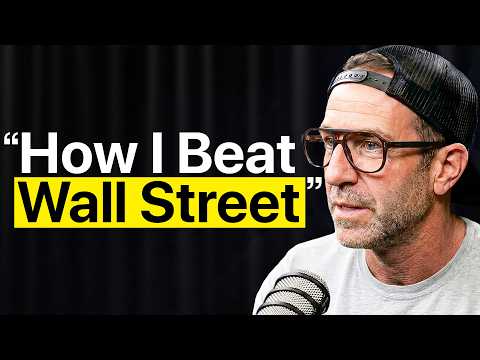
Chris Camillo argues that culturally connected retail traders possess a structural advantage over slow, career-conscious institutions. His new audit was not yet finished, but he expected it to show roughly 70% annualized returns over 18 years; of 70–80 publicly discussed high-conviction trades, he estimates fewer than 10 were wrong. His blunt framing: “The market is rigged for you, not against you.”
His edge is detecting changes in human attention before they become transactions, earnings surprises, or consensus narratives. Social platforms have evolved from closed social grids into open “information maps,” making conversations about products, habits, and technologies observable in real time. “Before anybody does anything, they speak about it,” and Camillo expects agentic AI to help traders connect that overwhelming conversational flow to investable companies.
Attention arbitrage is a filtering process, not a license to buy anything viral. Camillo may monitor 100 shots to find one or two where the product is genuinely consequential, adoption is escaping paid promotion, other investors have not recognized it, and no larger company-specific issue overwhelms the thesis. His live example was Sweetgreen’s new portable wrap: reviews were encouraging, but “it’s not really a trade yet.”
Camillo expresses exceptional conviction through options and concentration while insisting that no trade is certain. He commonly allocates 5–15% of his portfolio to a medium- or high-conviction idea and sometimes far more; a QSR options trade cost him one-third of his liquid net worth in an hour. The Frozen-doll thesis was operationally correct, yet the stock reversed from roughly +30% premarket to down 20–30% when a fund holding 10% of the company dumped its entire position: “There’s always something.”
His Amazon and Bloom Energy buying during geopolitical panic illustrates his probability-first approach. Camillo assigned only a 1–5% probability to the feared escalation because political incentives opposed it, versus roughly 95% odds that the scare faded and his theses resumed; he therefore added while Thread Guy and much of FinTwit were doom-posting. He cited Amazon around $197 and Bloom near $77 before Bloom later reached about $295, while stressing that outcomes—not frightening headlines—determine the trade.
The methodology can work in mega-caps because even the most-covered companies can be culturally misunderstood. Camillo’s formative examples include holding an original iPhone and recognizing its importance while Wall Street focused on the missing keyboard and weak AT&T service, and tracking the accelerating phrase “cloud computing” in technology forums before investors grasped AWS. His Novo thesis similarly began with TikTok users describing a drug capable of shedding 15–25% of body weight, not with a spreadsheet.
Choosing the right security requires separating the true beneficiary from the security investors will initially believe is the beneficiary. Camillo is not yet ready to trade peptides, but thinks the trend is a “freight train” that could unfold over months; HIMS might rise merely because investors nominate it as the obvious expression, even if another platform ultimately captures the economics. AI should test granular questions such as whether the trend can move the needle and what competing variables matter—not answer “What stock should I buy?”
The highest-leverage preparation happens before rare events and the most important restraint comes after large wins. Camillo recommends pre-mapping 20–30 low-probability scenarios so that when one occurs, the trader can act in minutes rather than hours: “You will not pull the trigger…unless you’ve been thinking about it for years.” Conversely, after a grand slam he says to trade less, because overconfidence and abundant cash have repeatedly preceded his worst decisions; he also prescribes a complete 24-hour market break every one or two months.
🔗 Original source & video: An Unfiltered Conversation with Chris Camillo