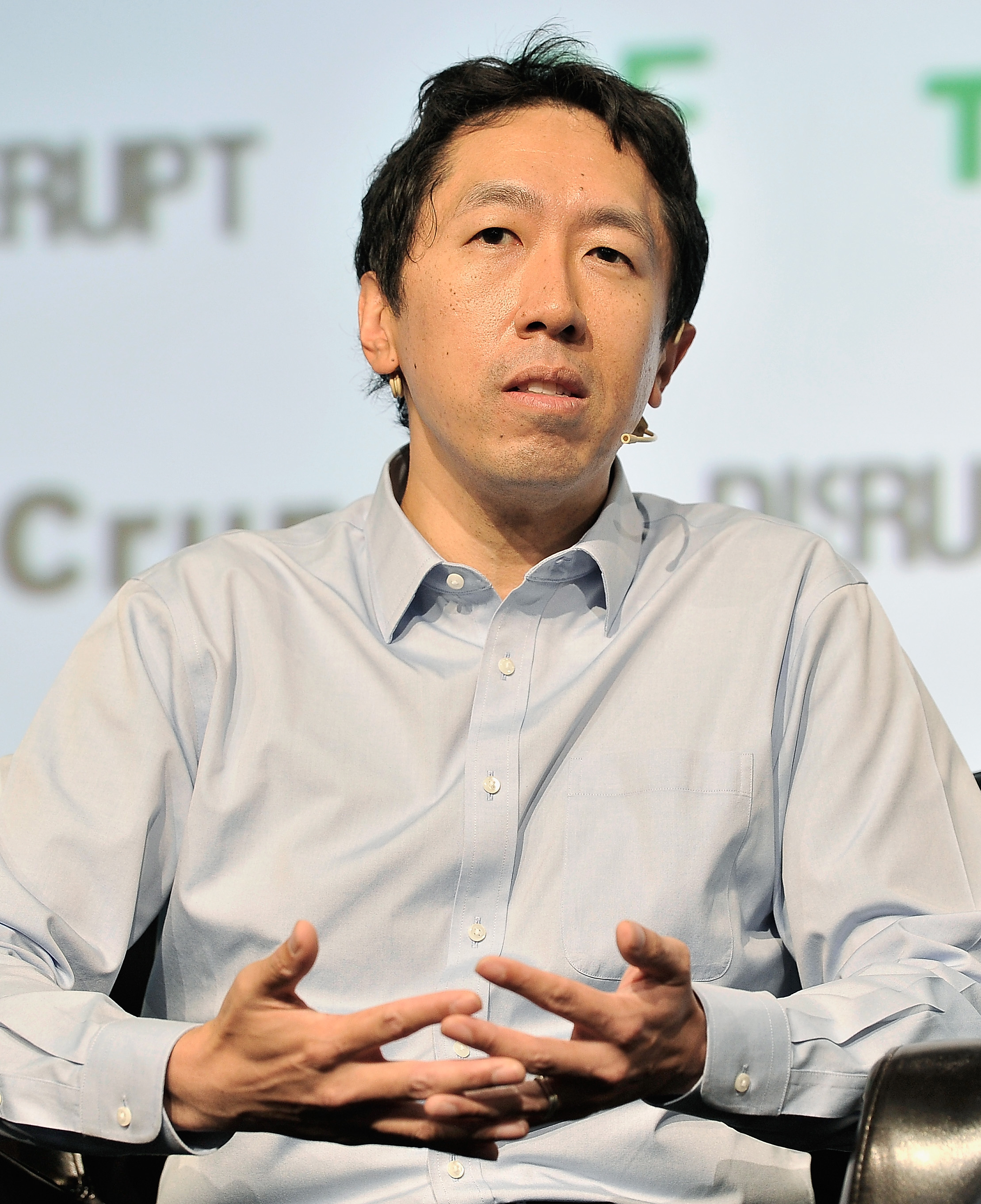
Andrew Ng
Frontier Insights
Frontier Thesis: Power and silicon are AI’s hard physical constraints, yet cheap intelligence is collapsing software dev cycles from quarters to weekends. Coding agents represent the clearest initial value pool, but lasting economic upside lies in fundamentally rebuilding workflows with agentic workflows and open models.
Strategic Moats: Because switching between foundation models is frictionless, technical moats erode rapidly. Durability shifts entirely to proprietary distribution, vertical use cases, relationship capital, and razor-sharp product judgment over raw headcounts.
Risks & Warnings: Jevons paradox looms: falling inference costs are outpaced by soaring usage. Meanwhile, lean teams risk losing out to aggressive incumbents capitalizing on sheer speed over mere headcount efficiency.
Key Views & Dialogues
AI Fund’s GP, Andrew Ng: LLMs as the Next Geopolitical Weapon & Do Margins Still Matter in AI?
- 🗓️ Date:
2025-11-17| 🎙️ Show:20VC
Electricity and semiconductors are AI’s near-term constraints, while coding tools already show application-layer ROI by compressing some six-engineer, six-month projects into one-person weekend efforts. Falling token prices and weak tool-level moats pressure margins, making workflow redesign, enterprise change management and workforce reskilling central to whether AI delivers 5%–6% or more GDP growth.
View Dialogue Notes & Key Takeaways
Andrew Ng sees electricity and semiconductors—not a sudden end to scaling—as AI’s binding near-term constraints. Compute demand has felt insatiable throughout his roughly 20-year career, and cheaper inference is being met by still more usage, particularly in coding. Infrastructure investment therefore needs to remain “a lot,” though complex financing and circular deals make the exact amount harder to calibrate.
AI coding is the clearest evidence that application-layer ROI already exists. Work that once took six engineers half a year can sometimes be completed by one person over a weekend, while Claude Code, OpenAI Codex and Gemini CLI compete for developers who can switch tools quickly. Ng calls coding a “harbinger” for recruiting, marketing and finance—but the weak tool-level moat means today’s leader can change quickly.
In Ng’s software-engineering examples, the labor divide is between AI-enabled and AI-unprepared workers, not simply humans and machines. He describes experienced engineers fluent in AI as the most productive, followed by AI-fluent graduates, experienced developers still working “like it’s 2022,” and graduates without AI skills. Because AI might perform 30%—perhaps 50%—of a recruiter’s work but not the remainder, he expects augmentation and partial role redesign rather than wholesale replacement for many jobs; AGI is “decades away, maybe even longer.”
Ng hopes AI can push GDP growth toward 5%-6% or more by making intelligence cheap, but that requires redesigning products rather than merely trimming labor. Automating one of five equal workflow steps yields a useful 20% saving; turning a two-week loan process into a 10-minute initial answer changes the product. The larger opportunity is to do work faster or “a thousand times more,” extending services such as high-touch financial advice to customers who could not previously receive them.
Open-weight models are becoming innovation infrastructure and geopolitical soft power. China’s releases accelerate domestic knowledge circulation while influencing the answers users receive about borders, history and values; Ng compares that influence with Hollywood and K-pop. He believes US chip controls “largely backfired” by incentivizing China to accelerate semiconductor development, while Europe’s ambition to lead in regulation is “not a competitive advantage.”
Application margins matter, but Ng builds against the expected cost curve rather than today’s token bill. Token prices may be falling around 80% annually “depending on who you believe,” and his teams have repeatedly reduced costs faster still after first proving user demand. Harry counters with roughly 80% of Replit or Lovable’s pass-through going to Anthropic, supporting Ng’s warning that today’s “VC-subsidized AI computing” cannot persist indefinitely.
Enterprise adoption is constrained primarily by people and change management, not by an absolute shortage of data. Private transaction, sales, manufacturing and logistics data can already support scrappy projects; security, permissions and workflow redesign slow deployment. Ng expects major progress within one or two years but says enterprises will still be discovering applications a decade from now, making workforce reskilling a central unresolved problem.
🔗 Original source & video: AI Fund’s GP, Andrew Ng: LLMs as the Next Geopolitical Weapon & Do Margins Still Matter in AI?
How Agentic AI is Transforming The Startup Landscape with Andrew Ng
- 🗓️ Date:
2025-08-21| 🎙️ Show:No Priors
Andrew Ng sees AI progress broadening from scale toward agentic workflows, multimodality, applications, and possible diffusion models for text, even as marketing hype outpaces business adoption. Coding agents show the clearest current value: work once requiring six engineers for three months can sometimes be completed by one person over a weekend, shifting the bottleneck toward product judgment. Implementation skill, proprietary context, evals, and AI fluency remain decisive, while smaller teams may still lose winner-take-all markets if incumbents use distribution to catch up.
View Dialogue Notes & Key Takeaways
AI progress is broadening beyond scale, where Andrew Ng sees only “a little bit more juice out of the scalability lemon” and rising difficulty. Agentic workflows, multimodal systems, concrete applications, and possible wild cards such as diffusion models for text now matter alongside larger models. The business progress is real, but “the marketing hype has grown insanely fast.”
Ng calls skilled implementation the single biggest barrier to agentic applications, even as technical components still need work. Computer use, guardrails, and evals remain imperfect, but the decisive capability is running “a systematic error analysis process with evals” against proprietary business context. For the next year or two, human engineers and product managers remain essential because the required knowledge often lives in employees’ heads, not internet training data.
Coding agents are the clearest proof that highly autonomous agents can create substantial economic value today. Ng places coding beside ChatGPT-style question answering as AI’s two obvious value pools and calls Claude Code his current favorite because it can plan, build a checklist, and execute multiple steps. He rejects “vibe coding” as misleading: serious AI-assisted development is a “deeply intellectual exercise” better described as “rapid engineering.”
Rapid engineering changes startup economics by moving the bottleneck from writing software to deciding what deserves to be built. Work that once required six engineers for three months can sometimes be completed by one person over a weekend; when a prototype takes one day but user feedback takes a week, product judgment becomes painfully scarce. Simulated users and AI-led interviews look promising, but product tools are not accelerating product managers nearly as much as coding tools accelerate engineers.
Ng says technically fluent product leaders are now much more likely to succeed than business-savvy founders who lack a feel for a rapidly changing capability surface. Teams should inspect anything still done as it was in 2022 because much of it may no longer work in 2025. Customer empathy, speed, conviction, and hard work matter because startup decisions resemble “playing tennis” more than solving calculus problems: founders need enough accumulated instinct to act immediately through many reversible “two-way doors.”
In one hiring example, AI fluency outweighed tenure, while experience plus AI fluency creates an even more formidable talent tier. Ng hired an AI-native college graduate over a full-stack engineer with 10 years’ experience who barely used AI tools, yet says the best engineers are veterans with 10–15-plus years who also master the new tooling—“completely in a class of their own.” At AI Fund, even legal, finance, and front-desk staff learn to code so they can specify work precisely to computers.
Smaller AI-enabled teams can outperform, but optimizing for head count or profitability can become a strategic trap. Ng increasingly asks whether a task needs budget to “hire AI,” while Elad Gil warns that underhiring can give incumbents time to win through distribution, citing Slack versus Teams and Sketch before Figma. The calibration depends on market structure: in winner-take-all categories, speed to capture the market can matter more than keeping teams lean.
The most durable human advantages are proprietary context, relationships, and judgment—while the upside belongs disproportionately to people who embrace AI. Competitive research and LP paperwork look automatable, but founder assessment still draws on offhand reference comments, in-person leadership signals, and trust that an AI cannot yet access. Ng’s five-year call is that adopters across job functions will become “far greater” in individual capability than most people currently imagine.
🔗 Original source & video: How Agentic AI is Transforming The Startup Landscape with Andrew Ng