Adam Foroughi
Frontier Insights
Core Thesis: AppLovin turned an existential 92% drawdown into an ad-tech juggernaut by refactoring its core engine around Axon 2—replacing rigid branch logic with semantic embeddings to drive unmatched targeting accuracy at lower unit compute costs.
Strategy: Treating AI throughput and token budgets strictly as financial inputs, Foroughi built a hyper-efficient machine delivering ~70% growth, 84% EBITDA margins, and immense free cash flow conversion.
Risks & Next Frontier: Hitting a $1T valuation requires cracking non-gaming verticals like e-commerce. Looming threats include terminal SaaS compression, stock dilution, platform dependencies, and potential talent disruptions from aggressive automation.
Key Views & Dialogues
Inside AppLovin’s $100B Ad Engine
- 🗓️ Date:
2026-08-14| 🎙️ Show:Sourcery
AppLovin rebuilt after a 92% post-IPO drawdown around Axon 2, with EBITDA run rate now over $7 billion. Semantic embeddings replaced Axon 1’s hundreds of thousands of if/else branches, improving extrapolation and lowering GPU costs while e-commerce showed decent ROAS on a premature model. Reaching a trillion-dollar valuation requires over $30 billion in annual cash flow, putting category expansion and creative execution under scrutiny.
View Dialogue Notes & Key Takeaways
AppLovin’s arc is the episode’s spine: down 92% in the first 18 months as a public company, rebuilt around the Axon 2 model, and now a $100B company with a stated path to a trillion. Adam Foroughi’s math: EBITDA run rate is “over a $7 billion” with ~75% converting to cash — he said the comparable figure three years earlier was probably 1/20th of today’s — and a trillion-dollar valuation requires “$30 billion-plus of cash flow a year,” which gaming UA alone can’t support, hence e-commerce and eventually adjacent categories.
The technical unlock was replacing a tree-based Axon 1 — “hundreds of thousands of if/else branches” — with learnable semantic embeddings feeding a deep neural network. CTO Giovanni Ge says the new model both extrapolates to unseen user-item pairs and runs cheaper, because GEMM operations are what GPUs are optimized for while trees aren’t: “Once we’re able to make prediction more accurate, advertisers see better returns and our business grow.”
The org design is a major part of the story alongside the model: ~100 engineers, roughly unchanged in three years, and very few product managers in Ge’s organization, while engineering headcount stayed flat as the business scaled. Ge’s framing — “I don’t want our engineers to sit next to AI. I want our engineers to sit on top of AI” — accompanies a new-generation model the team was able to tackle with AI assistance.
E-commerce, entered roughly 18 months ago, answers the standing bear case that AppLovin only has gaming data. Foroughi’s rebuttal: it’s a billion people, not a billion gamers — casual-game players skew slightly female, 30-50, and include many heads of households — and pixeling advertiser websites follows the approach Facebook used to build a broader data flywheel; the first e-commerce data engine was literally designed on a breakfast napkin at a Vegas conference, with decent ROAS even on a “very premature” model.
Chatbot/LLM advertising may not be the best fit for AppLovin’s model: if 99% of AI usage is search, chatbot ads will probably look and feel like bottom-of-funnel search ads, while AppLovin’s engine is top-of-funnel discovery. The extension surfaces under R&D on a “three, five, 10-year” horizon are connected TV and open-web video — fragmented environments unlike the Apple/Google mobile duopoly.
The drawdown playbook is directly relevant to today’s beaten-down SaaS names — and Foroughi doesn’t think most can copy it. AppLovin kept stock comp in fixed-dollar terms, did no investor relations “for well over a year at the bottom” (“nobody buys something that’s dirt cheap… they wanna see a vision”), and deployed every dollar it made and more into buybacks to “become our best investor”; enterprise SaaS without algorithmic growth or cash flow can face “a downward spiral” and may be taken private by private equity.
Both executives’ hot take converges on taste as the scarce input in the AI era. Ge: “I would attribute the success of Axon largely to what we decided not to do, not actually to what we did” — AI makes building easy, so companies can drown themselves in “bad-taste ideas”; Foroughi adds that legacy organizations may “almost have to replace nearly everyone” to become AI-native, and “there’s no clear answer” for most.
Ad creative remains a source of manual alpha in an otherwise automated system. There’s no formula — “if you create 30 ads a week, probably one of those might be interesting” — social’s three-second ADHD playbook does not simply transfer to 60-second playable ads, and gen-AI still can’t reliably produce a brand-safe 30-60-second video, so advertisers who invest early in the platform’s format “get alpha.”
🔗 Original source & video: Inside AppLovin’s $100B Ad Engine
AppLovin CEO: Why Founders Shouldn’t Angel Invest & Why the Best Don’t Need Mentorship
- 🗓️ Date:
2026-04-27| 🎙️ Show:20VC
AppLovin combines roughly 70% growth, 84% EBITDA margins, and over $10M EBITDA per core employee, after rebuilding its recommendation technology from the 2022 trough. Its targeted buyback removed a fragile cap table overhang, but AI-driven layoffs, SBC dilution, and frontier-model competition make cash flow, moat durability, and terminal value the central risks.
View Dialogue Notes & Key Takeaways
AppLovin’s financial profile has no comparable, and Foroughi knows it invites suspicion: ~$150B market cap, 84% EBITDA margins, rule of 40 running near 150, ~70% year-over-year growth, and reaching or over $10M EBITDA per head across the ~400-person core business. “There’s not another comp in the world that looks like it” — and his explanation for the short attacks follows directly: “in a world where things don’t make sense, people think you’re cheating.”
The turnaround was a central conviction bet at the bottom: after falling 92% in 2022 to under $4B (under 4x EBITDA, while growing ~40%), he declared the old recommendation-system ML dead, slowed basically all R&D on it, turned over the people committed to it, and rebuilt on cutting-edge techniques — Model Axon 2, launched April 2023 — with the stock later running from $9 to $750 in roughly two and a half years.
The 2022 buyback created “roughly a third of the company’s value… call it 50 billion around”: he shut down investor relations, raised some debt, and bought back specifically from the flimsy COVID-era cap table that needed to sell, removing the overhang. But he’s explicit that buybacks don’t usually pan out — “you sort of trade where you deserve to trade” — citing Wix’s big buyback followed by a ~25% weekly drop.
The org call: he cut 40-50% of staff in most departments during a near-triple-digit growth year, rebuilding “as if we were building it knowing what technologies were available to us today” — HR went from 70-80 people to ~15. Same logic applied to AI spend: “token quotas and token budgets are no different than hiring quotas,” and he expects “a lot more tech layoffs over the next couple of years.”
The SaaS apocalypse is fair and “I’m not sure it’s actually done yet” — LLM shipping speed makes terminal value “dicier,” and the SBC death spiral (3% dilution becomes 10% after a 66% fall) compounds it. Judge everything on cash flow minus SBC; AppLovin holds its grant flat at ~$300M a year. And on startups: “I would be very very nervous if I was building a business as an interface on top of” the frontier labs.
Management heterodoxy throughout: no product org (engineers are the product managers; 80-90% of code is AI-written but “that discounts quality over quantity”), no one-on-ones, no reviews, little mentorship — “really good people figure out a way” — a four-person exec team, and Claude Code as the shop standard with Cursor “less so these days.”
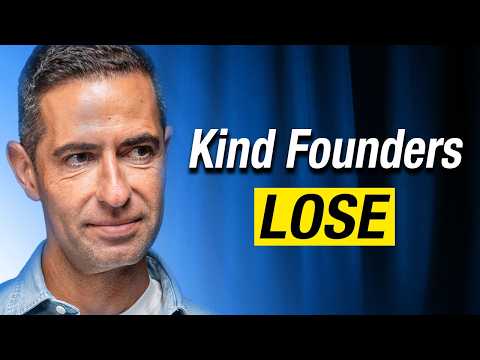
The personal ledger, stated without varnish: founders shouldn’t angel invest (the distraction losses “can compound”), kindness has a speed cost (“if you’re too kind and not as direct, not as aggressive, you’re wasting time”), and the price of the grind was presence — his kids’ childhood was “sort of a blur”: “I was there, but I wasn’t there mentally.”
🔗 Original source & video: AppLovin CEO: Why Founders Shouldn’t Angel Invest & Why the Best Don’t Need Mentorship